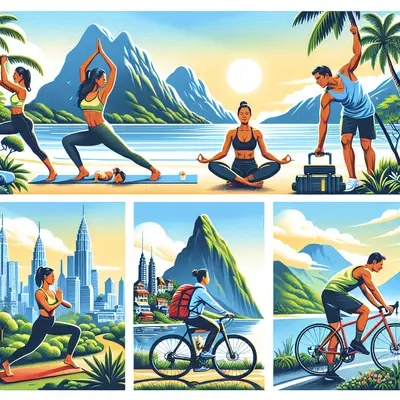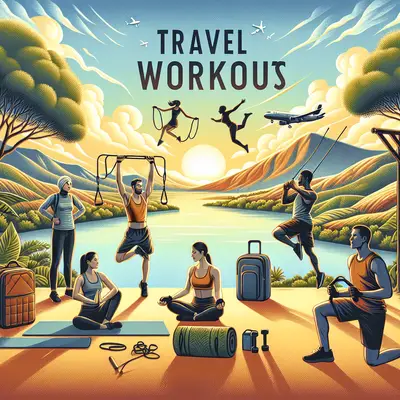
Your boarding pass might say 22A, but your body is built for more than sitting still at cruising altitude. Whether you’re chasing Wi-Fi in Lisbon, sunrise hikes in Thailand, or client calls from airport lounges, your training doesn’t have to stay parked at home.
This is your portable playbook for staying strong, mobile, and adventure-ready anywhere on the map—no hotel gym, no rigid routine, just smart movement that slips into the cracks of a travel day.
Build a “No-Excuse” Micro-Workout Mindset
When you’re hopping borders and time zones, the perfect workout window almost never appears. Instead of hunting for a 60-minute session and a full rack of dumbbells, shrink your expectations and sharpen your focus.
Think in “movement snacks” instead of workouts: 5–15 minute chunks you can drop into your day between calls, while laundry dries, or during a long layover. Research suggests even brief bouts of moderate-to-vigorous activity add up for heart health, mood, and energy levels.
Anchor your micro-workouts to predictable moments: right after waking, before you open your laptop, while your coffee cools, or every time you check in to a new place. The goal isn’t perfection—it’s repeated, intentional movement that keeps your body in “adventure mode” instead of “office chair mode.”
Over time, this mindset turns cramped hotel rooms and quiet hostel corners into training opportunities, not excuses.
Tip 1: Master a Three-Move Anywhere Circuit
If you remember nothing else, lock in this simple bodyweight sequence. It needs zero gear, almost no space, and hits your biggest muscle groups so you feel switched on for whatever the day throws at you.
The Anywhere Circuit (5–10 minutes):
Do 30 seconds of each move, rest 30 seconds, repeat 3–5 rounds.
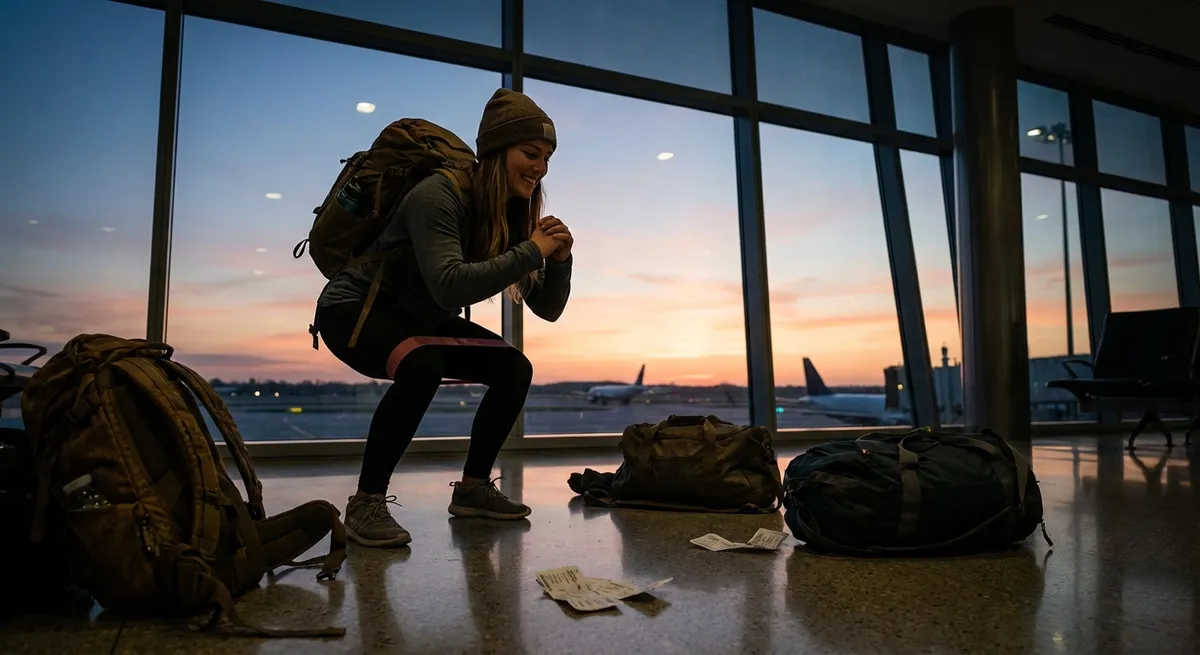
Squat or Split Squat
- Targets legs and hips, counteracting long sitting stretches. - Use a backpack for added resistance if you want more challenge. - Focus on controlled depth and a strong, upright chest.
Push-Up Variation
- Standard, incline (hands on bed, bench, or suitcase), or knee push-ups. - Works chest, shoulders, triceps, and core. - Keep your body in a straight line—no sagging or “tent” shape.
Row or Isometric Pull
- If you have a resistance band, loop it around a doorknob or pole and row. - No band? Grip each side of a sturdy doorframe, hinge back slightly, and “pull” yourself in while keeping tension through your upper back (isometric hold for 20–30 seconds). - This combats the rounded-shoulder posture of laptops and travel seats.
This trio gives you a full-body hit: legs for power, pushing for upper-body strength, pulling for posture. You can sneak it in before a flight, between meetings, or while waiting for food delivery.
Tip 2: Turn Transit Time into Mobility Time
Travel days are the enemy of your hips, back, and ankles. The good news: you can quietly undo a lot of that damage in terminals, train stations, and bus lines without looking like you’re auditioning for a yoga retreat.
Aim for 5 minutes of mobility for every 2–3 hours of sitting on travel days.
Low-key moves you can do almost anywhere:
- Standing Hip Circles
Plant one foot, lightly hold a wall or chair, and draw big circles with your free knee. This wakes up your hip flexors and glutes, which get locked up from sitting.
- Ankle Rocks
While standing, shift your weight forward and back, letting your knees move over your toes, then lean into your heels. This keeps your ankles supple, key for hiking, running, and stair-heavy cities.
- Thoracic (Upper Back) Rotations
Stand tall, hands across your chest, and slowly rotate left and right, following with your eyes. This opens your upper spine after hours hunched over tray tables or laptops.
- Neck Reset
Gently tuck your chin, reach the crown of your head tall, then slowly look left and right. No aggressive stretching—just smooth, controlled range of motion.
These little resets help your body feel more like you’re ready to hit a street market or a coastal trail, and less like you’re molded to seat 34C.
Tip 3: Pack One Piece of “Adventure Insurance” Gear
You don’t need a portable gym. You just need one strategic item that multiplies your options without eating your luggage space.
Three travel-tested choices:
- Long Resistance Band (Loop or Tube)
- Weighs almost nothing, coils into any pocket.
- Turns doorframes and railings into pull stations for rows, pulldowns, and face pulls.
- Great for warm-ups before hikes, runs, or surf sessions.
- Lightweight Suspension Trainer (Optional Upgrade)
- Hooks onto doors, beams, or trees.
- Lets you row, squat, lunge, and even do supported single-leg work in tiny spaces.
- Best if training is a high priority on your trip.
- Mini-Band (Hip Loop)
- Ideal for glute and hip activation in hotel rooms or quiet corners.
- Use for lateral walks, glute bridges, and kickbacks to wake up sleepy hips.
Once you pick your “adventure insurance,” build a simple band-based flow:
- 10–15 band rows
- 10–15 band squats or deadlifts
- 10–15 band chest presses or push-ups
- 10–20 banded glute bridges or hip thrusts
Run through 2–4 rounds, depending on your time and energy. This gives you strength work that feels like more than just bodyweight—but still fits in your carry-on.
Tip 4: Use Your Surroundings Like a Training Playground
Most travelers see benches, stairs, and railings. You see a roaming obstacle course.
Wherever you land, scan for:
- Stairs or Safe Hills
- Power walk or run stairs for a heart-pounding conditioning hit.
- Add step-ups or slow, controlled descents for leg strength.
- Use railings for supported single-leg squats if you’re advanced.
- Low Walls, Benches, or Sturdy Ledges
- Perfect for elevated push-ups, Bulgarian split squats, or triceps dips.
- Combine them: 8–10 elevated push-ups, 8–10 split squats per leg, 8–12 dips.
- Parks and Open Spaces
- Mix bodyweight circuits with short runs, shuttles, or bounding drills.
- Example: 30-second jog, 10 squats, 10 push-ups, 20-second plank, repeat.
- Hotel Room or Airbnb Corners
- Wall sits, static lunges, planks, and isometric holds if you’re arriving late or leaving early.
- Even 3–5 minutes before bed can help your body unwind from travel stress.
The trick is to think less like you’re “missing the gym” and more like you’re unlocking a new training terrain each time you change cities.
Tip 5: Sync Workouts to Your Adventure Goals, Not Just Aesthetics
Your travel training doesn’t have to chase six-pack lighting or PRs on a barbell that isn’t with you. Instead, tune your sessions to support the adventures you actually care about on this trip.
Ask yourself: “What do I want my body to do here?”
Examples:
- Exploring Big Cities on Foot
- Prioritize leg endurance, posture, and back strength.
- Do more walking lunges, step-ups, rows, and carry-style movements (like loaded backpack holds).
- Mountain or Trail-Based Destinations
- Emphasize single-leg strength, ankle stability, and hip mobility.
- Add slow, controlled split squats, calf raises, and balance drills (single-leg stands while brushing your teeth).
- Surf, Swim, or Paddle-Focused Trips
- Focus on core stability and shoulder health.
- Use planks, side planks, band pull-aparts, and scapular push-ups.
- Work-Heavy Nomad Stints (Long Laptop Days)
- Double down on posture, hip openers, and upper-back work.
- Daily: a few sets of rows/band pull-aparts, hip flexor stretches, and short walks every 60–90 minutes.
When your workouts are clearly linked to your adventures—stronger hikes, longer walking tours, better energy for late-night food runs—you’re far more likely to stick to them, even as your surroundings keep changing.
Conclusion
You don’t need a fixed address, a full gym, or a perfect routine to stay strong on the move. You need a shift in perspective:
- Short sessions instead of perfect hours.
- One key piece of gear instead of a suitcase full of equipment.
- Environments as training partners instead of obstacles.
- Workouts built around the adventures you want your body to handle.
Treat every new city, airport, and guesthouse as another chapter in your strength story. Your passport gets stamped at immigration; your body gets stamped every time you choose to move, even when space, time, and comfort are working against you.
Adventure favors the prepared—and your training can travel just as far as your ticket.
Sources
- [Physical Activity Guidelines for Americans, 2nd edition](https://health.gov/our-work/nutrition-physical-activity/physical-activity-guidelines/current-guidelines) – U.S. Department of Health and Human Services overview of recommended activity levels and health benefits of movement “snacks.”
- [Benefits of Short Bouts of Physical Activity](https://www.cdc.gov/physical-activity/php/benefits/index.html) – CDC summary of how brief, accumulated activity supports cardiovascular health and overall well-being.
- [Resistance Band Training: A Systematic Review](https://bjsm.bmj.com/content/53/19/1209) – British Journal of Sports Medicine review on the effectiveness of resistance bands for strength and functional fitness.
- [Travel Health: Advice for Travelers](https://www.who.int/initiatives/travel-health) – World Health Organization guidance on maintaining health while traveling, including movement and circulation considerations.
- [Deskbound and Sitting Time: Health Effects](https://www.health.harvard.edu/newsletter_article/the-danger-of-sitting) – Harvard Health Publishing explanation of why counteracting prolonged sitting with movement is critical, especially on travel and work-heavy days.
Key Takeaway
The most important thing to remember from this article is that this information can change how you think about Travel Workouts.