Travel doesn’t have to be a layover from your strength. With the right portable equipment, your backpack turns into a roaming training ground—airport floors, hostel balconies, and beachside piers all become fair game. This guide breaks down practical, packable tools and shows you exactly how to use them so your fitness can keep pace with your passport stamps.
Building a Travel-Ready Micro Gym
You don’t need a trunk full of barbells to stay strong on the road; you need smart gear that punches above its weight in versatility. Focus on tools that are light, compressible, and multi-use so they earn their spot in your pack.
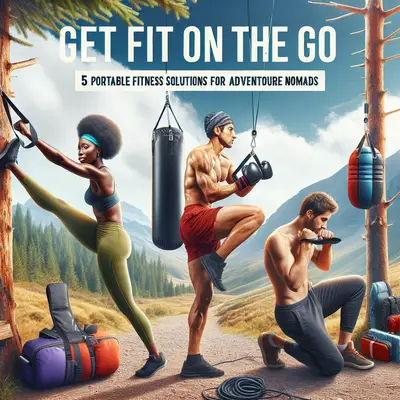
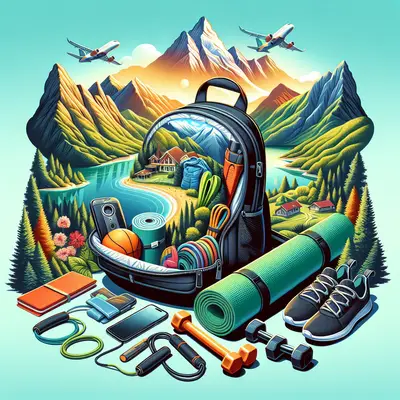
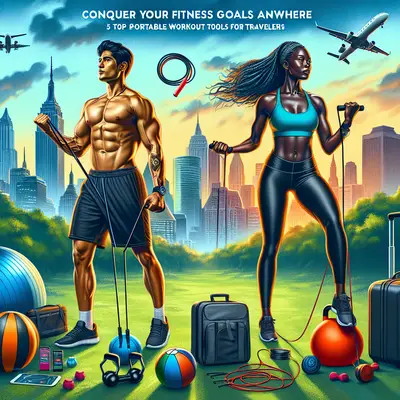
Start with resistance bands: a set of loop bands (mini bands) and one or two long tube bands with handles can mimic many cable machine movements while weighing less than a water bottle. Add a lightweight jump rope for conditioning—it coils into any side pocket and instantly turns parking lots, rooftop terraces, or quiet streets into cardio zones. A compact suspension trainer (or strong yoga strap style system) anchors to doors, beams, or playground bars and lets you pull, push, and hinge your way through a full-body session.
If weight allows, consider a foldable ab wheel or a pair of travel-friendly push-up bars; they’re small but dramatically increase core and upper-body challenge. Your smartphone becomes your timer, interval coach, and rep counter, so keep a minimal set of favorite workout notes or apps saved offline for those no-WiFi days. When you’re ruthless about multi-use gear, you carry less but do more—and that’s the whole point of a portable setup.
Choosing Gear for Different Types of Trips
Not every journey needs the same setup. The gear you pack for a minimalist backpacking loop is different from a month-long work trip with checked luggage and stable Wi-Fi.
For ultralight backpacking or carry-on-only travel, aim for “barely-there but brutally effective” tools. Mini loop bands plus a long resistance band, a speed rope, and your bodyweight can keep you strong for weeks. These weigh next to nothing and don’t set off extra questions at airport security. When you’ve got a bit more space—like checked luggage or slow travel—upgrade with a compact suspension trainer and maybe a collapsible foam roller or massage ball for recovery.
Match gear to your environment too. If you’ll be in cities with plenty of parks, playgrounds, and sturdy railings, a suspension trainer shines because you’ll find anchor points everywhere. Spending most of your time in small guest rooms or hostels? Bands and floor-based bodyweight training are easier and keep a low profile. For digital nomads posting up for months in one place, it can even make sense to buy a modest kettlebell or adjustable dumbbell locally and sell or donate it before you move on. Let the demands of your route, not your Instagram feed, decide what you carry.
Five Field-Tested Fitness Tips for Travelers and Nomads
1. Make Your Pack Part of the Workout
Your travel pack is essentially a weird-shaped sandbag—use it. Load it with clothes, books, or water bottles and turn it into a resistance tool when you have no other weight. Bear-hug the backpack for squats, press it overhead for shoulder strength, or row it from a hip hinge position for back work. For extra stability training, wear the pack and perform step-ups on a stable bench, curb, or low wall, focusing on slow, controlled movement and a strong core.
The key is consistency in what you load inside so you roughly know its weight across trips. If you’re often near clean tap water, fill bottles or collapsible containers to standardize the load (1 liter of water ≈ 1 kilogram / 2.2 pounds). Use this “field weight” when planning sets and reps, just like you would with a dumbbell.
2. Anchor Bands Anywhere (Safely)
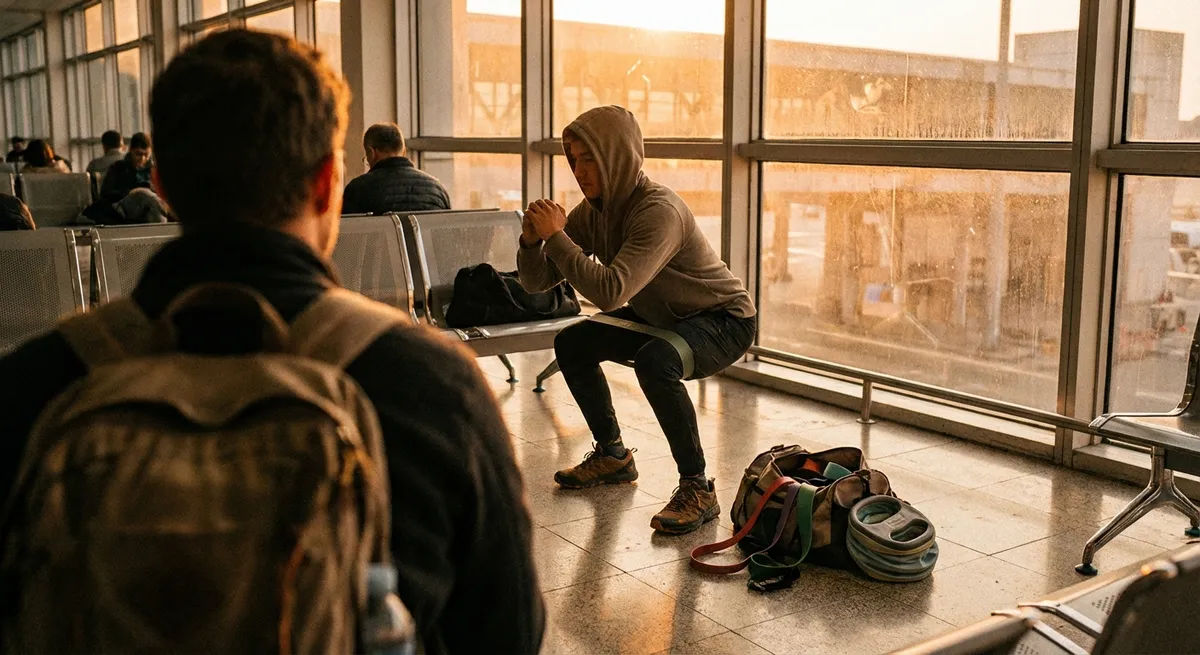
Resistance bands are only as good as their anchor. Look for solid, non-sharp structures: thick door frames, railings, tree trunks, sturdy bed frames, or structural columns. Use a purpose-built door anchor when attaching bands indoors—close it on the hinge side of the door so it can’t be yanked open mid-set. Outdoors, loop bands around smooth posts or trees at chest or hip height for rows, presses, and rotations.
Treat band work like strength training, not just rehab. For upper body, pair banded rows with banded presses and face pulls; for lower body, think banded deadlifts, good mornings, and lateral walks. Step away slowly to create tension rather than jerking into position, especially in cramped spaces. A snapped band in a hostel at 6 a.m. is no one’s favorite memory.
3. Use “Travel Intervals” to Outsmart Jet Lag
Long flights, bus rides, or late-night work sessions can wreck your energy. Short interval workouts, especially with portable gear, help reset your system and sharpen your brain without leaving you wrecked for tomorrow’s hike or client call. Think micro-sessions: 10–15 minutes of focused work, high intent, and then you’re done.
For example, pick three portable moves and cycle them: 30 seconds of jump rope, 30 seconds of banded rows, 30 seconds of squats or lunges, followed by 30–60 seconds of rest. Repeat for 5–8 rounds. This structure fits into layovers, early mornings, or pre-dinner windows and is easy to scale up or down depending on how you feel. Keep the focus on crisp technique, not annihilation—you’re training to explore more, not to crawl back to your bunk.
4. Build a Simple “Anywhere” Strength Circuit
Use your portable kit to cover push, pull, hinge, squat, and core in one tight circuit that works almost anywhere. Here’s a framework you can adapt with whatever gear you packed:
- Push: Push-ups (floor, incline on bed/bench, or with push-up bars)
- Pull: Band rows or suspension trainer rows
- Hinge: Banded good mornings or backpack deadlifts
- Squat/Lunge: Bodyweight squats, split squats, or backpack goblet squats
- Core: Plank variations or banded anti-rotation holds
Do 8–12 controlled reps of each (20–30 seconds for holds), move from one to the next with minimal rest, then rest 60–90 seconds after the full circuit. Run through 3–5 rounds depending on time and energy. This structure turns almost any space—a guesthouse patio, a quiet corner of a co-working space, or a campsite clearing—into a functional training zone.
5. Pack One Recovery Tool and Actually Use It
Portable fitness isn’t just about grinding; it’s also keeping your body able to handle more mileage, more stairs, and more surprise adventures. A single recovery tool can save your joints and sleep. A lacrosse ball or small massage ball is ultralight and brutal in the best way: roll out your feet after city marathons in flip-flops, work on glutes and hips after long bus rides, or ease upper-back tension from hours at the laptop.
If space allows, a compact travel foam roller or inflatable roller pad is worth its grams on longer trips. Combine this with simple mobility flows—hip openers, thoracic spine rotations, and ankle circles—to keep your joints moving well. A body that recovers fast lets you seize last-minute invites to sunrise hikes, surf sessions, or late-night food crawls without hesitation.
Turning Any Stop into a Training Ground
Portable equipment is less about owning clever gadgets and more about refusing to let your environment dictate your capacity. A couple of bands, a rope, and your own backpack can keep you ready for mountain trails, city staircases, and unpredictable days on the road. Instead of hunting for the “perfect” hotel gym, you learn to scan each new place for anchors, open space, and creative options.
Every border crossing becomes a chance to refine your setup, trim dead weight, and double down on tools that earn their place. Stay curious, train light but smart, and let your gear work as hard as your passport.
Sources
- [American Council on Exercise – Resistance Band Training 101](https://www.acefitness.org/resources/everyone/blog/7442/ace-sponsored-research-resistance-band-training/) - Research and guidance on the effectiveness and safety of resistance band workouts
- [Harvard Health Publishing – Interval Training for a Stronger Heart](https://www.health.harvard.edu/heart-health/interval-training-for-a-stronger-heart) - Explains benefits of interval-style training, useful for time-efficient travel workouts
- [Mayo Clinic – Exercise: 7 Benefits of Regular Physical Activity](https://www.mayoclinic.org/healthy-lifestyle/fitness/in-depth/exercise/art-20048389) - Overview of why maintaining regular movement (even while traveling) matters for health
- [CDC – Physical Activity Guidelines for Adults](https://www.cdc.gov/physicalactivity/basics/adults/index.htm) - Official recommendations on weekly activity levels to aim for on the road
- [Cleveland Clinic – Foam Rolling: What It Is and How It Helps](https://health.clevelandclinic.org/foam-roller-benefits) - Evidence-informed benefits of using rollers and similar tools for recovery
Key Takeaway
The most important thing to remember from this article is that this information can change how you think about Portable Equipment.