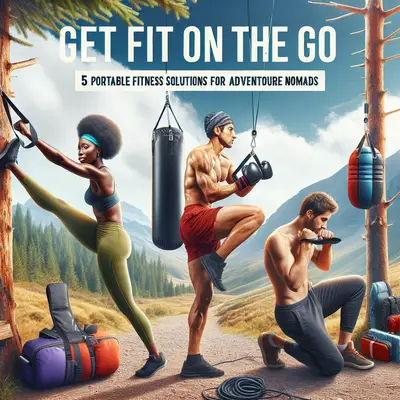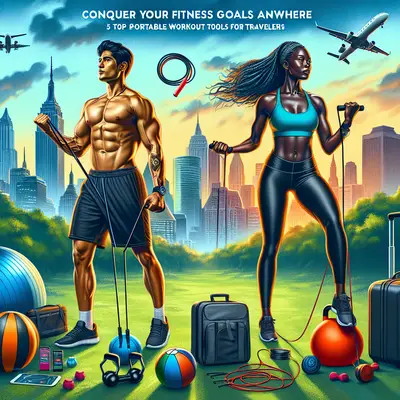
Adventure doesn’t wait for leg day. Whether you’re chasing surf in Portugal, client calls in Chiang Mai, or a sunrise train through Europe, your body is the one piece of gear that has to perform every single day. The catch: airport security, tiny rentals, and constant movement can make “fitness routine” feel like a fantasy. This is where a well-built portable kit turns your backpack into a mobile micro-gym—and your travel days into training days.
This guide shows you how to turn minimal gear into maximum strength, stamina, and resilience—without sacrificing carry-on space or adventure time.
Designing Your Mobile Micro-Gym
Think of your portable equipment like a climber’s rack: a carefully chosen set of tools that unlock a lot of terrain. Your goal isn’t to carry a gym; it’s to carry leverage—small items that multiply your training options.
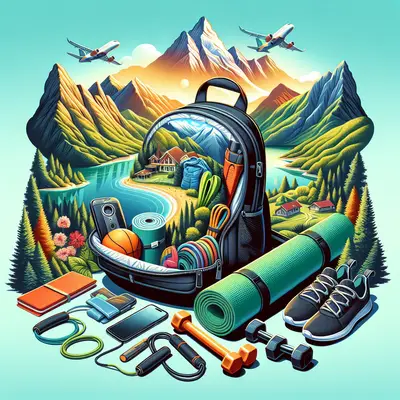
Start with one or two resistance tools that do heavy lifting: a pair of light–medium resistance bands or a suspension trainer. These let you mimic pulls, presses, and rows without dumbbells. Add one “surface” tool, like a compact travel yoga mat or foldable exercise mat, so you can train in hostel dorms, patios, or airport corners without grinding your knees or palms into questionable flooring. Finally, round out your kit with one recovery piece—lacrosse ball, mini massage ball, or a small roller—to keep your joints and soft tissue ready for the next sprint, hike, or red-eye.
Weight and volume are your main constraints. Prioritize gear that compresses flat, weighs under 2 kg total, and passes easily through airport security. If a piece of equipment doesn’t give you multiple movement options, it probably doesn’t earn a spot in your carry-on.
Core Gear That Punches Above Its Weight
Building a powerful, portable setup is about intelligent overlap: every piece should cover gaps the others miss.
- Long resistance bands (loop or tube)
These turn any sturdy anchor—door, tree, bed frame—into a cable machine. Think rows, presses, face pulls, hip thrusts, and assisted pull-ups if you find a bar. Choose at least two resistances: one lighter for shoulders and mobility, one heavier for legs and pulling.
- Mini resistance bands (booty bands)
Barely bigger than a wallet, they fire up glutes and hips, which often go dormant during long sits on planes and buses. Use them for lateral walks, hip thrusts, clamshells, and squat variations to keep knees and low back happy on long treks.
- Suspension trainer (or DIY straps)
A simple set of adjustable straps with handles hooks to doors, beams, playground equipment, tree branches, or hostel bunks. You get rows, push-ups, single-leg squats, core work, and angle-adjustable resistance just by moving your feet closer or farther.
- Travel mat or mat alternative
If a dedicated mat feels like too much, pack a thin microfiber towel or compact camping pad. Your willingness to train goes up when your knees and spine aren’t grinding into tile, concrete, or mystery carpet.
- Compact recovery tools
A lacrosse ball weighs almost nothing and becomes your roaming physio. Roll out tight hips after flights, decompress upper back tension from laptop hours, and keep your calves from locking up after long city days.
When in doubt, choose versatility over novelty. A single sturdy band and your bodyweight can deliver more than a suitcase of gimmicky travel gadgets.
Five Adventure-Ready Fitness Tips for Travelers and Nomads
These tips assume your life is fluid: changing time zones, inconsistent sleep, and irregular access to workout spaces. The goal is consistency with minimal friction.
1. Train to Time, Not to a Schedule
Forget “Monday: chest day.” Travel days rarely respect your plan. Instead, use training windows and durations.
Pick a minimum effective dose—say, 15–20 minutes, 3–5 times per week. Slot it into natural breaks: post-check-in, post-lunch, or after your first coffee. If you miss the morning, your rule becomes: “Next time I’m in my room with 20 free minutes, I train.”
A sample 20-minute anytime circuit with one band:
- 8–12 band rows
- 8–12 push-ups (floor or incline)
- 10–15 squats or split squats
- 20–30 seconds plank
- 8–12 band pull-aparts
Cycle through 3–4 rounds. No gym, no excuses, no rigid clock.
2. Link Workouts to Daily Anchors
Nomad life often nukes routine, so anchor your training to events that always happen: waking up, showering, brushing your teeth, starting work, or closing your laptop.
Examples:
- “After I make my morning coffee, I do 10 minutes of mobility and band work.”
- “After I check into a new place, I set up my gear and do one short session.”
- “After my last work call, I’ll train for 15 minutes before dinner.”
This habit-stacking approach turns workouts into reflexes, not decisions. The fewer decisions you make on the road, the more energy you keep for actual adventure.
3. Use Environments as Equipment
Your surroundings are training partners if you’re willing to improvise.
- Parks & playgrounds: pull-up bars, steps, monkey bars, benches—perfect for rows, dips, step-ups, and core work.
- Stairs & hills: built-in interval machines. Jog up, walk down; repeat for 8–12 minutes.
- Hotel rooms & Airbnbs: sturdy doors for bands or suspension trainers, chairs for Bulgarian split squats, countertops for incline push-ups.
- Beaches: perfect for barefoot stability work, sprints, and loaded carries using water jugs or packed backpacks.
Treat each new location as a puzzle: “How many movements can this space give me?” Your portable gear then plugs the gaps a location can’t solve on its own.
4. Prioritize Compound Moves and Travel-Proof Mobility
When time and energy are low, train movements that give you the biggest return:
- Push patterns: push-ups, band presses, dips on stable chairs or benches
- Pull patterns: rows with bands or suspension trainer, inverted rows under a sturdy table, pull-ups on bars/branches if available
- Hip-dominant moves: hip hinges, single-leg Romanian deadlifts (with or without bands), hip thrusts on beds or sofas
- Knee-dominant moves: squats, lunges, step-ups on stairs or benches
- Core stability: planks, side planks, dead bugs, anti-rotation band holds
Pair this with a short, reliable mobility sequence you can repeat daily: ankle circles, hip openers, thoracic rotations, and shoulder dislocates with a band or towel. Mobility keeps you hiking, surfing, and hauling backpacks without your joints revolting.
5. Build a “Red-Eye Recovery” Ritual
Travel will occasionally smash your sleep and energy. On those days, your workout should switch from “performance” to “maintenance and repair.”
Have a 10–15 minute fallback protocol:
- 2–3 minutes of easy breathing (4–6 seconds in, 4–6 seconds out, through the nose if possible)
- Gentle band-assisted stretches for hip flexors, hamstrings, chest, and lats
- 1–2 minutes of soft-tissue work with a ball on glutes, upper back, and calves
- 5 minutes of ultra-light movement: bodyweight squats, cat-cow, arm circles, and slow, controlled lunges
You’re not chasing a sweat; you’re rebooting your nervous system and keeping the “I’m someone who moves” identity intact, even on the ugliest travel days.
Packing Strategy: Fitting Strength into Your Carry-On
A smart packing system makes your gear feel invisible until you want it.
Store your equipment in a dedicated drawstring bag or packing cube. This way, you can toss it at the foot of your bed or next to your desk as a visual cue to train. Choose neutral colors if you’ll be using bands or straps in shared spaces; being low-key keeps you more likely to actually use them in hostels or co-working spots.
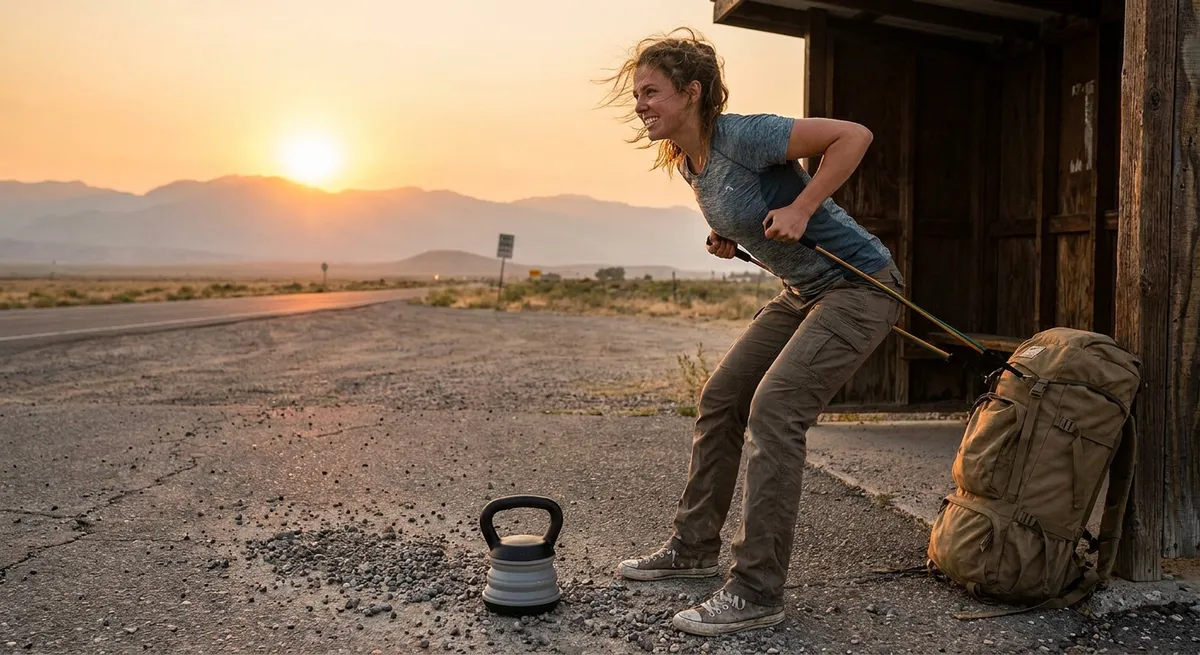
Distribute heavier items near the spine of your backpack or suitcase to maintain balance when sprinting through airports. If you’re traveling long-term, consider buying “disposable” heavy items (like a cheap kettlebell or sandbag) locally in places where you’ll stay longer, then sell or donate them when you leave.
Finally, mentally categorize your gear:
- Non-negotiables: items you always pack (e.g., bands, mini band, lacrosse ball).
- Nice-to-haves: things you bring only on trips where space and weight allow (e.g., suspension trainer, travel mat).
By deciding this once, you reduce decisions before every trip—and keep your mobile micro-gym ready to deploy anywhere.
Conclusion
A strong, resilient body is the best travel adapter you’ll ever pack. With a few strips of rubber, a couple of straps, and your own bodyweight, you can turn cramped hotel rooms, city parks, train platforms, and beach sunsets into training grounds.
You don’t need perfect conditions; you need a portable system and a handful of non-negotiable habits. Build your mobile micro-gym, train to time instead of a rigid schedule, and let the road become part of your strength—not an excuse to lose it.
Sources
- [American Council on Exercise (ACE) – Resistance Bands: The Portable Gym](https://www.acefitness.org/resources/pros/expert-articles/6777/resistance-bands-the-portable-gym/) - Overview of resistance band benefits, exercise options, and practical use cases
- [Mayo Clinic – Fitness Basics: Building a Balanced Routine](https://www.mayoclinic.org/healthy-lifestyle/fitness/in-depth/fitness/art-20048269) - Explains key movement patterns and components of an effective, efficient workout plan
- [Harvard Health – The Importance of Stretching](https://www.health.harvard.edu/staying-healthy/the-importance-of-stretching) - Details why mobility and flexibility work matter, especially for people who sit or travel frequently
- [Cleveland Clinic – How to Work Out with Limited Time](https://health.clevelandclinic.org/no-time-to-exercise/) - Discusses time-efficient workouts and why short sessions still provide meaningful health benefits
- [NIH – Physical Activity Guidelines for Americans](https://health.gov/our-work/nutrition-physical-activity/physical-activity-guidelines) - Provides evidence-based recommendations for weekly activity levels and intensity
Key Takeaway
The most important thing to remember from this article is that this information can change how you think about Portable Equipment.