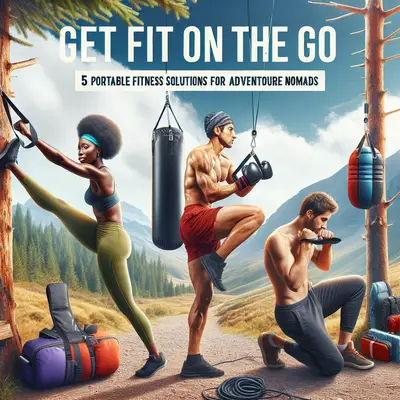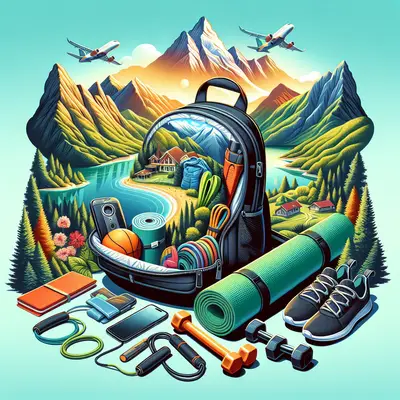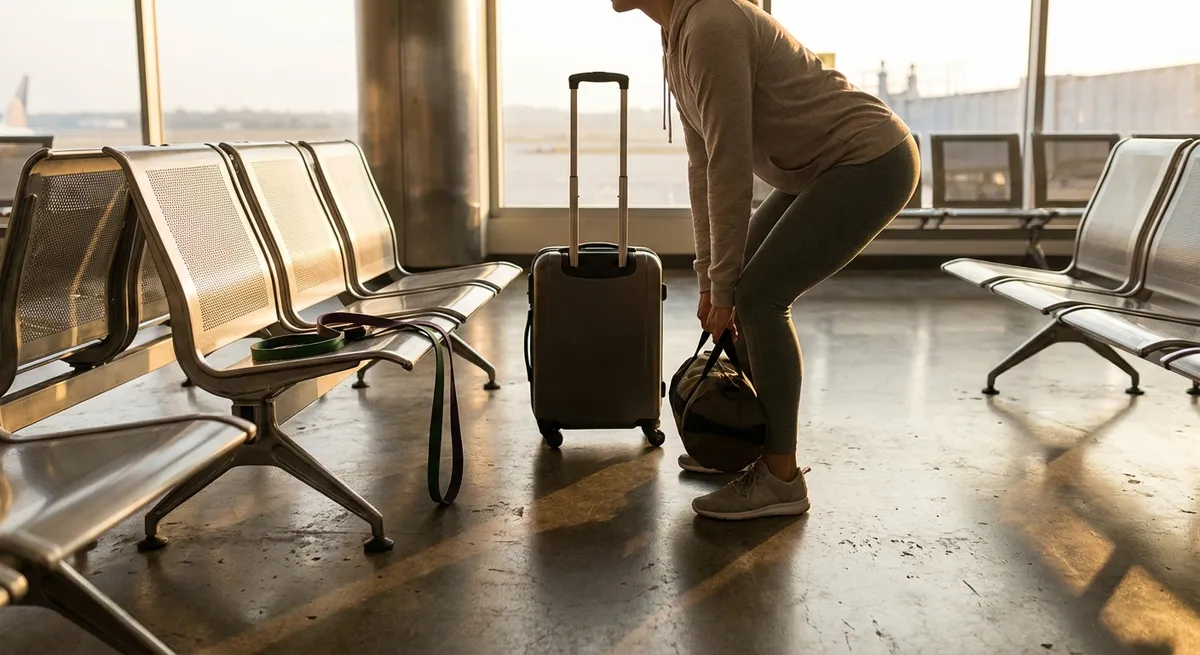
Your boarding pass doesn’t have to be a break-up letter with your fitness. If you’re hopping borders, chasing Wi‑Fi, or living out of a backpack, you can still build a body that keeps up with your passport. Portable equipment has evolved way beyond squeaky hotel dumbbells—today’s travel‑ready tools pack serious performance into carry‑on space. This guide shows you how to turn tiny gear into big results, plus five adventure-proof tips to stay strong wherever you land.
Build a “Go-Bag” Gym That Fits Under an Airplane Seat
Think of your portable equipment as a mission kit, not random gadgets. Every piece you carry should earn its weight by being:
- Multi-use (one tool, many exercises)
- Durable (survives sand, sweat, and overhead bins)
- Packable (fits in a daypack with room for your laptop)
Smart staples for a travel-ready “go-bag”:
- Mini resistance bands (loop bands): Feather-light, perfect for glute activation, shoulder warm-ups, and rehab-style work in tiny spaces.
- One long resistance band (pull-up or tube band): Your substitute for cable machines—rows, presses, pulldowns, assistance for pull-ups, and even mobility drills.
- Lightweight suspension trainer (or DIY with strong webbing/straps): Anchors to doors, beams, or trees for full-body strength with bodyweight leverage.
- Packable jump rope: Fits in a pocket, delivers intense conditioning, coordination, and footwork in minutes.
- Travel-friendly massage ball or small peanut roller: For working out knots from long flights and cramped bus rides.
Pack your gear in a small pouch inside your main bag so you always know exactly where your “gym” is. If it takes more than 60 seconds to set up, you won’t use it after a 12‑hour travel day. Your goal: you land, you unpack a laptop and a gym—no excuses, no drama.
Dial in Your “Anywhere” Strength Plan
Portable gear shines when you stop thinking in terms of machines and start thinking in movement patterns. If your setup lets you push, pull, hinge, squat, and carry in some form, you’re covered.
Use your portable equipment to hit these categories:
- Push: Band chest presses, push‑ups with your feet in suspension straps, band overhead presses.
- Pull: Band rows around a column, assisted pull-ups with a heavy band, suspension trainer rows from a door.
- Legs: Band-resisted squats, split squats with back foot in a strap, banded hip hinges or good mornings.
- Core: Suspended plank variations, band-resisted anti-rotation presses (Pallof presses), slow mountain climbers with feet in straps.
- Conditioning: Jump rope intervals, band-resisted sprints in a park, fast-paced bodyweight circuits.
Structure a simple template you can plug into any location:
- Warm-up (5–8 minutes): Mini-band glute bridges, band pull-aparts, arm circles, easy rope skipping or brisk walking.
- Strength block (15–20 minutes): 3–4 exercises covering push, pull, legs, core. Perform 3–4 rounds, 8–15 reps each, resting briefly between movements.
- Finisher (5–10 minutes): Jump rope intervals, a fast band circuit, or suspension trainer core work.
When your plan is pattern-based instead of equipment-based, it stops mattering whether you’re in a micro‑apartment in Lisbon or a guesthouse in Chiang Mai—you just adapt the tools and angles to the space.
Tip 1: Treat Your Portable Gear Like a Non-Negotiable Essential
If your resistance bands are “optional,” they’ll be the first thing you ditch when you’re rushing to the airport at 5 a.m. Put your training tools in the same mental category as your passport and laptop: non‑negotiable.
Practical ways to lock this in:
- Pack your main band and mini-band in your personal item, not your checked bag. If luggage gets delayed, you still have your gym.
- Choose gear that passes security smoothly—no metal handles, no weird-looking hardware. Plain bands, soft straps, and a basic jump rope are rarely an issue.
- Keep your gear in a high-visibility pouch so you see it every day in your accommodation. If it’s buried under clothes, it may as well be back home.
You’ll be surprised how much more often you train when your equipment is literally staring at you while you open your bag.
Tip 2: Pair Short Workouts with Strong Cues in Your Day
Travel and nomad life wreck routines. Time zones shift, coworking spaces change, and “I’ll work out later” gets lost between visa runs and sunset beers. The solution: attach short, portable workouts to existing anchors in your day.
Examples that work well:
- After your first coffee: 15 minutes of band and bodyweight work before you open your laptop.
- Post-work shutdown: As soon as you close your laptop, you clip your suspension trainer to the door and move for 20 minutes.
- New city ritual: On your first morning in a new place, you do a full-body band session. It becomes part of your arrival routine, like finding Wi‑Fi and buying a SIM.
You’re aiming for frequency over heroics. Three or four 20-minute sessions with bands and a suspension trainer most weeks will keep your strength and mobility far better than one intense gym session squeezed in between flights.
Tip 3: Use Bands to Battle “Travel Posture”
Planes, buses, and hours on laptops can do more damage than skipping a leg day. Portable gear is perfect for undoing the rounded shoulders and tight hips that come with constant motion.
Build a quick “posture reset” you can run with your bands:
- Mini-band lateral walks: Wake up glutes that go dormant from sitting.
- Band pull-aparts and face pulls: Strengthen upper back and rear shoulders to counter rounded posture.
- Band-assisted deep squat holds: Use a band anchored in front of you to sit into a deeper, more supported squat, opening ankles, knees, and hips.
- Band chest stretch and overhead stretch: Wrap the band around a sturdy object and lean into it to open your chest and shoulders.
Run this circuit for 5–10 minutes after long travel days or heavy laptop sessions. You’re not just “stretching”—you’re using resistance to retrain your body to hold itself better despite the chaos of transit and remote work.
Tip 4: Turn Minimal Space Into Maximum Leverage
You don’t need a balcony or a rooftop gym. Most portable equipment is designed to thrive in tiny, awkward spaces—you just need a few hacks:
- Door anchors: Many suspension trainers and bands come with door anchors. Always test the door: it should close toward you and lock solidly. Set up inside the doorframe to avoid surprises if someone tries to enter.
- Furniture anchors: Heavy tables, bed frames, stair railings, or sturdy balcony railings can become anchor points for bands. Protect the band from sharp edges with a towel or sock if needed.
- Body as anchor: You can loop bands under your own feet, around your back, or around your hips while your hands hold the ends, turning yourself into the cable machine.
Think in angles: if you can step farther from the anchor point, you increase tension. If you change your body angle (more horizontal for rows, more vertical for presses), you change difficulty. This lets you scale resistance in a cramped studio with nothing more than a door, a band, and your body weight.
Tip 5: Program “Maintenance Phases” Instead of Maxing Out on the Road
Portable equipment is fantastic for maintaining—and sometimes even building—strength, but travel conditions aren’t ideal for max testing or aggressive bulking. Instead of fighting reality, plan maintenance-focused phases for your heaviest travel stretches.
How to do this intelligently:
- Keep intensity moderate to high, but use higher reps (8–20) with bands, bodyweight, and suspension work instead of chasing 1–3 rep maxes.
- Focus on joint health and movement quality: control tempo, emphasize full range of motion, and add isometric holds.
- Use RPE (Rate of Perceived Exertion): finish most sets around 7–8/10 effort—challenging but with a rep or two left in the tank.
- When you land somewhere with a good gym for a few weeks, you can switch into a heavier lifting block, then slide back to portable gear maintenance when you start moving again.
This approach keeps your connective tissues happy, your strength surprisingly solid, and your training sustainable across long stints of flights, buses, and constantly changing environments.
Conclusion
Your training doesn’t have to depend on finding the perfect gym in every city. With a small arsenal of portable equipment and a handful of smart habits, you can turn any landing—hostel, homestay, airport hotel, or coworking loft—into functional training ground. Treat your gear like essential travel tech, tether your workouts to daily rituals, and use bands and straps to fight off travel posture and energy slumps.
The goal isn’t to live in “maintenance mode” forever; it’s to stay strong, mobile, and adventure-ready enough that when the next peak, surf break, or last-minute side trip shows up, your body says “let’s go” instead of “no chance.”
Sources
- [American Council on Exercise – Resistance Band Training 101](https://www.acefitness.org/resources/everyone/blog/7639/resistance-band-training-101/) - Overview of benefits, safety, and exercise ideas for resistance bands
- [Mayo Clinic – Exercise: 7 Benefits of Regular Physical Activity](https://www.mayoclinic.org/healthy-lifestyle/fitness/in-depth/exercise/art-20048389) - Evidence-based benefits of consistent exercise, relevant for staying active while traveling
- [Harvard Health – Why Strength Training Is So Important](https://www.health.harvard.edu/staying-healthy/why-strength-training-is-so-important) - Explains the health and longevity impact of regular strength work, even with minimal equipment
- [Cleveland Clinic – Jump Rope Workout Benefits](https://health.clevelandclinic.org/jump-rope-workout) - Details on the cardiovascular and conditioning benefits of jump rope as a portable training tool
- [NHS (UK) – How to Sit Correctly](https://www.nhs.uk/live-well/healthy-body/how-to-sit-correctly/) - Guidance on posture that aligns with using portable equipment to counteract travel and desk strain
Key Takeaway
The most important thing to remember from this article is that this information can change how you think about Portable Equipment.