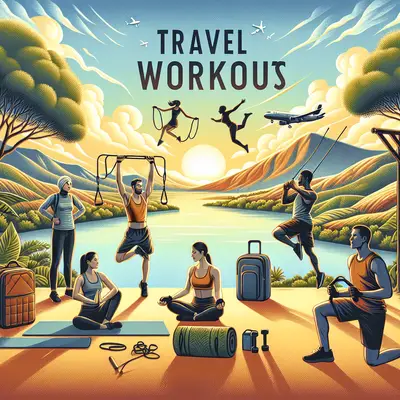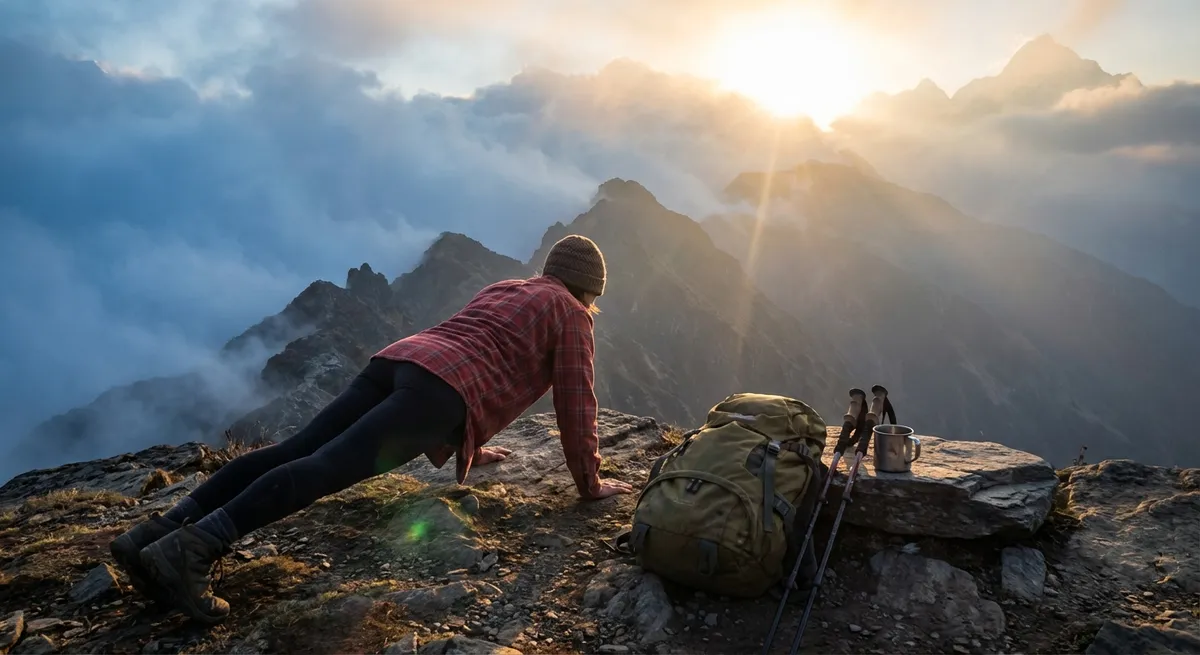
Your passport is full, your calendar is a mess, and your body is… somewhere between “desk potato” and “airport sprinter.” If you’re living out of a backpack or hopping time zones for fun or work, you don’t need a perfect gym—you need a body that can keep up. Travel doesn’t have to be the excuse that ruins your fitness. Done right, it becomes resistance training with better scenery.
This guide is built for digital nomads, long-haul travelers, and anyone whose “home base” is a locker, hostel bed, or hotel room. No bulky equipment, no 90-minute routines—just portable, practical tactics that fit between boarding calls, client calls, and checkout times.
Tip 1: Build a “Micro-Workout Map” Into Every Travel Day
Instead of waiting for a magical 60-minute workout window that never shows up, treat your whole day as a training ground. Pick specific “anchors” you know will happen—wake-up, coffee, lunch, check-in, brushing teeth—and attach 2–5 minute mini-workouts to them. For example, 15 squats after brushing your teeth, a 60-second wall sit before your shower, or 10 push-ups every time you open your laptop for a work block. String these together and you’ve quietly logged serious work without needing a gym.
This approach is especially useful when you’re jet-lagged or mentally fried from travel. You don’t have to motivate yourself for a long session—just a tiny block of effort. Over a week, these micro-moments stack into dozens of sets. In tight hotel rooms, airport corners, or tiny Airbnb studios, you always have space for a micro-session. Think of it as “stealth training”—no one notices, but your body does.
Tip 2: Turn Your Backpack Into a Mobile Training Tool
Your backpack is more than a gear hauler—it’s a portable weight set. Load it with what you already carry (laptop, chargers, water bottle, book, extra clothes) and you’ve got a rugged training tool that goes wherever you do. Use it for backpack squats (hug it to your chest), backpack deadlifts (hinge at the hips, keep spine long), overhead presses (if it’s light enough), and single-arm rows (brace one hand on a bed or chair and row the pack with the other hand).
Adjust the difficulty by adding or removing items. If you’re staying put for a few days, fill the bag with water bottles or local groceries for extra weight. In small rooms, stand in place and cycle through squats, lunges, rows, and presses with the pack. Outdoors, combine backpack strength moves with brisk walking or stair climbs. Your backpack doesn’t count against your “gear allowance” because you’re carrying it anyway, and it automatically keeps your workouts real-world and functional.
Tip 3: Use Stairs and Hills as Your Built-In Cardio Machine
You don’t need a treadmill when every city still has gravity. Stairs and hills are brutal, joint-friendly cardio tools that exist in almost every destination. In a hotel, use emergency stairs for short, intense climbs: walk one flight, jog one, or power up three floors and walk down to recover. In a new city, find a hill, temple steps, or a pedestrian overpass and do repeats: climb hard, walk back down, repeat until your legs and lungs are awake.
These sessions are perfect when time is tight—10 to 20 minutes of stair or hill repeats can match or beat a longer, flat session. They also double as practical training for travel: you’re literally building the strength and conditioning you need to haul your pack, sprint for connections, or explore on foot all day. Just keep your form tight—short steps, upright posture, and full-foot contact on each step—to protect your knees and ankles while you chase that “I earned this view” feeling at the top.
Tip 4: Lock In a No-Excuse Bodyweight Circuit
When Wi-Fi drops, your schedule gets nuked, or your energy is low, you need a go-to routine you can run on autopilot. Design a simple, equipment-free circuit you can do in almost any space—hostel hallway, airport hotel, campsite clearing, or balcony. A solid, travel-proof example: push-ups, squats, hip hinges (good mornings), lunges, glute bridges, and plank holds. Pick a number of reps or a time (e.g., 30 seconds on, 15 seconds off) and cycle through.
The power of a “default circuit” is that you don’t have to decide what to do; you just press play on a habit. Keep it short enough that “I don’t have time” doesn’t stick—10–15 minutes is enough to wake your muscles, keep joints moving, and maintain that mental identity of “I’m someone who trains, no matter where I am.” Over time, tweak the circuit to match your goals: add tempo (slower lowering), pauses at the bottom of reps, single-leg variations, or explosive moves like squat jumps if your space and neighbors allow it.
Tip 5: Train for the Way You Actually Travel
Travel has its own movement patterns: long sits, bag carries, awkward overhead reaches, and occasional “run or miss the train” sprints. Shape your training around those realities. Prioritize hip mobility (lunges, deep squats, hip circles), upper-back strength (rows, reverse flys with your backpack), and core stability (planks, side planks, dead bugs) to counteract hours in seats. Practice “travel sprints” by doing short, hard intervals of fast walking or light jogging—30 seconds on, 60 seconds off—for 5–10 rounds.
If you mostly work from a laptop, train anti-hunch moves daily: chest openers against a door frame, wall slides for your shoulders, and thoracic spine rotations on the floor. If you carry heavy bags, add farmer’s carries: grab your backpack or suitcase and walk for 30–60 seconds with tall posture and tight core. This style of training doesn’t just make you “fit”—it makes you more resilient to cramped flights, heavy carry-ons, and nonstop exploring, so you arrive at each new location ready to enjoy it instead of needing a recovery day.
Conclusion
Your fitness doesn’t have to wait for the perfect gym, the right schedule, or the end of your trip. The road itself can be your training partner if you learn to see stairs as cardio, backpacks as weights, and ordinary moments as chances to move. The goal isn’t to run a flawless program—it’s to stay strong, mobile, and ready for whatever your next border crossing, business meeting, or mountain trail throws at you.
Pack your laptop, your passport, and one more thing: the decision that movement is non-negotiable, no matter where you sleep tonight. The world is your workout—go explore it stronger.
Key Takeaway
The most important thing to remember from this article is that this information can change how you think about Travel Workouts.