If a single viral post can make 23 million people nerd out over “things they just learned,” you know the world is changing fast. That’s exactly what’s happening in the r/TodayILearned-style communities highlighted in the trending article “30 Facts From An Online Group Where People Post The Most Interesting Things They Learn.” We’re living in a golden age of micro-innovation—tiny, intelligent gear that does more and weighs less. And for travelers and digital nomads, that shift isn’t just fun trivia. It’s freedom.
Every year, more of your old “must‑have” gadgets quietly join the museum of obsolete tech: Discman, travel DVD player, chunky power bricks, even full‑size laptops for many remote workers. In their place? Pocket‑sized chargers that think, collapsible gyms that disappear into your backpack, and smart wearables that outwork an entire drawer of gear. If you’re living out of a carry‑on and a daypack, this isn’t a tech curiosity—it’s your survival strategy.
Below, we’ll ride that wave of change and turn it into something you can toss into your bag today: clever, portable equipment ideas plus 5 field‑tested fitness tips for staying strong, mobile, and adventure‑ready wherever you log in.
1. Pocket‑Sized Power Stations: The New Core Of Your Mobile Camp
The same internet that loves sharing mind‑blowing facts also loves brutally exposing bad gear. Scroll any travel or digital nomad thread and you’ll see one constant: people hate running out of power. The good news? Today’s ultra‑compact power banks and chargers are the natural evolution of all those “world has changed so much” posts—fewer cables, more juice, less weight.
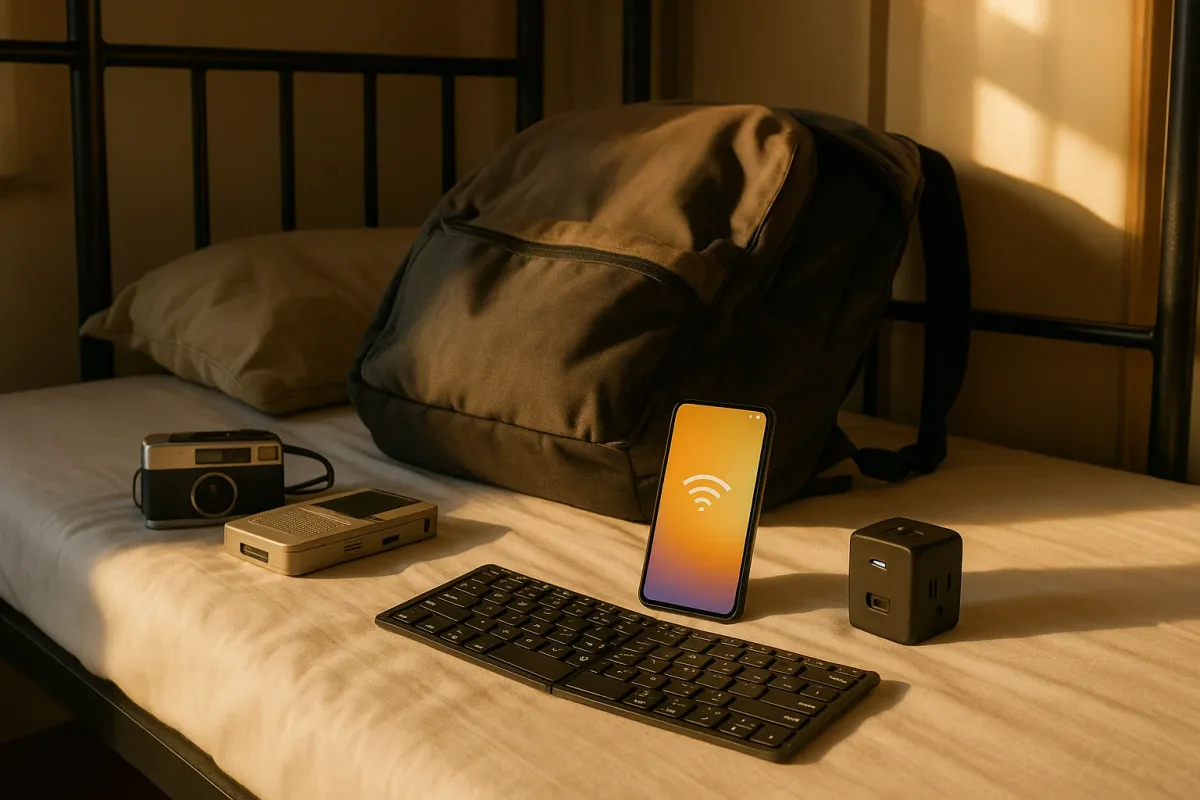
Look for a GaN (gallium nitride) travel charger: they’re dramatically smaller and cooler‑running than the old bricks. A 65W or 100W GaN charger from brands like Anker, UGREEN, or Baseus can fast‑charge your laptop, phone, and earbuds from one tiny hub. Pair that with a 10,000–20,000mAh power bank that supports USB‑C PD (Power Delivery), and you’ve essentially built a portable wall socket that fits in your jacket pocket. That’s not just convenience—it’s training freedom: you can walk out of a café, power bank topped up, hit a park workout, and still have enough juice to upload client work afterward. Add one short USB‑C cable and one short Lightning/USB‑C phone cable, wrap them with a Velcro strap, and you’ve just replaced a tangled pouch of chargers with a palm‑size “power kit” you can move through airports, trains, and tuk‑tuks without thinking.
Fitness tip #1 – The Power‑Block Rule:
Whenever you plug in to charge (at a gate, hostel, café), use that time as a trigger for movement. Set a 10–15 minute “charge block” where you do:
- 20 bodyweight squats
- 10–15 incline push‑ups on a bench or wall
- 30–60 seconds of brisk walking or stair climbs
Repeat until your device hits your target percent. Your gear charges; your body does too.
2. Wearables As Your Invisible Coach (No Gym, No Problem)
Those “interesting facts” communities thrive because they surface patterns we’d otherwise miss. Wearables do the same thing for your body. Instead of guessing how fried you are after a red‑eye or a 12‑hour bus ride, your watch or ring quietly logs heart rate, HRV, sleep, and movement—and hands you the data.
A lightweight smartwatch or fitness band (Garmin, Apple Watch, Fitbit, COROS, Oura ring, etc.) is now as important for a nomad as a passport wallet. Modern wearables automatically track steps, stairs, heart rate zones, and even short bodyweight workouts. Many will nudge you when you’ve been sitting too long—perfect for deep‑work days hunched over a laptop in Chiang Mai or Lisbon. The key is to use this data strategically: if your sleep score tanks after a late‑night train and three espressos, schedule a mobility‑focused, low‑intensity day instead of trying to PR your hotel‑room HIIT.
Fitness tip #2 – The 5‑Country Baseline:
Set a simple baseline that must be met, no matter where you are—Asia, Europe, or stuck in an airport overnight:
- Minimum 7,000–8,000 steps
- At least 5 minutes of stretching or mobility
- One “micro‑workout” (see tip #3)
Track this in your wearable. Challenge yourself: keep a streak alive across 5 different countries or cities. The adventure becomes staying consistent through the chaos, not waiting for the chaos to end.
3. Micro Gyms: Resistance Bands, Cables, And The 3‑Item Rule
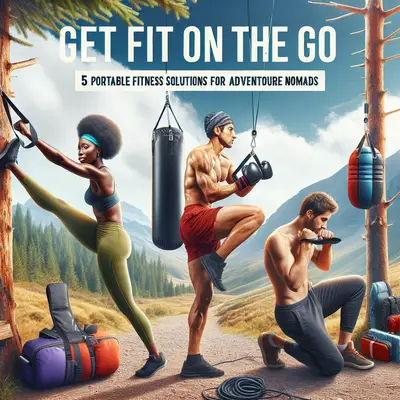
The flip side of all those “40 Obsolete Things” posts is this: gear is disappearing. For fitness‑minded travelers, that’s a win. Instead of lugging around a full gym bag, you can carry a 300‑gram training kit that covers strength, mobility, and conditioning.
Base your kit around three items:
- Long resistance band (looped) – Great for rows off a door, band‑assisted push‑ups, good mornings, and hip work.
- Mini loop bands – Perfect for glute activation, shoulder work, and turning hotel‑room squats into burners.
- Lightweight suspension strap or fabric gymnastics rings – Clips onto a door, tree, or stair rail for rows, push‑ups, single‑leg squats, and core work.
Together, they build a “micro gym” that fits in a packing cube. The magic is modularity: in a cramped Tokyo hotel, you might just use mini bands. In a Bali guesthouse courtyard, you can rig the suspension straps to a beam. On a layover, loop a band around a pillar in the terminal. You’re not hunting for a gym; you’re carrying one that adapts to whatever the road gives you.
Fitness tip #3 – The 12‑Minute Anywhere Circuit:
Use your micro gym to run this zero‑excuse session:
- 40 seconds band rows
- 40 seconds push‑ups or band‑assisted push‑ups
- 40 seconds squats or band‑resisted squats
- 40 seconds glute bridges with mini‑band
- 40 seconds plank or suitcase hold (using your backpack as weight)
- 40 seconds rest
Do 2 rounds for 12 minutes total. This slots neatly between client calls, boarding announcements, or pre‑dinner sunsets.
4. Luggage That Trains With You (Backpacks, Slings, And Packs As Weights)
Look at any “obsolete vs. modern” comparison and you’ll notice a trend: multi‑use wins. One‑trick devices vanish; the survivors do double duty. Your luggage should, too. A well‑designed, 25–35L travel backpack can be more than a carry system—it can be a training tool.
Choose one with solid straps, a sternum clip, and a stable profile (brands like Osprey, Peak Design, Aer, or Cotopaxi are popular with nomads). Packed at 7–12kg, it becomes a portable sandbag. Slings and small daypacks can be used for one‑arm rows or offset carries. Suddenly your “stuff” isn’t just dead weight—it’s resistance.
Fitness tip #4 – The Loaded Explorer Walk:
Turn transitions into training without looking like you’re doing a workout video in the terminal:
- Wear your backpack or travel pack fully loaded
- Walk 15–20 minutes at a purposeful pace
- Every minute, alternate:
- 20–30 seconds of walking stairs (up and down) if available
- Or 10–15 seconds of slow, controlled calf raises while standing in place
If you’ve got a smaller sling or daypack, use it for one‑sided carries: hold it in one hand for 1–2 minutes, switch sides, and keep walking. Core engaged, shoulders back. It looks like normal travel, but it trains your grip, core, and postural endurance—the exact things that break down on long travel days.
5. Analog Tools In A Digital World: Tiny Notebooks, Timers, And “Offline Mode” Workouts
As those viral threads love to remind everyone, not everything new is better. Some “obsolete” tools still punch far above their weight. A tiny notebook and pen can out‑perform any app when your phone’s dead, you’re in airplane mode, or you’re trying to escape distraction. For travel fitness, that matters more than you think.
Use a pocket notebook to log quick workouts, jot down new bodyweight variations you see in a park, or track your step counts when you don’t want to be glued to a screen. Pair it with a palm‑size digital timer or just a simple analog watch with a seconds hand. Now you can run timed intervals, EMOM (Every Minute On the Minute) sets, or breath‑focused walks without touching your phone. This “offline mode” is your insurance policy when Wi‑Fi is garbage, chargers are scarce, or you’re deliberately going off‑grid for a trek.
Fitness tip #5 – The Offline 3‑by‑3 Protocol:
When your tech is out of reach (or you want it to be), use this simple structure:
- Pick 3 movements: e.g., squats, elevated push‑ups, backpack rows
- Do each for 30–40 seconds, rest 20–30 seconds
- Complete 3 total rounds, resting 1 minute between rounds
Note the date, location, and how it felt in your notebook: “Lisbon hostel rooftop, windy, felt strong.” Over months, your notebook becomes a travelogue of training sessions—a living record that proves you didn’t just see the world; you carried your strength through it.
Conclusion
The headlines about “obsolete things” and the exploding popularity of “most interesting things I learned today” communities aren’t just nostalgia—they’re a reminder that what we carry, and what we know, is changing fast. For travelers and digital nomads, that’s a massive opportunity.
You don’t need a full‑size gym, a bag of bricks, or a tangle of old chargers to stay fit on the road. You need a smart power kit, a wearable coach, a micro gym, multi‑use luggage, and a couple of analog tools to keep you honest when the Wi‑Fi dies. Combine those with the five habits above, and your body stops being collateral damage of the lifestyle—and becomes the engine that lets you say “yes” to the next overnight bus, mountain trail, or last‑minute flight.
The world is moving on. Let your gear—and your fitness—move with it.
Key Takeaway
The most important thing to remember from this article is that this information can change how you think about Portable Equipment.