Every trip has a weight limit, but your strength doesn’t have to. Whether you’re chasing Wi‑Fi in a mountain town, hopping between client meetings, or living out of a backpack, your body is the one piece of “equipment” you can’t afford to neglect. The mission: pack light, move often, and use portable tools that survive layovers, bus stations, and border crossings without turning your bag into a lead brick.
This guide is your field manual for building real strength and conditioning with gear that fits under an airplane seat—and habits that survive timezone chaos.
Building a “Go-Bag” That Actually Works in the Wild
Minimalist travel demands ruthless gear choices. The question isn’t “What’s ideal?” but “What will I actually use when I’m tired, jet-lagged, and staring at a hotel chair?”
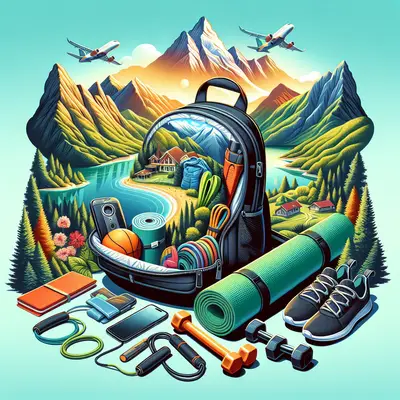
Start with one small packing cube dedicated to training. If it doesn’t fit in that cube, it doesn’t come. This limitation keeps your setup portable and realistic, especially for digital nomads living from a carry‑on. Prioritize gear that is:
- Multi-use: One tool, many patterns (push, pull, hinge, carry).
- Durable: Survives airport security, balcony workouts, and rough floors.
- Low-tech: No charging cables, no app dependency required to function.
Think of your go-bag as a modular system, not a fully stocked gym. Your body provides resistance. The gear just multiplies your options.
Core Portable Tools That Earn Their Pack Space
You don’t need a trunk full of iron. You need a tight crew of tools that punch above their weight.
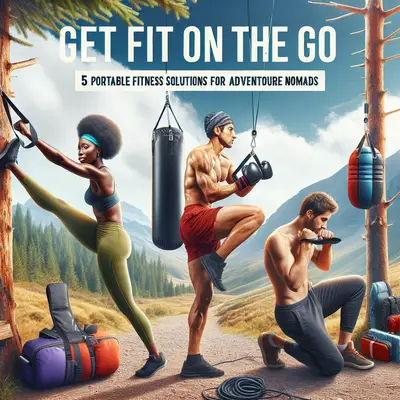
Suspension straps (lightweight TRX-style system)
Anchor them to a door, tree, railing, or sturdy beam. You instantly unlock rows, presses, core work, and single-leg strength in cramped spaces. They roll down to barely bigger than a T‑shirt and weigh less than your laptop charger.
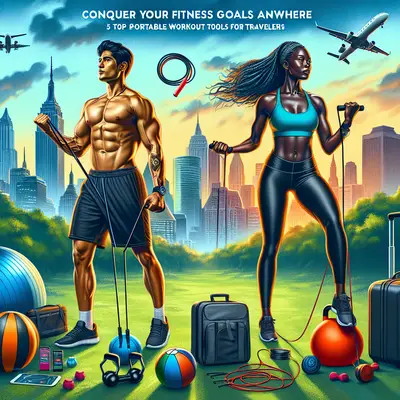
Flat and loop resistance bands
Flat bands are great for shoulder health, warmups, and mobility; loop bands give you portable loading for squats, hinges, presses, and rows. They’re quiet, cheap, and perfect when hotel walls are thin and you don’t want to be “that” person dropping luggage as deadlifts.
Collapsible or fabric “sandbag” shell
Use a fillable sandbag or dry-bag style shell. Fill it with local material—sand, rocks, even rice bags or books. Now your strength work no longer depends on finding a gym. Empty it before crossing borders and it’s just another piece of fabric in your pack.
Jump rope
For when you have two things: a patch of flat ground and lungs that need humbling. It’s brutally effective for conditioning, coordination, and warmups, and it coils down into a pocket.
Grip trainer or light therapy ball
Tiny, but perfect for countering laptop posture and all‑day touchpad use. Keeps your forearms and hands strong for climbing, surfing, or just hoisting your pack without complaining.
Pick two or three of these to start. Over-packing gear you never use is just fitness clutter in disguise.
Five Field-Tested Fitness Tips for Travelers and Nomads
These tips are built for messy schedules, unpredictable spaces, and constantly changing time zones.
1. Train by “Missions,” Not Days of the Week
Instead of a strict Monday–Wednesday–Friday plan, operate with missions:
- Strength mission: 30–40 minutes of focused pushing, pulling, squatting, hinging.
- Conditioning mission: 10–20 minutes of elevated heart rate (rope, sprints, circuits).
- Mobility mission: 10–20 minutes of focused joint work and stretching.
On any given day, ask: “What mission fits my energy, time, and space right now?” Then execute. This keeps you consistent when flights are delayed or client calls run long.
2. Anchor Your Training to Fixed Daily Events
Time zones are chaos. Fixed cues are not. Tie your workouts to repeatable anchors:
- After your first coffee = 10–20 minutes of movement.
- After logging off work = strength mission.
- Before shower and bed = short mobility session.
Habit research shows that hooking a behavior to an existing routine makes follow-through far easier, especially when your environment is constantly new. Your anchor doesn’t move, even when your GPS does.
3. Use the “10-Minute Pact” to Overcome Travel Fatigue
Jet lag and long-haul days kill motivation. Use a simple rule:
Do 10 focused minutes. If you still feel wrecked, you can stop.
Most of the time, once you start:
- Your heart rate climbs.
- Your head clears.
- You finish the full session.
If not, those 10 minutes still maintain the habit and keep your joints, spine, and hips from locking up. On brutal travel days, one 10‑minute circuit with bands and bodyweight is a win, not a failure.
4. Prioritize Strength Patterns, Not Fancy Exercises
You don’t need a perfect exercise menu. You need reliable movement patterns you can recreate anywhere with whatever gear you have.
Aim to hit:
- Push: Push-ups, band presses, suspension push-ups.
- Pull: Band rows, suspension rows, luggage rows.
- Squat/Lunge: Bodyweight, band-resisted, split squats.
- Hinge: Hip hinges with a filled sandbag or backpack.
- Carry/Core: Loaded carries with luggage, plank variations, anti-rotation bands.
If every week on the road includes these patterns two to three times—at any intensity your situation allows—you stay resilient, strong, and much more ready to ramp up when you reach a more stable base.
5. Pack a Recovery Kit as Seriously as Your Laptop
Constant transit is its own sport. Your recovery gear should be as deliberate as your portable tools:
- Mini massage ball or lacrosse ball: For feet, glutes, upper back against a wall.
- Light band: For shoulder and hip mobility after long flights.
- Earplugs and eye mask: Sleep is performance-enhancing “equipment” that weighs grams.
- Electrolyte packets: Especially useful if you’re training in hot climates or flying frequently.
Recovery keeps your travel training from turning into accumulated joint debt. The more consistently you land even half-decent sleep and basic mobility, the more effective those short, sharp workouts become.
Sample “Anywhere” Session Using a Minimal Go-Bag
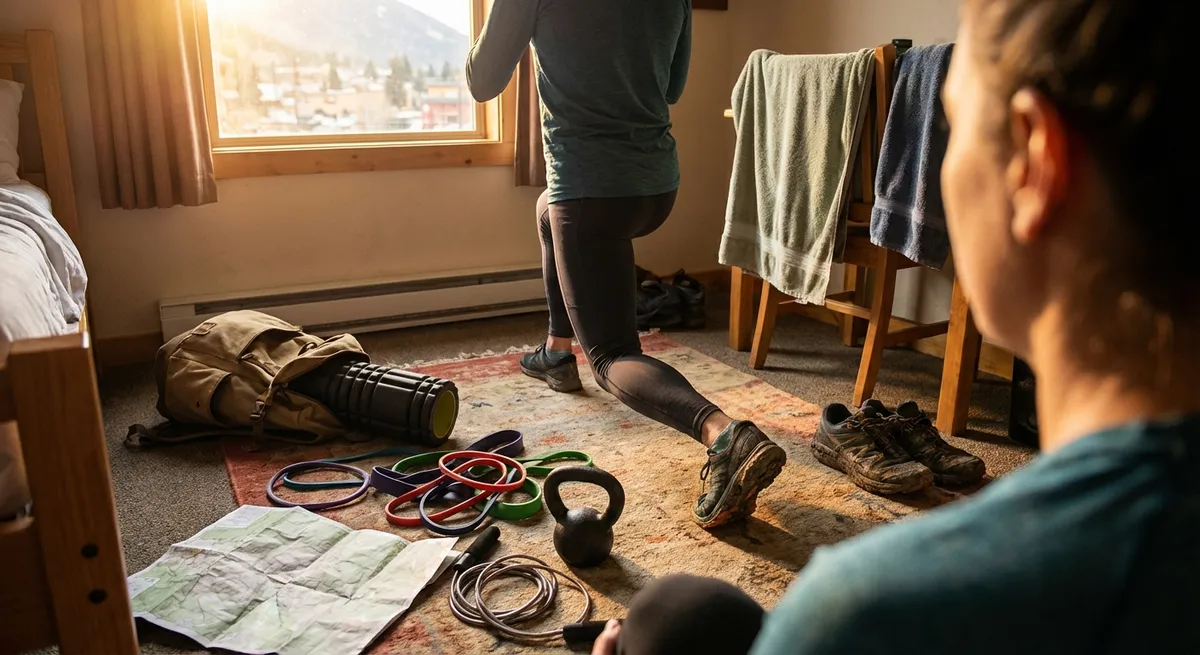
Here’s how your portable gear translates into a mission-ready session when you land somewhere new, with only a small patch of floor and a door anchor:
Warm-Up (5 minutes)
- Jump rope or brisk marches in place - Light band pull-aparts and shoulder circles - Air squats and hip circles
Strength Circuit (15–20 minutes)
Rotate through 3–5 rounds with brief rests: - Suspension rows or band rows – 8–12 reps - Push-ups (hands elevated if needed) – 8–15 reps - Split squats (bodyweight or holding loaded backpack) – 8–10 reps/leg - Sandbag or backpack deadlifts – 8–12 reps - Plank or dead bug – 20–40 seconds
Conditioning Finisher (5–10 minutes)
- Jump rope: 30 seconds on / 30 seconds off - Or a fast bodyweight combo: squats, mountain climbers, and shadow boxing
Mobility Cool-Down (5 minutes)
- Hip flexor stretch (vital after flights) - Chest/shoulder doorway stretch - Gentle spinal rotations lying on the floor
Total time: about 30–40 minutes. Enough intensity to maintain or even build strength, not so long that it’s impossible on a busy remote-work day.
Conclusion
You don’t need to choose between adventure and strength. With a tight, well-chosen set of portable tools and flexible “missions” instead of rigid routines, your body can stay capable while your address keeps changing.
Pack light, train often, adapt to the terrain, and treat every new city as another test ground—not an excuse to hit pause. Your go-bag isn’t just luggage; it’s a mobile base for a body that can keep up with the life you’re chasing.
Sources
- [American Council on Exercise (ACE) – Resistance Band Training](https://www.acefitness.org/fitness-certifications/ace-answers/exercise-science-education/resistance-bands/) – Overview of benefits, effectiveness, and safety tips for band-based workouts
- [TRX Training – What Is Suspension Training?](https://www.trxtraining.com/blogs/news/what-is-suspension-training) – Explains how suspension systems work and why they’re effective for portable strength
- [Harvard Health – Why Strength Training Matters](https://www.health.harvard.edu/staying-healthy/why-strength-training-is-so-important) – Evidence-based summary of strength training’s health and longevity benefits
- [CDC – Physical Activity Guidelines for Adults](https://www.cdc.gov/physicalactivity/basics/adults/index.htm) – Official recommendations for weekly activity and strength work
- [Sleep Foundation – Jet Lag and Sleep](https://www.sleepfoundation.org/jet-lag) – Details how travel and time zone changes affect sleep and recovery, plus strategies to manage it
Key Takeaway
The most important thing to remember from this article is that this information can change how you think about Portable Equipment.