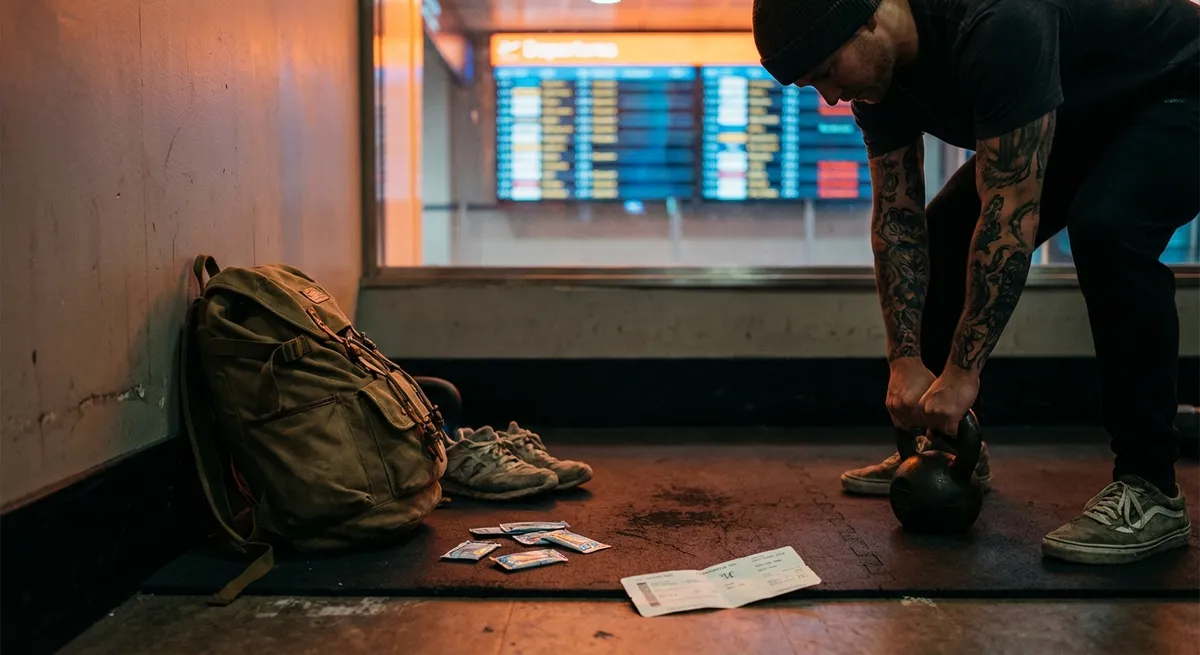
Adventure hits different when your body can keep up with your passport. Whether you’re chasing Wi‑Fi in Bali, red‑eye flights across continents, or weekend climbs between client calls, your health is either your fuel—or your handbrake. Nomad life doesn’t have to mean “I’ll get back in shape when I’m home.” This is your home now, and your body needs to travel like it.
This guide is your on‑the-road playbook: portable tactics, zero‑excuse fitness, and travel‑proof routines that fit in a backpack and survive time zones.
Build a “Travel Body” Instead of a Vacation Body
Most people train for a single destination—weddings, beach trips, race days. Nomads need a body built for constant movement: irregular sleep, new foods, long sits, surprise hikes, and questionable office chairs.
A “travel body” isn’t about aesthetics; it’s about resilience. You want joints that don’t complain after 10 hours in economy, a back that doesn’t revolt after three weeks of café chairs, and energy that lasts from sunrise flights to midnight deadlines. That means prioritizing strength, mobility, and recovery over the perfect gym setup or ideal schedule.
Think in seasons, not days: your health strategy should survive delayed flights, visa runs, and hotel reshuffles. Instead of rigid programs, you want a modular toolkit—small pieces that plug into whatever the day throws at you.
Nomad Fitness Tip 1: Anchor Your Day With a “First 10 Minutes” Ritual
Before emails, before scrolling, before you check where your luggage ended up—move.
A simple rule: the first 10 minutes of your waking day belong to your body. No gear, no negotiation. This does three things: wakes up your nervous system, resets your posture after sleep or flights, and builds consistency in a life where everything else is in flux.
Sample “First 10” you can run in any room:
- 2 minutes: deep nasal breathing and gentle neck rolls
- 3 minutes: cat-cow, hip circles, and thoracic spine rotations
- 3 minutes: slow bodyweight squats and calf raises
- 2 minutes: plank variations (front, side, or elevated on a chair)
This ritual isn’t about intensity; it’s about identity. You’re the person who moves every single day, regardless of city, climate, or check-in time. Once that’s locked, layering more training becomes easier.
Nomad Fitness Tip 2: Treat Transit Days Like a Sport
Travel days are athletic events disguised as “sitting.” You’re loading your spine with bags, compressing your hips in seats, dehydrating at altitude, and playing flexibility roulette with boarding times.
Instead of writing transit days off, plan them like game day:
- Pre‑flight / pre‑train: Walk 10–20 minutes in the terminal or station. Do ankle circles, standing hip flexor stretches, and shoulder rolls while you wait in line.
- On board: Every 45–60 minutes, do ankle pumps, seated marches, and shoulder retractions (squeeze shoulder blades back into the seat). Stand up when possible—use the aisle for light calf raises or gentle hamstring stretches.
- Post‑arrival: Before you unpack, hit a 5–8 minute reset: brisk walk, then a quick sequence of lunges, forward folds, and wall angels.
Also, treat your bag like a training tool. If you’re stuck in an airport with time to kill, you can do suitcase deadlifts, farmer carries with your backpack, and overhead presses with your carry-on (safely, away from crowds). Transit isn’t downtime; it’s your maintenance phase.
Nomad Fitness Tip 3: Carry a “Micro Gym” That Fits in Any Backpack
You don’t need a membership in every city; you need tools that disappear into your carry‑on but deliver big results. A compact setup can turn any Airbnb, park, rooftop, or hallway into a training ground.
A powerful minimalist kit might include:
- Long resistance band (loop or tube) – Rows, presses, pulls, deadlifts, and assisted single-leg work
- Mini‑band (hip band) – Glute activation, lateral walks, knee stability drills
- Light jump rope – Conditioning that fits in a side pocket
- Door anchor or sturdy strap – Turns any solid door into a pulling station
- Packable yoga mat or towel – For grip and joint comfort on tile or concrete
With a micro gym, your default workout can look like this in 20 minutes:
- Band rows
- Band chest presses
- Band Romanian deadlifts
- Split squats (bodyweight or with your backpack)
- Push-ups (floor, bed, or desk elevated)
- Jump rope intervals or fast stair climbs
Rotate exercises instead of chasing perfection. The win is showing up often, not finding the world’s nicest gym.
Nomad Fitness Tip 4: Use Time Zones to Your Advantage, Not as an Excuse
Time zones can wreck routines—or give you leverage. Instead of fighting your changing schedule, build around it.
When you land in a new time zone:
- Daylight + walking first: Get outside and walk within a few hours of arrival. Sunlight helps reset your circadian rhythm and reduces jet lag.
- Short strength, not long cardio: Your body’s already stressed from travel. Hit a 10–15 minute strength circuit instead of a fatiguing run. Think squats, hinges, pushes, and pulls.
- Use “dead pockets” of time: Early morning wake‑ups from jet lag? That’s free training time. Do a band session, mobility work, or a brisk walk instead of doom‑scrolling.
- Wind‑down ritual: At the end of the day, do gentle stretching and breathwork to downshift your nervous system and help your sleep catch up.
You won’t always match your old home time workout slot—and that’s fine. The win is finding one reliable anchor per city (morning walk, post‑work strength, pre‑dinner mobility) and sticking to it while you’re there.
Nomad Fitness Tip 5: Design “Never Skip” Workouts for Chaotic Days
Life on the road comes with canceled plans, mystery Wi‑Fi, and surprise invitations you actually want to say yes to. On those days, your choice isn’t “perfect workout” vs. nothing—it’s “tiny but targeted” vs. nothing.
Build a menu of “never skip” workouts that all take 5–12 minutes and require zero thought:
Bodyweight Blast (about 7 minutes)
- 40 seconds squats, 20 seconds rest
- 40 seconds push-ups or incline push-ups, 20 seconds rest
- 40 seconds glute bridge, 20 seconds rest
- 40 seconds plank, 20 seconds rest
Repeat once if you have time.
Hotel Hallway Session (about 8–10 minutes)
- 20 seconds fast walk or light jog down the hall, 40 seconds easy walk back
- 30 seconds walking lunges, 30 seconds rest
- 30 seconds wall sit, 30 seconds rest
- 30 seconds calf raises on a stair, 30 seconds rest
- Neck stretches and slow circles
- Seated or standing hip flexor stretch
- Thoracic rotations (hands together in front, rotate side to side)
- Forward fold with soft knees, then roll up slowly
Desk Break Mobility (about 5 minutes)
Your rule: if the day is chaos, pick one micro workout and do it. No negotiation. That streak of “I always do something” will carry you through the messiest itineraries.
Conclusion
Nomad life isn’t a pause on your health—it’s the stress test. The flights, the weird chairs, the time zones, and the adrenaline of new places all ask your body the same question: can you keep playing at this level?
With a travel‑proof ritual to start your day, a transit strategy, a micro gym in your backpack, smart time zone tactics, and “never skip” workouts for wild days, you can answer that question with a confident yes.
Your office might be a bus, your gym a balcony, and your recovery a quick stretch between calls—but your body is still the main vehicle. Treat it like your most important ticket, and it will keep taking you further than any airline ever could.
Sources
- [Centers for Disease Control and Prevention: Travel Health](https://wwwnc.cdc.gov/travel/page/travel-health) - Guidance on staying healthy during international travel, including movement and hydration recommendations
- [Harvard Health Publishing – The Importance of Stretching](https://www.health.harvard.edu/staying-healthy/the-importance-of-stretching) - Explains benefits of flexibility and mobility work for posture and pain reduction
- [American Council on Exercise – Resistance Band Workouts](https://www.acefitness.org/resources/everyone/blog/7442/why-resistance-bands-are-your-new-best-friend/) - Details the effectiveness and versatility of resistance bands for strength training
- [Sleep Foundation – Jet Lag and Sleep](https://www.sleepfoundation.org/jet-lag) - Covers how time zone changes impact sleep and strategies to adjust your circadian rhythm
- [World Health Organization – Physical Activity Facts](https://www.who.int/news-room/fact-sheets/detail/physical-activity) - Provides evidence-based guidelines on minimum activity levels for health
Key Takeaway
The most important thing to remember from this article is that this information can change how you think about Nomad Health.