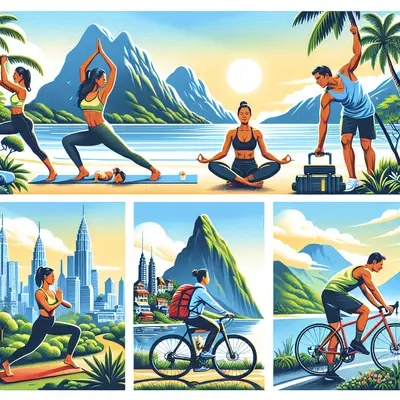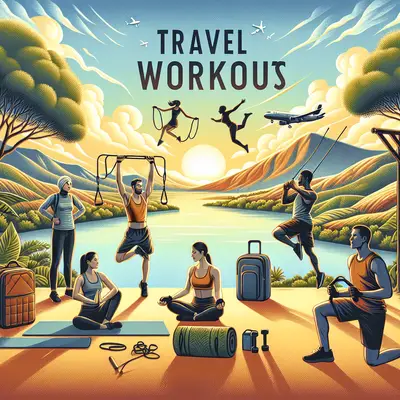
You don’t need a home gym, a strict routine, or perfect sleep to stay strong on the road. You need a plan that survives red-eye flights, border crossings, and surprise layovers. This is your field guide to building a body that can keep pace with your passport.
Build a “Movement Minimum” You Can Do Anywhere
When you’re hopping between cities, routines get smashed by late trains, long work calls, and unpredictable Wi-Fi. The fix isn’t chasing the perfect program; it’s locking in a “movement minimum” you can hit no matter where you land.
Your movement minimum is a short, non-negotiable micro-workout that takes 10–15 minutes and needs zero equipment. Think of it as your daily physical check-in: enough to keep your joints moving, your muscles awake, and your head clear, even when your schedule is chaos.
A simple travel-tested template:
- 10 air squats
- 8 push-ups (incline on a bed/desk if needed)
- 6 reverse lunges per leg
- 20-second plank
- 10 glute bridges
Loop this 3–5 times at a pace that challenges your breathing but still feels sustainable. Do it in a hotel room, hostel corridor, or even beside your bunk on a sleeper train. Once this minimum is locked in as habit, you can stack more volume or intensity on good days without losing momentum on rough days.
Turn Transit and Layovers into Training Opportunities
Travel days feel like “lost days” for training, but with a mindset shift, airports, bus stations, and train platforms become bonus conditioning blocks.
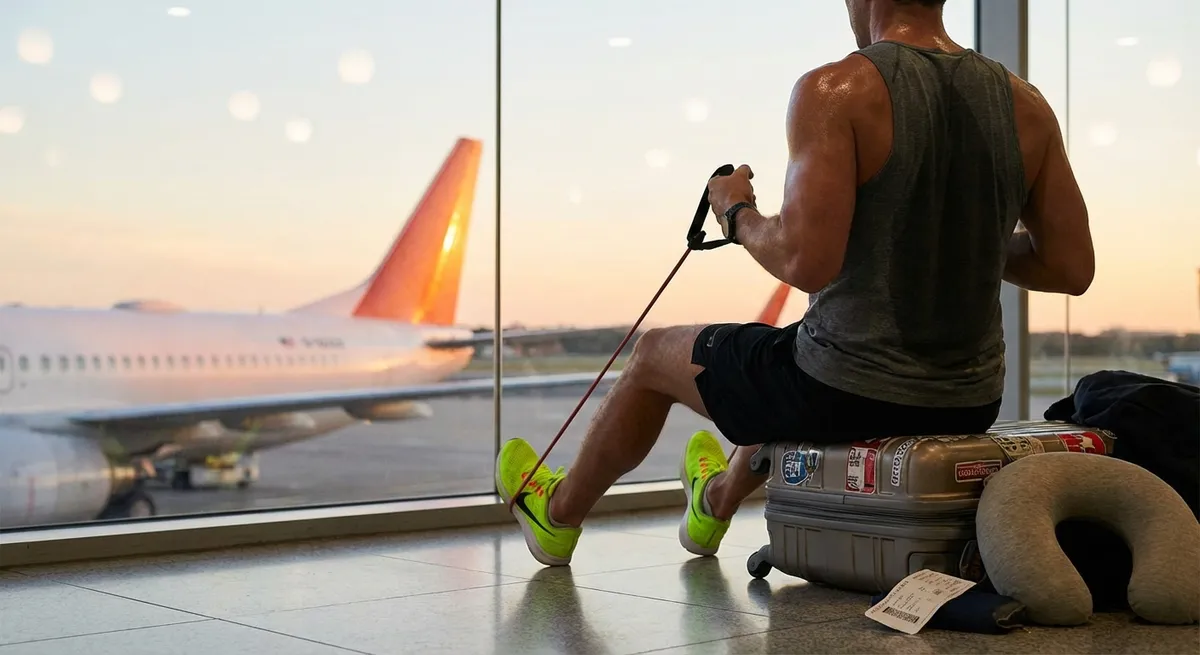
At airports, rack up steps by walking the length of multiple terminals instead of sitting by the gate. Use your carry-on as a makeshift weight for slow, controlled suitcase deadlifts or one-arm “suitcase carries” down a quiet hallway. On long connections, drop into a corner and run short circuits of bodyweight squats, calf raises, wall push-ups, and standing hip circles to wake up your lower body and spine.
On trains or buses, sprinkle in isometric work: push your hands into your knees to fire your core, perform seated glute squeezes, or press your forearms into the armrests for shoulder engagement. None of this replaces a heavy training day, but it dramatically reduces stiffness, keeps blood flowing, and makes it easier to hit a fuller session once you arrive.
Tip 1: Anchor Workouts to Fixed Daily Events
Time zones shift. Sunrise changes. Schedules implode. What usually doesn’t change: you wake up, you eat, you work, you sleep. Instead of “I’ll train at 7 p.m.,” anchor your workout to events that happen no matter where you are.
Examples:
- Immediately after waking: 10–20 minutes of mobility and light strength to flush jet lag and reset your body clock.
- Before your first real meal: A brief strength or conditioning circuit that makes food feel “earned” and improves insulin sensitivity.
- Right after closing your laptop: A decompression session so your brain associates “work done” with movement, not doom-scrolling.
This event-based approach shrugs off time zones. Whether it’s 6 a.m. in Lisbon or 10 a.m. in Bangkok, “after I wake up, I move” keeps your training for the day from becoming optional.
Tip 2: Use Micro-Sessions to Outmaneuver Unstable Schedules
Trying to fit a 60-minute workout into a day packed with travel, calls, and exploration is a losing game. Instead, treat your training like installments: multiple short hits of movement sprinkled through the day.
Break your training into 5–15 minute blocks:
- Morning: 2–3 sets of push-ups, squats, and a plank right after getting out of bed.
- Midday: 10–15 minutes of “walking meetings” or brisk solo walks between cafés or co-working spaces.
- Evening: A short session focusing on whatever feels stiff — hips, thoracic spine, or shoulders.
This “micro-dose” method lines up with research showing that shorter, accumulated bouts of exercise can yield meaningful cardiovascular and metabolic benefits. More importantly for nomads, micro-sessions are almost impossible to “miss” because you never have to protect a full hour of uninterrupted time.
Tip 3: Pack One Piece of Gear That Multiplies Your Options
You don’t need a trunk of equipment to train on the move, but a single smart piece of gear can radically expand what you can do in a small space.
Travel-proof options:
- Light resistance bands: Take up almost no space and let you train pulling movements (rows, pull-aparts), hip work (lateral walks), and even assisted push-ups.
- Jump rope: Easy to pack, brutal for conditioning, and doubles as a warm-up tool when you’re short on time.
- Suspension trainer / door anchor system: Turns any solid door or beam into a mini-gym with rows, fallouts, split squats, and more.
Choose the one that fits your style and luggage limits, then build a “default session” around it (for example: rows + squats + presses + planks with bands). Knowing you have a go-to sequence reduces decision fatigue, especially when you’re tired from travel or working late from a new city.
Tip 4: Sync Movement with Local Light to Hack Jet Lag
Your training can do more than build muscle — it can help your body adapt to new time zones faster. Pairing movement with natural light exposure gives your internal clock powerful signals about when to be awake and when to wind down.
When you land somewhere new:
- Get outside and walk briskly for 20–30 minutes during the local morning light. This helps shift your circadian rhythm and fights the heavy “jet-lag fog.”
- Use your first light workout — even just 10–15 minutes of easy bodyweight moves — during that same daylight window to reinforce the signal.
- Avoid intense, late-night training sessions in the first couple of days in a new place; they can confuse your body about whether it’s actually time to wind down.
Walking, gentle mobility, and low-to-moderate intensity workouts become part of your time zone adaptation toolkit. Instead of fighting fatigue all week, you accelerate the adjustment and free up more energy for work and adventure.
Tip 5: Treat Recovery as Gear You Always Pack
The more you move with backpacks, overhead bins, and strange mattresses, the more your recovery has to be intentional. You can’t always control how you sleep or what chair you’re stuck in, but you can carry habits that help your body bounce back.
Travel-friendly recovery rules:
- Hydrate more than you think: Air travel and air-conditioned spaces dry you out, which amplifies fatigue and makes your heart and muscles work harder.
- Move your spine and hips daily: Cat-cow, gentle twists, hip flexor stretches, and glute activation work go a long way toward countering cramped seats and heavy bags.
- Use the floor: Lying flat on the floor with your legs up a wall after a long day of walking or standing can ease swelling and take pressure off your low back.
- Guard your first and last 30 minutes of the day: Keep them free from screens and heavy work. Use this window for breathing drills, light stretching, or a short walk to settle your nervous system.
Recovery is not “bonus” — it’s how you make sure tomorrow’s adventure (and tomorrow’s workout) is possible, not painful.
Conclusion
A nomadic life doesn’t have to mean pausing your strength, conditioning, or confidence in your body. The key is to trade perfection for persistence: a movement minimum instead of a rigid program, micro-sessions instead of marathon workouts, one smart piece of gear instead of a full gym.
Anchor your training to daily events, use transit time as bonus movement, sync your sessions with daylight, and treat recovery like essential kit. Do that, and your passport stamps won’t just mark where you’ve been — they’ll track how strong you’ve become along the way.
Sources
- [Centers for Disease Control and Prevention – Physical Activity Guidelines](https://www.cdc.gov/physicalactivity/basics/adults/index.htm) – Overview of recommended physical activity levels and health benefits
- [World Health Organization – Physical Activity Fact Sheet](https://www.who.int/news-room/fact-sheets/detail/physical-activity) – Global guidelines and evidence on movement, health, and disease prevention
- [Harvard T.H. Chan School of Public Health – Exercise and Sleep](https://www.hsph.harvard.edu/nutritionsource/exercise-and-sleep/) – How exercise timing can influence sleep quality and circadian rhythm
- [National Institutes of Health – Jet Lag and Circadian Rhythms](https://www.ninds.nih.gov/health-information/disorders/circadian-rhythm-disorders) – Background on body clocks, jet lag, and strategies for adaptation
- [American Council on Exercise – Micro Workouts and Exercise Snacking](https://www.acefitness.org/resources/everyone/blog/7663/exercise-snacking-is-it-right-for-you/) – Discussion of short, accumulated workouts and their effectiveness
Key Takeaway
The most important thing to remember from this article is that this information can change how you think about Travel Workouts.