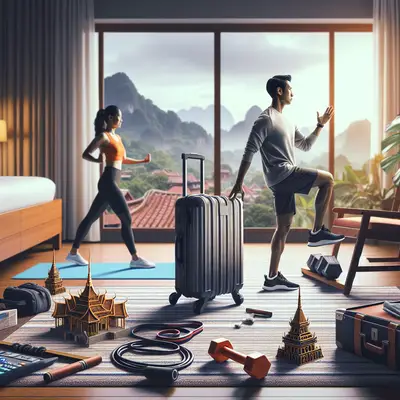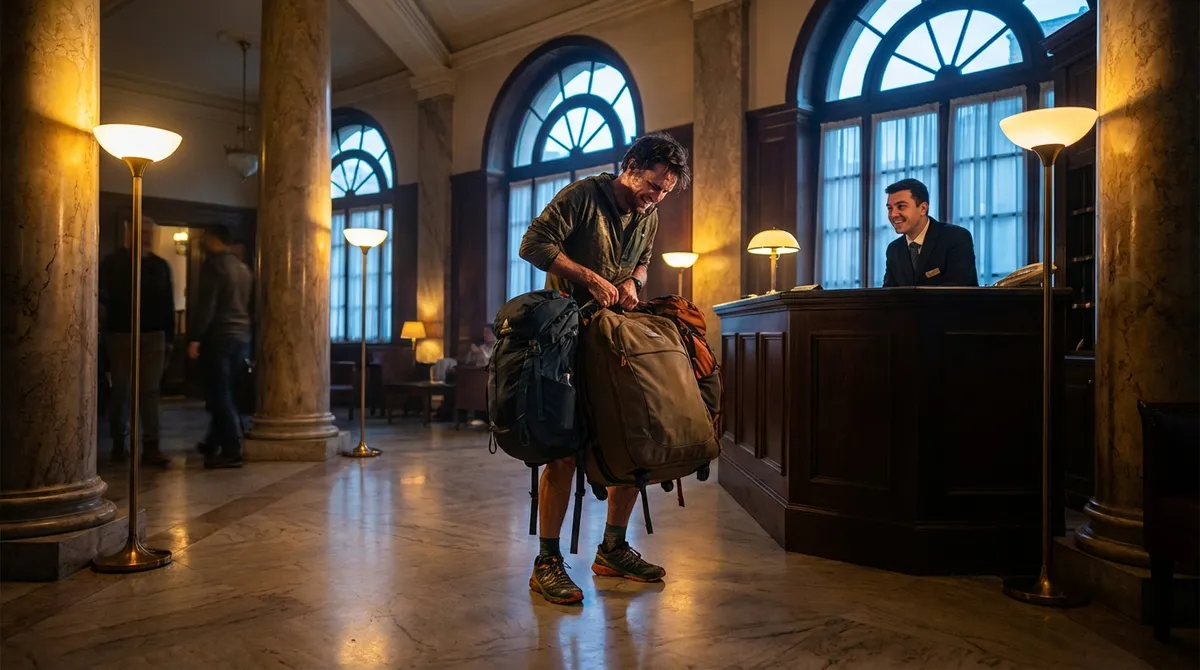
Most travelers treat hotels like sleep stations between flights, meetings, or mountain runs. You’re not “most travelers.” If your backpack is half laptop, half gear, and you’d rather chase sunrise than room service, your hotel can be a legit training basecamp—no fancy gym or heavy equipment required. This is your field guide to staying strong, mobile, and adventure-ready in whatever room key you’re holding this week.
Scout Your Terrain: Reading a Hotel Like an Athlete
Before you unpack, think like a climber picking a line up a wall: where’s the best route?
Walk the property once with your “training radar” on. Wide hallways? That’s your sprint lane. Solid stairwell? Instant elevation training. Empty conference room between events? Pop-up workout studio. Even a small balcony or fire exit landing can be your mobility corner. Ask the front desk about quieter floors or unused spaces—early mornings and late evenings are usually empty and perfect for quick sessions.
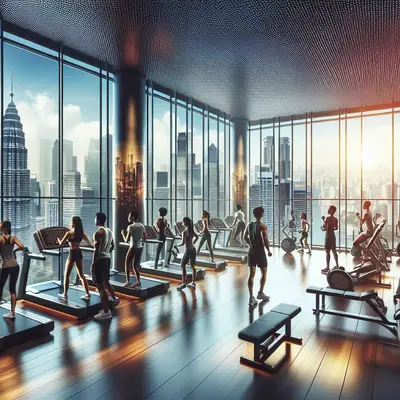
Check if the hotel has a basic gym, but don’t rely on it. Even if the equipment is dated or crowded, you can use a single bench for split squats, a low cable for core work, or a treadmill purely for warm-up. Most hotels also have heavy furniture: a sturdy chair, a stable desk, or a low dresser can all become training tools. The more you train yourself to see “equipment” in the environment, the less you ever feel dependent on a full setup.
Tip 1: Build a 15-Minute “Hotel Room Battle Drill”
Travel days wreck structure. That’s why you need a default ritual: a short, no-excuses session you can hit in any room, any time zone. Think of it as your daily “systems check” for strength and mobility.
Example battle drill:
- 40 seconds of bodyweight squats, 20 seconds rest
- 40 seconds of push-ups (elevate hands on the bed if needed), 20 seconds rest
- 40 seconds of reverse lunges, 20 seconds rest
- 40 seconds of plank shoulder taps, 20 seconds rest
- 40 seconds of glute bridges (feet on the floor or bed), 20 seconds rest
Rest 1–2 minutes, then repeat for 2–3 rounds depending on your energy. This hits legs, chest, core, and stability without needing any gear. Do it barefoot on the carpet or a towel if the floor feels rough.
The trick is consistency: same sequence, same order, wherever you are. Your body learns the pattern, and your brain stops negotiating. You land, you shower, you run the drill. That’s how fitness rides shotgun with your passport instead of trailing behind your itinerary.
Tip 2: Pack a “Pocket Gym” That Actually Fits in Your Backpack
You don’t need to turn your carry-on into a weight rack. A minimalist travel kit can live in a side pocket and turn any hotel into a training zone.
Consider packing:
- Light resistance band (mini-loop) – For glute activation, shoulder warm-ups, and joint-friendly strength work.
- Long resistance band – For rows using the bathroom door (looped around the hinge side, never the handle), assisted push-ups, and deadlift variations.
- Jump rope – When the weather or neighborhood vibe makes outdoor runs sketchy, you’ve got high-intensity cardio in a 100-gram package.
- Compact massage ball or lacrosse ball – Roll out feet, hips, and upper back after long flights or bus rides.
Use your bands to upgrade room workouts: banded squats, rows anchored around a sturdy bed leg, single-leg deadlifts with resistance, and standing presses. This lets you maintain strength in your back, hips, and shoulders—areas that suffer most from long hours of sitting and screen time. Your hotel room becomes less “box with Wi-Fi” and more “temporary training outpost.”
Tip 3: Turn Stairs and Hallways Into Your Conditioning Playground
If hotel gyms are crowded, tiny, or missing, your best cardio machine might be the stairwell you walk past every day. Stairs are brutally efficient for building lungs and legs without needing space or noise.
Try this simple ladder session:
- Walk 1 flight up, jog back down
- Jog 2 flights up, walk back down
- Jog 3 flights up, walk back down
Repeat the ladder 2–3 times depending on your fitness and schedule. Focus on quiet, controlled footwork—this isn’t a race; it’s sustainable conditioning. If you’re in a high-rise, pick a span of 3–5 floors instead of climbing all 30.
Hallways also work for quick “movement bursts” between calls or tasks: walking lunges between your room and the elevator, high-knee marches, or brisk pace walks while listening to a podcast. Keep it respectful—early mornings and mid-day are usually better than late nights. You stay in adventure shape, and no one complains to the front desk.
Tip 4: Out-Train Jet Lag With Strength and Light Exposure
Time zones are rough on energy, mood, and motivation. A smart hotel fitness plan helps you recalibrate faster so you’re not dragging your feet through the trip.
On arrival day, avoid long naps that leave you groggy. Instead, do a short strength-focused session: squats, push-ups, split squats, rows with a band, and some core work. Heavy-ish muscle engagement helps your body anchor to the new time zone. If there’s sunlight, get outside for a brisk 15–20 minute walk; daylight exposure is one of the strongest signals for resetting your circadian rhythm.
Keep workouts slightly shorter and less intense for the first 24–48 hours—aim for “feel better after” instead of “crawling off the floor.” Hydrate, avoid heavy late-night meals, and don’t rely solely on coffee to survive. Your hotel room can be a recovery hub too: stretch on a towel, do a 5-minute breathing session in bed, or roll your feet on a ball while answering messages. You’re taming jet lag instead of letting it dictate your trip.
Tip 5: Sync Work and Workouts Like a Pro Nomad
Digital nomads and remote workers often get trapped in the hotel-room-chair–laptop triangle. Breaking that loop keeps your body resilient for long-term travel.
Use “movement anchors” instead of random motivation. For example:
- After your first coffee: 5–10 minutes of mobility (hip circles, arm swings, cat-cow on the floor).
- Between big tasks or calls: 3-minute micro-circuit (10 squats, 10 push-ups, 20 jumping jacks, repeat).
- Before you leave the room in the evening: 60-second plank, 60-second wall sit, 20 slow lunges.
If you’re on video calls, stack them so you earn a movement break after a block of meetings. Take calls standing near the window or pacing the room instead of sitting slumped on the bed. Over a week, these micro-sessions compound into serious work: more steps, more joint movement, better posture, and less stiffness. You’re not just “fit enough to get by”; you’re building a body that can handle red-eyes, buses, and back-to-back project sprints.
Conclusion
Every hotel stay is a fork in the road: let the room dull your edges, or use it as a makeshift training basecamp that keeps you sharp for whatever’s outside the lobby doors. With a 15-minute battle drill, a pocket-sized gear kit, stairwell conditioning, jet lag tactics, and movement woven into your workday, your fitness doesn’t pause when your location changes—it adapts.
Travel will always throw time zones, odd schedules, and cramped rooms at you. That’s fine. You’re not chasing perfect conditions; you’re building portable strength and resilience that live in your body, not in a gym membership. Wherever your next check-in desk is, you’re ready.
Sources
- [Centers for Disease Control and Prevention – Physical Activity Basics](https://www.cdc.gov/physicalactivity/basics/index.htm) - Guidelines on recommended weekly activity levels and intensity
- [Harvard Health Publishing – The Importance of Strength Training](https://www.health.harvard.edu/staying-healthy/the-importance-of-strength-training) - Explains benefits of resistance work for travelers and adults of all ages
- [National Sleep Foundation – How Travel Affects Sleep](https://www.thensf.org/how-travel-affects-sleep/) - Details on jet lag, circadian rhythm, and strategies to adapt
- [American Heart Association – Interval Training 101](https://www.heart.org/en/healthy-living/fitness/fitness-basics/interval-training-101) - Basics of short, intense intervals that translate well to hotel workouts
- [Mayo Clinic – Resistance Band Exercises](https://www.mayoclinic.org/healthy-lifestyle/fitness/multimedia/resistance-band/sls-20076481) - Demonstrates safe, effective band movements ideal for travel fitness
Key Takeaway
The most important thing to remember from this article is that this information can change how you think about Hotel Fitness.