France is literally boiling—and if you’ve seen the recent clips of President Emmanuel Macron on stage while a visibly distressed French soldier abruptly walked off, you’ve watched the heatwave conversation go viral in real time. Social media in France is buzzing with conspiracy theories about the “odd behavior” behind Macron, but locals know the bigger story: another brutal heat spike hitting Europe, straining bodies, minds, and infrastructure.
For digital nomads, location-independent workers, and full-time travelers, this isn’t just news—it’s a health warning. Climate extremes are now part of the itinerary, from record-breaking heat in Europe to smoky skies in North America and humid heat waves across Asia. If your office is a café in Marseille one week and a co‑working hostel in Lisbon the next, your fitness and recovery practices have to adapt fast.
Below are five adventure‑ready, heat‑savvy fitness strategies built for travelers—especially those chasing sun, surf, and strong Wi‑Fi in a warming world.
Train Like It’s 35°C: Heat-Smart Workouts for Moving Bodies
European cities—from Paris to Barcelona—have been posting “canicule” (heatwave) warnings more often, reminding people to avoid strenuous activity during peak hours. As a nomad, you can turn that reality into a training framework rather than a limitation.
Shift your intense workouts to early morning or late evening when pavement and stone buildings have cooled a bit. During the hottest window (roughly 11 a.m. to 5 p.m.), swap intense cardio for mobility work, light strength, or walking in shaded areas. This mimics what endurance athletes do when racing in hot climates: they respect the environment instead of trying to overpower it. Treat any new city like a high‑heat race venue—acclimate slowly over 3–5 days, dial down intensity by 20–30%, and only push harder once you’re sleeping well and waking up hydrated. You’ll stay active without flirting with heat exhaustion like that soldier behind Macron seemingly did on live TV.
Your Packable Cooling Arsenal: Gear That Actually Earns Backpack Space
With climate extremes making headlines daily, the smartest travelers are quietly packing like mini field medics. You don’t need much, but you do need the right stuff. Start with a light, packable microfiber towel that can double as a cold compress; soak it in cool water and drape it on your neck or wrists after a city run. Add a collapsible, insulated water bottle so you’re not at the mercy of café prices or overheated plastic bottles in kiosks.
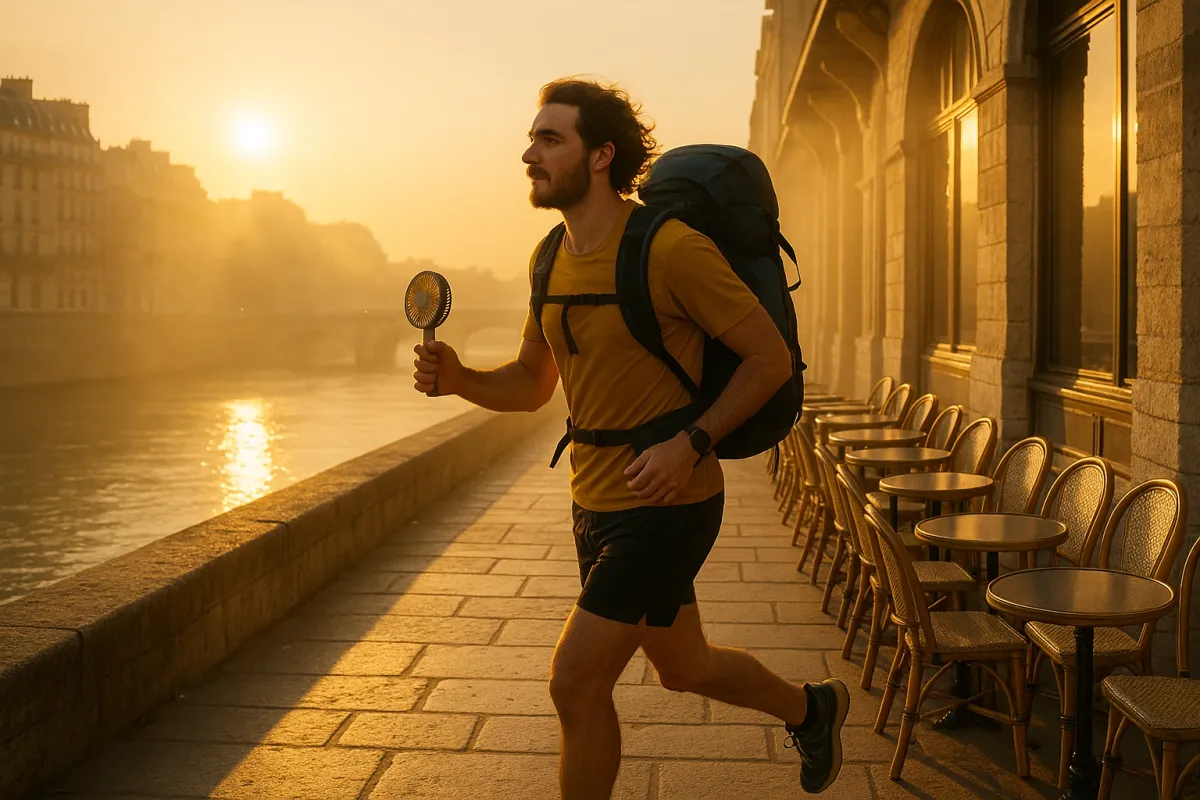
Consider a tiny, USB‑rechargeable neck fan—yes, they look touristy, but when you’re on a 40‑minute tram ride in a non‑air‑conditioned European city during a heatwave, you’ll be the only one not melting. Toss in electrolyte tablets or single‑serve packets; they weigh almost nothing and are worth their weight in gold if you’re working in co‑working spaces or hostels with questionable AC. Each item should serve multiple purposes: cooling you down post‑workout, helping you sleep in a hot room, and keeping you functional when the grid or AC fails.
Micro‑Workouts in Micro‑Climates: Moving Smart Between Shade, Indoors, and Transit
The French heatwave coverage has highlighted how urban design can trap heat—stone plazas, wide avenues, and minimal tree cover create literal heat bowls. As a nomad, you can hack this by breaking your training into movement “sprints” across varying micro‑climates.
Instead of a single 45‑minute run under a hostile sun, chain together 5–10 minute bursts of movement: stair repeats in a cool metro station, brisk walks through shaded parks, bodyweight squats and pushes in your hostel room, and mobility work during train or airport layovers. Think of every transition as an opportunity—waiting for a FlixBus in Lyon? Do calf raises and hip openers in the shade. On a long TGV ride? Walk the length of the train every hour and sneak in ankle circles and seated core bracing. You’ll accumulate movement without baking yourself, keeping your nervous system calmer and your recovery faster than a single “heroic” session in dangerous heat.
Hydration Isn’t Just Water: Travel-Ready Fuel for Hot, Long Workdays
French health officials have repeatedly warned during recent heatwaves that dehydration sneaks up fastest on older adults and workers standing for long periods—like that soldier behind Macron. Nomads often replicate that stress by stacking long laptop days with sightseeing and irregular meals. Hydration has to be treated like a training block, not an afterthought.
Anchor your day with a simple rule: 500 ml (about 17 oz) of fluid within the first hour of waking, ideally with a pinch of salt or an electrolyte tab. Then aim for steady, smaller hits rather than chugging liters at once. In hot cities, reach for foods with built‑in hydration and minerals: oranges, tomatoes, cucumbers, yogurt, and broths from local cafés. Watch for early red flags—head pressure, mild nausea, irritability, and a sharp drop in focus during work. Instead of another espresso, pause for a 5–10 minute “recovery pit stop”: water, electrolytes, a light snack, and a bit of shade. Maintaining this rhythm turns travel days and remote work marathons into sustainable, athletic performances rather than survival tests.
Build a “Heat-Ready” Routine You Can Run Anywhere
As climate stories like “France is boiling” keep trending, it’s clear this isn’t a one‑off summer—it’s the new terrain we all move through. Your best defense as a traveling human is a portable routine that automatically adjusts to heat, sleep, and stress without you overthinking it. Build a simple daily circuit that needs no equipment and no perfect conditions: 10–15 minutes of mixed strength (push‑ups, split squats, hinges), 5–10 minutes of mobility (hips, spine, ankles), and a short breathwork practice to downshift your nervous system before sleep.
Run this “core protocol” once on hectic days and twice when your schedule opens up. When you land in a new city, give yourself a 48‑hour acclimation window where you only use this low‑gear routine—no long runs, no brutal HIIT in that cute rooftop gym under the midday sun. Layer intensity back in once you know how the local climate, food, and sleep affect you. Over time, this habit makes you resilient enough to handle broken AC units, surprise heat spikes, and long workdays without burning out, physically or mentally.
Conclusion
Watching a French soldier quietly unravel behind Macron during a sweltering public event is a sharp reminder: heat doesn’t care about rank, status, or passport stamps. If you live and work on the road, extreme weather isn’t background noise—it’s part of your environment, just like altitude, traffic, or language barriers.
Travel like an athlete in a changing climate: train early or late, carry a minimalist cooling kit, stack micro‑workouts through your day, hydrate like it’s your job, and run a simple, portable routine that adapts to wherever you land. The world is still wide open for adventure—it just demands that your health tactics be as agile and mobile as your lifestyle.
Key Takeaway
The most important thing to remember from this article is that this information can change how you think about Nomad Health.