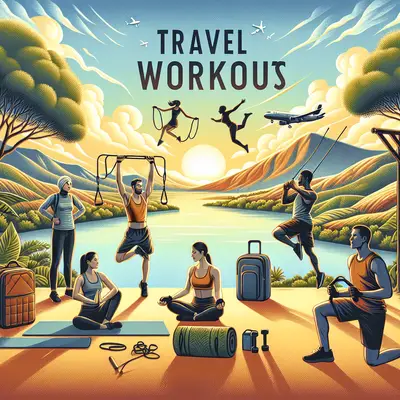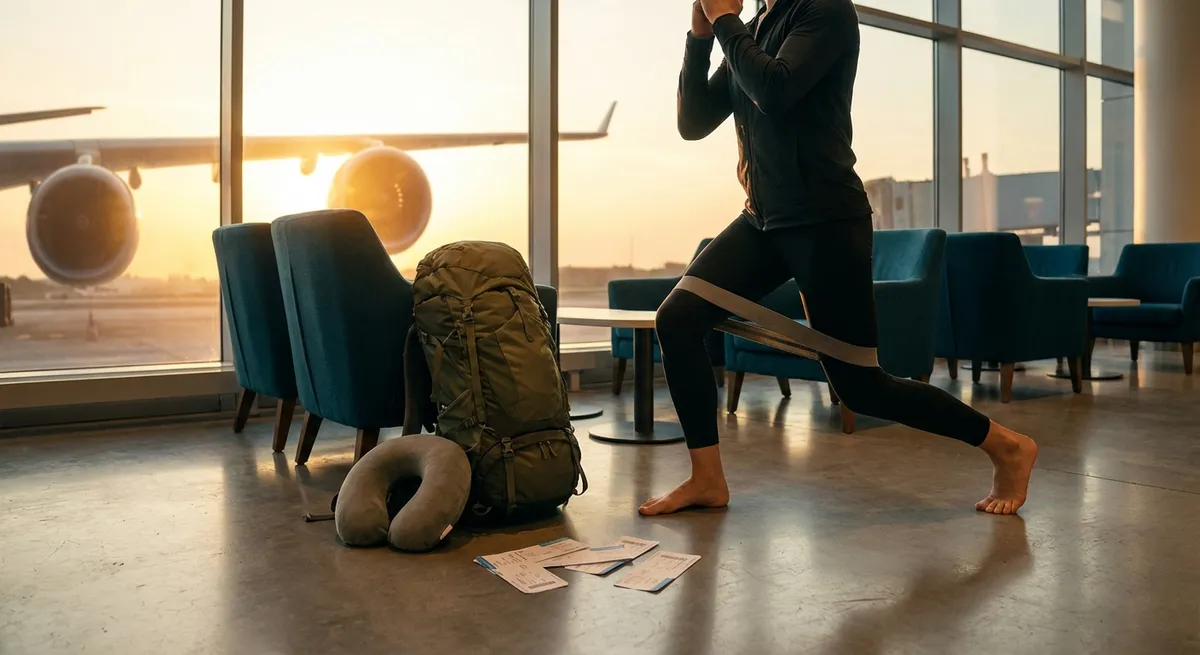
You’re jumping time zones, chasing sunsets, living out of a bag—and your body is supposed to just keep up? Not happening by accident. If you want to hike the extra ridge, say yes to last‑minute city walks, and still power through laptop sessions, you need a travel workout strategy that fits in your carry-on, not a full gym.
This isn’t about chasing PRs with perfect equipment. It’s about staying capable, durable, and ready for whatever the road throws at you—whether that’s a 10-hour bus ride or a surprise volcano trek.
Build A “Movement Minimum” For Every Travel Day
Most travelers think in workouts. Nomads need something smaller: movement minimums. That’s your non-negotiable baseline, even on brutal transit days or jet-lagged mornings.
Pick a simple circuit you can do in a hostel hallway, airport corner, or tiny Airbnb: think 5–10 minutes, no equipment, no excuses. For example:
- 10 squats
- 10 push-ups (elevated on a bed or desk if needed)
- 10 hip hinges (good mornings)
- 20–30 seconds of fast marching in place
- 10 reverse lunges (each leg)
Run that 2–3 times at any pace. The goal isn’t to “smash a workout,” it’s to tell your nervous system: we still move. This helps circulation after flights, reduces stiffness, and keeps your joints familiar with basic patterns, so when adventure appears—kayak tour, mountain trail, random city stair climb—your body doesn’t panic.
Write your movement minimum somewhere visible (phone notes, journal, laptop wallpaper). When you’re exhausted, you don’t negotiate—you default to the plan.
Turn Every City Into An Outdoor Training Ground
If you stay picky about “perfect” workout conditions, you’ll skip more sessions than you finish. Instead, train your eyes to see equipment where others see tourism.
Benches become step-up platforms and incline push-up stations. Staircases double as cardio machines. Park railings work for rows and supported squats. Quiet alleys and waterfront paths become running tracks or interval zones.
A simple city-based session might look like:
- Power walk or easy jog from your stay to the nearest park
- 3–5 rounds of:
- 10–15 bench step-ups (each leg)
- 10–15 incline push-ups on the bench
- 20–30 seconds of fast stair climbs or uphill walking (if available)
- Walk back as your cooldown while scouting food options
This approach keeps you exploring instead of hiding in hotel gyms—and gives you a mental map of your new location. You’re not “fitting in a workout”; you’re training while you explore the terrain.
Pack One Lightweight Tool And Learn It Well
You don’t need a trunk full of gear. But one smart, ultra-packable tool can explode your options and consistency.
A few powerful candidates:
- Resistance band loop or long band: Weighs almost nothing, works for rows, presses, hip work, and shoulder activation.
- Yoga strap or strong fabric belt: Great for mobility, isometrics, and stretching after long flights.
- Suspension trainer (lightweight version): Hooks over doors or sturdy beams for full-body strength.
The key is not owning every gadget—it’s knowing 5–8 movements with one tool cold. For example, with a single long resistance band, you can hit:
- Banded rows (anchored to a handle, railing, or your feet)
- Overhead presses
- Deadlifts or good mornings
- Split squats (band under front foot, held at shoulders)
- Face pulls and pull-aparts for posture after laptop marathons
Keep your chosen tool in your daypack, not buried in your main luggage. If it’s within reach at a café, park, or airport lounge, you’re more likely to actually use it.
Sync Movement With Your Travel Rhythm, Not A Perfect Schedule
Time zones wreck rigid routines, so stop pretending you’ll always have a dedicated 60-minute block. Instead, build micro-sessions into your day like checkpoints.
Think in anchors, not times:
- Wake-up anchor: 3–5 minutes of mobility (neck rolls, cat-cows on the bed, hip circles, ankle rolls, light core engagement) before touching your phone.
- Mid-day anchor: Short strength burst between tasks or sightseeing (one 5–10 minute circuit of push-ups, squats, and band rows).
- Evening anchor: Walk after dinner plus a few minutes of easy stretching, especially calves, hips, and upper back.
If you’re in heavy travel mode (long bus ride, border crossing, multi-flight itinerary), focus on circulation and decompression: ankle pumps, seated marches, breathing exercises, and a 5–10 minute mobility sequence when you land.
This rhythm-based approach keeps you training even when every day looks different—and protects your sleep and joints from the chaos of shifting time zones and seats that barely recline.
Train For Durability, Not Just Aesthetics
Travel demands weird strength: carrying bags up broken elevators, hoisting luggage into overhead bins, hiking with a pack, and walking 20,000 steps on cobblestones that hate your ankles. Your workouts should reflect that reality.
Prioritize movements that build durability:
- Loaded or tempo squats and lunges (even bodyweight): Help knees and hips survive long walks and stair-heavy cities.
- Hinges and deadlift variations: Protect your lower back when lifting bags, camera gear, or groceries.
- Push and pull patterns: Push-ups and rows balance the laptop hunch and keep your upper body ready for paddling, climbing, or carrying.
- Calf and foot work: Heel raises, single-leg balance drills, and barefoot time (where safe) prepare you for unpredictable terrain.
- Core stability: Planks, dead bugs, and side planks help you handle backpacks and awkward loads without crumbling.
Think of your body as your primary piece of adventure gear. You’re not just working out for photos—you’re training for fewer injuries, more spontaneous yes’s, and the ability to handle the “that escalated quickly” moments of life on the road.
Conclusion
You don’t need a membership, a perfect schedule, or a spotless gym floor to stay strong while you roam. You need a movement minimum, an eye for urban (or jungle) training spots, one reliable piece of gear, and a rhythm that bends with your itinerary.
When you treat fitness as part of the journey—not a separate chore—you stop choosing between “travel hard” and “stay fit.” You get to do both. And your future self, halfway up some unpredictable mountain stairs with a pack on, will be very glad you trained for it.
Sources
- [Centers for Disease Control and Prevention – Physical Activity Basics](https://www.cdc.gov/physicalactivity/basics/index.htm) - Guidelines on weekly activity levels and benefits, useful for setting realistic travel movement goals
- [American College of Sports Medicine – ACSM Guidelines for Exercise Testing and Prescription](https://www.acsm.org/education-resources/books/guidelines-exercise-testing-prescription) - Evidence-based recommendations on strength, cardio, and flexibility that can be adapted to travel
- [Harvard T.H. Chan School of Public Health – Benefits of Physical Activity](https://www.hsph.harvard.edu/nutritionsource/benefits-physical-activity/) - Overview of how consistent movement supports health, energy, and longevity
- [NHS (UK) – How to Sit Correctly](https://www.nhs.uk/live-well/healthy-body/how-to-sit-correctly/) - Posture tips that translate directly to long flights, bus rides, and laptop work on the road
- [Mayo Clinic – Traveling? Don’t Let Jet Lag Get You Down](https://www.mayoclinic.org/diseases-conditions/jet-lag/in-depth/jet-lag/art-20045922) - Practical strategies for managing jet lag, which helps align workout timing and sleep while changing time zones
Key Takeaway
The most important thing to remember from this article is that this information can change how you think about Travel Workouts.