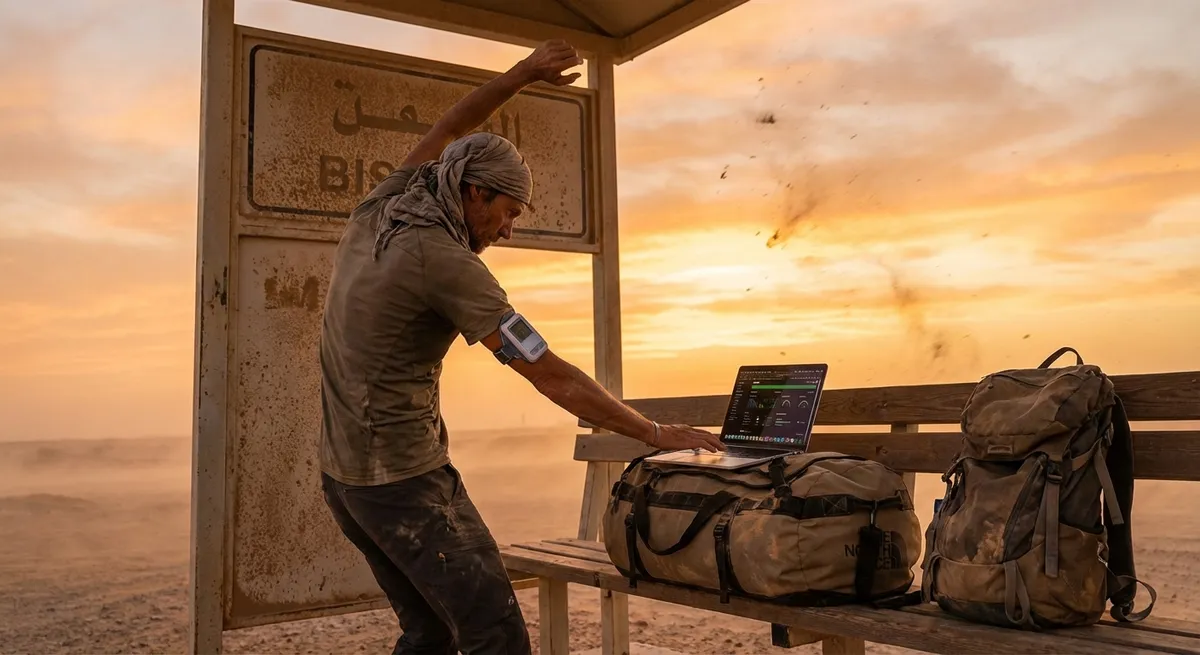
Stamps in your passport don’t mean much if your body can’t keep up. Red-eye flights, spotty Wi‑Fi, late-night street food, and improvised workstations can quietly erode your health while you chase the next border crossing. Nomad health isn’t about perfection—it’s about staying mission-ready in chaotic environments with portable, no‑excuse tactics that actually work on the road.
This guide gives you an adventurous, practical playbook: five fitness tips built for travelers and digital nomads who refuse to trade mobility for fragility.
Build a “Non-Negotiable” Movement Ritual
Routines collapse when time zones shift. Rituals travel well.
Instead of a full workout plan that dies the second your flight is delayed, create a 10–15 minute non‑negotiable movement ritual you do every single day, no matter what country you wake up in. Think of it as brushing your teeth for your joints, lungs, and nervous system.
Pick 3–5 movements you can do in a tiny hostel room: squats, push‑ups (or wall push‑ups), glute bridges, plank variations, and a hip-flexor stretch. Tie it to an anchor that happens every day on the road—first coffee, post-shower, or right after you close your laptop.
The key is intensity control. Some days this ritual is a gentle mobility flow; other days it’s a mini strength session. What doesn’t change is the commitment. When your surroundings are chaos, consistency beats complexity. This daily ritual keeps your joints moving, your blood circulating after long travel days, and your brain in “I train, no matter what” mode.
Turn Layovers and Transfers into Micro-Training Blocks
You don’t need a gym when every transfer is a training opportunity. Airports, train stations, ferry queues, and long checkout lines can either be dead time—or low-key conditioning.
Walk your terminals with intent. Aim for a fast-paced lap of the airport instead of staking out a seat at the gate. Use stairs whenever possible and set a quiet rule: escalators and moving walkways are for standing only if you’re carrying heavy luggage or actually injured.
If you’re stuck in one spot, you can sneak in micro-mobility: ankle circles, seated calf raises, neck rotations, pelvic tilts, and band pull‑aparts if you carry a light resistance band. No one cares what you’re doing as much as you think they do.
Over a week of travel, these micro-blocks stack up—extra steps, extra circulation, and far less of that cement‑leg feeling. Think like an opportunist: every delay is a chance to get your body ready for the next mission instead of stiffening up in a plastic chair.
Pack a Minimalist “Nomad Gym” That Fits in Any Bag
Your bag is already fighting for space—but a smart, ultra‑portable setup makes it easier to train anywhere than to skip it.
Focus on three highly packable items:
Long resistance band or loop bands
Adds load to squats, rows, presses, and deadlift patterns using doors, bed frames, or your own body as an anchor. They weigh almost nothing and transform any tiny room into a strength zone.
Jump rope
Instant conditioning tool when you don’t have safe running routes. Five focused minutes of intervals can light you up more than a distracted 20‑minute jog.
Lightweight suspension trainer or DIY strap setup
Optional but powerful. Clips over a door or sturdy beam and turns bodyweight into serious upper‑body and core strength work without needing a gym.
With just these tools, you can rotate between strength-dominant days (banded rows, presses, squats, RDLs, face pulls), capacity days (jump rope intervals, fast-paced bodyweight circuits), and recovery days (band-assisted stretches, controlled articular rotations). The less friction between you and a session, the more likely you are to train—even after a 6‑hour bus ride on mystery roads.
Protect Your Spine and Shoulders from Laptop Punishment
Digital nomads don’t just fight jet lag—they fight the slow creep of laptop posture. Random café chairs, bed-desk setups, and bus “workstations” wreck your spine and shoulders if you don’t counterattack.
Start with environment triage:
- Elevate your screen: stack books, use a laptop stand, or even flip your backpack on a table to raise the display closer to eye level.
- External tools: when possible, use a compact travel keyboard and mouse to free your shoulders and wrists from the “T‑rex arms” position.
- Timebox damage: set a timer (25–45 minutes) and stand, walk, or stretch during each break.
Then harden your body:
- Add daily “anti‑desk” moves: thoracic extensions over a rolled towel, band pull‑aparts, scapular push‑ups, and hip flexor stretches.
- After long work blocks, do 3–5 minutes of movement before opening another tab: cat‑cows, figure‑four hip stretch, chest openers against a wall, or slow air squats.
You don’t need perfect ergonomics in every country. You just need to stop pretending your body will tolerate endless laptop hunching without a response plan.
Use Sleep and Hydration as Your Nomad Recovery System
Adventure is seductive; recovery is what lets you keep saying yes to it.
Constant motion means your nervous system is always processing new noise: languages, maps, scams, timelines, and logistics. Without predictable recovery, your training stagnates, your mood swings, and every minor travel stress feels heavier.
Treat these two as strategic tools, not afterthoughts:
- Hydration: Travel dehydrates you—flights, climate shifts, and caffeine all stack up. Aim for steady sips across the day, not massive gulps at night. If local water is questionable, lean on sealed bottles or a portable filter and add electrolytes if you’re sweating hard in hot climates.
- Sleep: Choose a simple sleep armor kit: earplugs, eye mask, and maybe a small white‑noise app. Anchor your nervous system with a 5–10 minute pre‑sleep ritual (light stretching, reading, or breathwork) that you repeat in every country. Don’t chase the “perfect” 8 hours; aim for “good enough, most nights” and catch up with strategic naps on safer travel days instead of pushing through exhaustion.
When you respect sleep and hydration as performance multipliers, every other part of your nomad health strategy works better—strength, cognition, mood, and resilience all rise together.
Conclusion
Nomad health isn’t about living like a monk or pretending airports are wellness retreats. It’s about becoming the kind of traveler who can sprint to a gate, hike to a hidden lookout, crush deep work blocks, and still wake up ready for the next city.
A daily movement ritual, opportunistic training during transfers, a packable micro‑gym, defensive tactics against laptop posture, and deliberate recovery—these are your core systems. They don’t depend on the perfect hotel gym or a stable home base. They depend on your decision to move like an athlete in transit, not a passenger just along for the ride.
Wherever you’re headed next, your body is the only gear you can’t replace. Treat it like mission-critical equipment.
Sources
- [World Health Organization – Physical Activity Fact Sheet](https://www.who.int/news-room/fact-sheets/detail/physical-activity) – Global recommendations and health benefits of regular movement
- [American College of Sports Medicine – Resistance Training for Health and Fitness](https://www.acsm.org/docs/default-source/files-for-resource-library/resistance-training-for-health-and-fitness.pdf) – Evidence-based guidance on strength training with minimal equipment
- [Harvard Medical School – Why Hydration Is So Important](https://www.health.harvard.edu/staying-healthy/the-importance-of-staying-hydrated) – Explains how hydration affects energy, cognition, and performance
- [CDC – Sleep and Sleep Disorders](https://www.cdc.gov/sleep/about_sleep/index.html) – Outlines the impact of sleep on health and daily functioning
- [Mayo Clinic – Sitting and Posture: The Dangers of Prolonged Sitting](https://www.mayoclinic.org/healthy-lifestyle/adult-health/expert-answers/sitting/faq-20058005) – Details the risks of sedentary behavior and the need for regular movement
Key Takeaway
The most important thing to remember from this article is that this information can change how you think about Nomad Health.