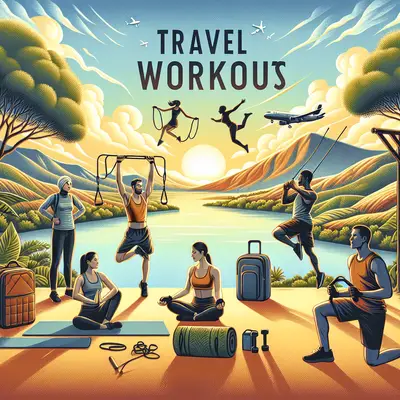
Stamps in your passport don’t have to mean dents in your fitness. When your “home base” is a boarding gate, a hostel bunk, or a month‑to‑month studio, your body still craves challenge, strength, and movement. The trick isn’t finding a perfect gym—it’s turning whatever landscape you land in into a training ground. This guide gives you travel‑proof workout strategies and five field-tested fitness tips that keep you strong, mobile, and adventure‑ready, no matter what city, climate, or time zone you wake up in.
Building a Nomad-Proof Workout Mindset
Travel chews up routines: flights at odd hours, surprise delays, sketchy hotel “gyms,” and days that blur between laptop marathons and urban exploration. Instead of chasing a rigid schedule, nomad fitness works best when you think like an expedition leader: adapt the plan to the terrain.
That means shifting from “I need 60 minutes and full equipment” to “What can I do with this body and this space in 15–25 minutes?” Bodyweight strength, mobility, and short, intense efforts are your best allies. They’re light in your backpack (literally zero weight), scalable whether you’re deconditioned or advanced, and easy to anchor to daily triggers—like after your first coffee or right before your evening shower.
This mindset also reframes setbacks. Jet lag? Use short mobility and breathing sessions to reset your body clock. No gym? Turn a park bench into your weight rack. Tight schedule? Stack micro‑workouts throughout the day. When you stop relying on perfect conditions, every city becomes a training partner, not an excuse.
Tip 1: Turn Transit Time Into Movement Missions
Long-haul flights, overnight buses, and train marathons are ambushes for your hips, back, and circulation. Instead of accepting that stiff, foggy feeling as the price of a ticket, treat transit as a low‑key mission to keep your body online.
At airports, walk deliberately instead of sitting at the gate: pace the terminal, take stairs instead of escalators, and use standing time for simple calf raises and gentle hip circles. During flights and buses, set a timer (every 45–60 minutes when possible) to stand, stretch your calves, and move your ankles in circles—this helps blood flow and reduces the risk of deep vein thrombosis, especially on long flights.
When space allows, add chair‑based moves: seated marches, glute squeezes, and gentle spinal rotations. These may not feel like “workouts,” but they prevent the deep stiffness that makes you skip real training later. Think of transit movement as priming your joints and circulation so you step off the plane ready to explore instead of needing a full day to recover.
Tip 2: Use the “One Backpack Exercise” Rule
Nomad life rewards minimalism, and your training should match. Instead of hauling resistance bands, suspension trainers, and special shoes, commit to mastering a single “backpack exercise” that you can load with whatever you’re already carrying.
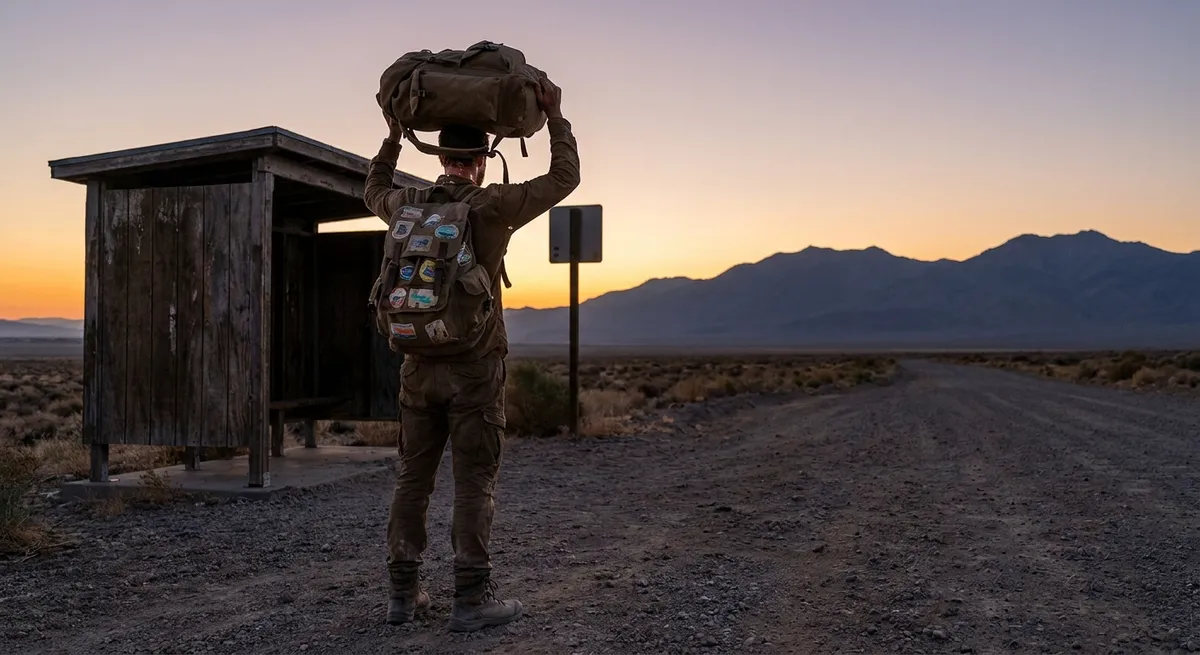
For strength, a loaded backpack turns into a sandbag substitute. Use it for squats, lunges, rows, and split squats in your room or at a quiet park. Adjust the weight by adding or removing items—laptop, water bottles, clothes—so the pack becomes a dynamic tool, not just luggage. You can hug it to your chest for goblet squats, sling it over one shoulder for anti‑rotation work, or hold it overhead for stability challenges.
Pick one signature movement you’ll always do with your pack, like 3–4 sets of backpack squats, every other day. By locking in a default exercise, you skip decision fatigue and maintain a familiar strength anchor even when everything else—language, time zone, climate—is changing. Over months, that simple ritual builds serious resilience in your legs and core without any dedicated equipment.
Tip 3: Anchor Workouts to “Unmissable” Daily Moments
When you bounce between coworking spaces, cafés, and train compartments, time blurs fast. Waiting for the “perfect window” to train means it never happens. Instead, tie your workouts to daily events that happen almost everywhere: waking up, brewing coffee, showering, or shutting the laptop.
Choose one anchor for strength and one for mobility. For example, commit to a 15–20 minute strength block right after your morning coffee, before you open your inbox. Then attach a 5–10 minute mobility session to your evening wind‑down—right before a shower or while your dinner cooks. These anchors travel as easily as your passport; it doesn’t matter if you’re in Lisbon or Bangkok, the habit stays.
This approach also kills the “I’ll do it later” trap. When your workout is linked to a non‑negotiable daily moment, it becomes part of the ritual, not an optional add‑on. Over weeks, those short anchored sessions stack into consistent training even through border crossings, visa runs, and back‑to‑back client calls.
Tip 4: Build a Three-Move “Anywhere Circuit”
When Wi‑Fi is spotty and days are packed, you don’t want to scroll through routines or design fresh workouts. Nomads thrive with a tiny, dependable toolkit—a three‑move circuit you can run anywhere in 15–20 minutes, no equipment, no planning.
Pick one lower‑body move (like squats, reverse lunges, or step‑ups on a low bench), one upper‑body push (push‑ups with hands elevated on a bed if needed), and one core move (planks, dead bugs, or slow mountain climbers). Cycle them: 30–45 seconds of work, 15–30 seconds of rest, 4–6 rounds. If you’re advanced, extend the rounds or add tempo (slow lowers, explosive pushes).
The magic isn’t that this circuit is fancy; it’s that it’s friction‑free. Hotel room with three square meters of floor? Run it. Beach at sunrise? Run it. Tiny Airbnb balcony? Run it. Because you’ve already preselected the moves, you avoid overthinking and just press play on your body. Over time, you can swap variations to match your environment—incline push‑ups on a park bench, Bulgarian split squats on a suitcase—but the three‑move structure stays constant, acting like your portable gym template.
Tip 5: Use Exploration Days as Built-In Cardio
Travel already hands you the perfect excuse for endurance: you’re in new cities, on new trails, walking unfamiliar neighborhoods. Instead of separating “workout cardio” from “exploring,” merge them into one adventure-driven session.
Plan at least one day per week where exploration becomes deliberate conditioning. Walk instead of ride for medium distances; aim for 8,000–12,000+ steps when safe and practical. If you’re in a hilly city, treat climbs as intervals—walk uphill at a brisk pace, recover on the flats. On coastal paths or urban riverfronts, set time targets (brisk pace out for 20 minutes, return in the same time or faster).
If you’re short on time between calls, use “micro‑missions”: 10–15 minute brisk walks before or after work blocks, preferably in daylight to help reset your body clock. These spur-of-the-moment walks are powerful jet lag tools and mood lifters, and they double as low‑impact conditioning that makes your next hike or surf session feel easier. The goal isn’t to chase marathon training; it’s to keep your engine tuned so you can say “yes” whenever the chance for a spontaneous trek or long city wander appears.
Conclusion
A life in motion doesn’t have to mean a body stuck in survival mode. When you treat every city as a makeshift training ground and every day as a chance to move—even in small, scrappy ways—your fitness starts to feel as portable as your laptop. Tie your workouts to daily anchors, keep a reliable three‑move circuit, use your backpack as a roaming weight, move during transit, and turn exploration into cardio. Do that consistently, and your strength stops depending on perfect gyms or predictable schedules. You become the kind of traveler who can land anywhere, drop your bag, and feel ready—not just to work, but to climb, roam, and say yes to whatever wild detour shows up.
Sources
- [Centers for Disease Control and Prevention – Travel-Related Deep Vein Thrombosis](https://wwwnc.cdc.gov/travel/page/dvt) - Covers risks of long-haul travel, circulation, and movement recommendations during flights
- [American College of Sports Medicine – ACSM Guidelines for Exercise Testing and Prescription](https://www.acsm.org/education-resources/books/guidelines-exercise-testing-prescription) - Provides evidence-based recommendations for frequency, duration, and types of exercise
- [Harvard T.H. Chan School of Public Health – Physical Activity and Health](https://www.hsph.harvard.edu/nutritionsource/physical-activity/) - Summarizes research on benefits of regular activity, walking, and short exercise bouts
- [Mayo Clinic – Fitness basics: Guidelines for staying active](https://www.mayoclinic.org/healthy-lifestyle/fitness/in-depth/fitness/art-20045506) - Outlines practical guidance on intensity, duration, and components of a balanced routine
- [World Health Organization – Physical Activity Fact Sheet](https://www.who.int/news-room/fact-sheets/detail/physical-activity) - Details global recommendations for physical activity for adults, including minimum thresholds
Key Takeaway
The most important thing to remember from this article is that this information can change how you think about Travel Workouts.