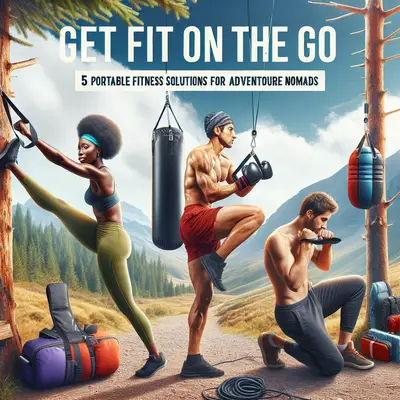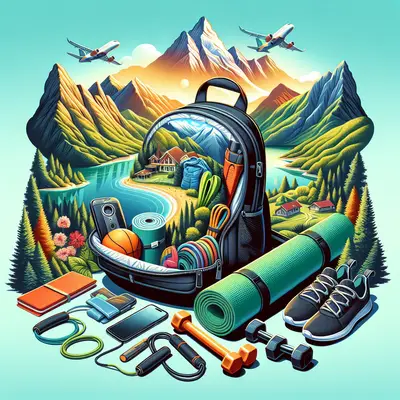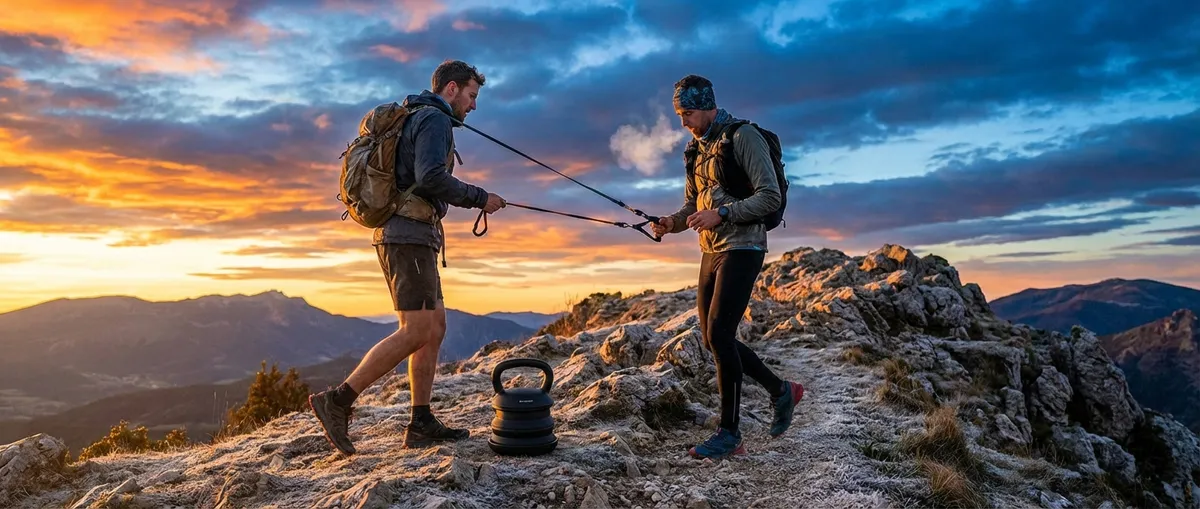
You don’t need a rolling suitcase full of steel to stay strong on the road—you just need smart, portable tools and a plan that survives delayed flights, brutal time zones, and questionable hotel carpets. The right gear should disappear into your pack, clear TSA without drama, and still let you hammer out a legit workout in a hostel dorm or on a beach at sunrise.
This is your field guide to portable equipment that actually earns its weight, plus five battle-tested tips to keep your fitness alive while your life lives out of a backpack.
Resistance Bands With Handles
If you only pack one piece of fitness gear, make it a set of resistance bands with handles. They weigh almost nothing, roll up smaller than a T-shirt, and can mimic most cable machine exercises you’d find in a full gym. Loop them around a door, bedframe, railing, or sturdy tree and you’ve got rows, presses, curls, triceps work, and even leg exercises covered. Choose a set with carabiners and interchangeable bands so you can stack resistance when bodyweight starts feeling too easy. They’re also quiet, which is gold when you’re in a thin-walled Airbnb and don’t want to be the “midnight burpee guy.” Pro tip: always check your anchor point before pulling hard—nomad life is wild enough without bringing a curtain rod down mid-workout.
Lightweight Suspension Trainer
A travel-friendly suspension trainer lets you turn almost any structure into a mobile training rig. Door, park swing, bus stop, sturdy tree branch—suddenly you’ve got support for rows, push-ups, single-leg squats, fallouts, and core work. Unlike big gym machines, a suspension trainer forces your stabilizers to wake up, which is perfect when travel has your posture wrecked from screens and seats. Look for a set that packs into its own small bag and includes a solid door anchor for hotel sessions. Use foot cradles for hamstring curls and pikes when you’re stuck in a tiny room with zero floor space options. Just hang low when using doors: attach on the side that closes toward you so it doesn’t surprise-open while you’re leaning back mid-row.
Mini Loop Bands
Mini loop bands (those short circular resistance bands) are the secret weapon of minimalist travelers. They vanish into a pocket and weigh less than most snacks, but absolutely light up your hips, glutes, and shoulders. Slip them above your knees for squats and lateral walks as a pre-flight warm-up, or around your ankles for quick strength circuits in an airport corner. They’re ideal for undoing the damage of long sitting stretches by waking up the hip stabilizers that keep your knees and lower back happy. Use light resistance for mobility flows and heavier bands for serious burn-out finishers. Bonus: if you’re working in shared spaces, loop band sessions are nearly silent—no jumping, no thudding, just focused tension while everyone else is doom-scrolling.
Foldable Travel Yoga Mat
A foldable travel yoga mat turns any surface—hostel terrazzo, dusty balcony, airport carpet—into a training base camp. It doesn’t just support yoga flows; it gives you a clean layer for bodyweight strength work, stretching, and breath practice after long-haul flights. Choose one that folds flat into your backpack instead of rolling; it’ll slip between clothes and laptop without turning your pack into a cylinder. The thin build means you’ll feel the ground more, which is actually an advantage for balance drills and core work. Use it for morning mobility, jet lag decompression sessions, or as your personal workout “zone” on a crowded beach or park. When you’re done, a quick wipe-down and air-dry keeps it travel-ready and less… questionably sticky.
Compact Massage Ball or Peanut Roller
Travel breaks your body in sneaky ways: cramped plane seats, soft hotel beds, improvised workstations. A compact massage ball or peanut roller is your portable repair kit. Toss it in your backpack side pocket and roll out tight calves, hip flexors, glutes, and upper back against a wall or floor whenever you land. Unlike a big foam roller, these small tools dig into specific hot spots created by hours of sitting with your spine shaped like a question mark. Use it before workouts to unlock range of motion, or at night to calm your nervous system and help your brain recognize, “We’re done sprinting through airports now.” Consistent self-maintenance means you arrive at new locations ready to explore trails and city streets instead of limping through them.
5 Fitness Tips For Travelers and Digital Nomads
Build a “No-Excuse” 15-Minute Routine
Treat a short training block like brushing your teeth: non-negotiable and automatic. Design one full-body circuit you can do in 15 minutes with just your portable gear and bodyweight—think squats or lunges, pushes, pulls, and a core move. Repeat it two to three rounds with minimal rest and you’ve got a session that fits between check-out and your train, or before a late-night client call. The key is removing decision fatigue; when your brain is fried from navigating new cities and time zones, you want a routine you can start without thinking. Over time, that “just 15 minutes” approach keeps your strength and stamina climbing while everyone else is promising to start fresh next Monday.
Train for Movement, Not Just Muscles
On the road, your workouts should make travel easier, not just pump your biceps for beach photos. Focus on movements that match real nomad life: carrying luggage (farmer’s carries with bands or improvised weights), climbing stairs (step-ups and split squats), rushing for trains (short sprints or power intervals), and surviving long walks (hip and ankle mobility). Use your portable gear to reinforce pull patterns (rows, pull-aparts), push patterns (presses, push-ups), and hinge patterns (Romanian deadlift variations with bands). When you treat your training as preparation for the next hike, city, or continent, your sessions suddenly feel like mission briefings instead of chores.
Anchor Your Day With a Movement Ritual
Travel can trash your routines: new beds, new food, new schedules. A daily movement ritual reclaims a bit of control. Choose a simple sequence you can do in any space—like five minutes of joint circles, deep squats, hip openers, and a short band activation series. Do it at the same time each day, ideally after waking or before sleep. This signals your body that despite the chaos of changing time zones and environments, you’re still running your own show. It also keeps nagging tight spots from building into actual injuries that could derail your trekking plans, surf lessons, or that random volcano hike you booked on a whim.
Train With What the Location Gives You
Instead of fighting every environment, use it. No gym? Perfect. Stairs become your conditioning track, park benches become boxes for step-ups and incline push-ups, railings become anchors for your bands or suspension trainer. Beach nearby? Run sprints or do walking lunges in the sand for extra resistance. In a tiny hostel dorm? Quiet is king—use isometric holds (wall sits, planks, glute bridges) and slow-tempo band work that won’t shake the bunks. This mindset transforms travel from an obstacle into an advantage—every new city becomes a fresh training playground, not another excuse to “take a week off.”
Treat Recovery Like Part of the Adventure
When you’re hopping borders, recovery isn’t optional—it’s survival gear. Long flights, buses, and unpredictable sleep hammer your nervous system, so bake recovery straight into your routine. Use your massage ball before bed to work on tight areas, follow it with a short stretch flow on your travel mat, and finish with two to five minutes of slow nasal breathing. Hydrate aggressively after flights and walks, especially in hot or high-altitude locations where dehydration sneaks up on you. Recovery doesn’t make you soft—it keeps you capable of chasing early-morning hikes, late-night city walks, and last-minute invites without your body waving a white flag.
Conclusion
Staying fit on the move isn’t about hauling a mini-gym across continents—it’s about carrying a tiny toolkit and a clear plan. A few smart, portable pieces of equipment can turn any layover, balcony, or guesthouse into a training camp, and a handful of intentional habits can keep you strong through border crossings and back-to-back work calls.
Pack light, train deliberately, and treat every new city like both a destination and a testing ground for what your body can do. Your gear should disappear into your pack—but your strength should show up everywhere you land.
Key Takeaway
The most important thing to remember from this article is that this information can change how you think about Portable Equipment.