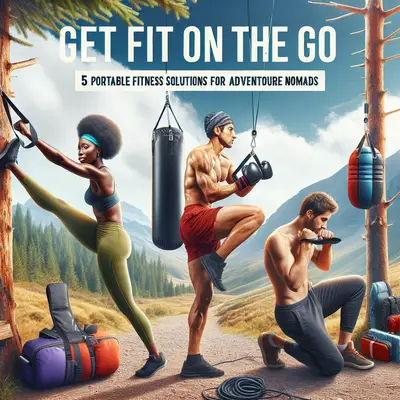
Adventure moves fast. Flights change, Wi-Fi drops, and check-in times never match your energy. But your strength doesn’t have to live at your home gym. With the right portable gear and a smart plan, you can stay powerful, mobile, and ready for any detour—whether you’re working from a beach café or a bus terminal.
This isn’t about squeezing in a random hotel workout. It’s about building a travel-ready kit and mindset so your body stays as resilient as your passport.
Building Your Portable Strength Kit
When your life fits in a backpack, every gram matters. The goal: gear that multiplies your training options without eating your carry-on space.
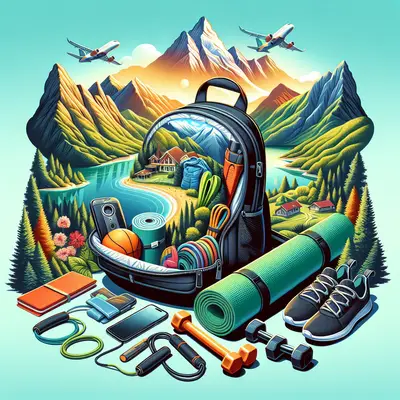
Start with one or two “anchor” items. A medium-strength resistance band with handles and a long loop band can turn a bare room into a complete workout space. These weigh almost nothing, coil small, and can stand in for cable machines, dumbbells, and mobility tools when you’re far from a proper gym.
Next, add a compact tool for grip and core work. A lightweight suspension trainer or a set of fabric mini-bands fits in a side pocket and lets you hit rows, presses, and leg work using nothing but a door, a tree branch, or a sturdy beam. If you’re really tight on space, a single long loop band plus bodyweight movements can still cover push, pull, hinge, squat, and carry patterns.
Round out your kit with micro-gear: a jump rope for conditioning, a collapsible water bottle to double as a light weight when filled, and a travel-friendly massage ball for muscle recovery. The aim isn’t to build a home gym in your bag—it’s to carry a few pieces that radically expand what your body can do anywhere in the world.
Adventure-Proof Gear Choices (That Actually Hold Up)
Not all “travel fitness” gear survives actual travel. Luggage tosses, humid rooms, and improvised setups can break cheap equipment fast.
Choose resistance bands with clear tension ratings and reinforced attachment points. Look for brands that publish test data or safety notes so you know they’ve been stretched under load, not just slapped with a random “heavy” label. Thick loop bands made from layered latex or high-grade rubber usually last longer than thin, glossy versions that snap under real use.
Suspension trainers should have strong stitching, metal carabiners, and a door anchor designed to spread the load across a wide surface. Low-quality webbing or plastic hardware becomes a safety risk once you start doing explosive rows in a hostel doorway. Check weight limits and review user photos before you buy.
For recovery tools, durability and density matter more than fancy designs. A simple solid rubber lacrosse-style ball and a firm travel roller or collapsible roller will go further than fragile, hollow gimmicks. These tools handle extreme temps and rough packing better than soft foams that deform or crumble.
Aim to buy once, cry once: one set of trustworthy gear beats a constant cycle of buying and replacing fragile tools on the road.
5 Travel-Ready Fitness Tips for Nomads and Frequent Flyers
You don’t need a perfect schedule to stay strong—you need a portable plan that bends with your itinerary. These five tips keep you ready for surprise hikes, street adventures, and long workdays.
1. Train in “movement blocks,” not full workouts.
Instead of waiting for a 60-minute window that never appears, think in 10–15 minute blocks. One block might be band rows, push-ups, and squats. Another could be mobility and core work. Stack blocks when you have time; drop to a single block on travel days. Your body cares about total weekly volume, not whether it all came in one polished session.
2. Make your gear earn its space.
Every item in your bag should have at least three uses. A long loop band can become a warm-up tool, a strength-builder, and a mobility assist for stretching. A jump rope covers conditioning and footwork. This mindset keeps your pack light and your training options wide.
3. Anchor your day with one non-negotiable pattern.
Pick a “keystone” movement pattern—like squats, hinge/hip work, or pulling—and hit it daily with your portable gear. For example: 3 sets of band squats before your first coffee, every day. On bigger training days, you add more, but that one pattern keeps your body familiar with moving under load even when your schedule falls apart.
4. Use your surroundings as bonus equipment.
Benches, handrails, playgrounds, stairwells, and even sturdy luggage can upgrade your portable gear. Combine a resistance band with a pole for rows, use a step for split squats or calf raises, and turn staircases into conditioning tools. Your gear is the base layer; the environment fills in the gaps.
5. Sync recovery with your travel rhythm.
Long flights and bus rides are basically “forced recovery windows” if you use them right. Pack a small massage ball in your personal item and work on calves, glutes, and upper back while seated. Hydrate aggressively, stand and walk every chance you get, and use your first 5 minutes after arrival for a mobility circuit: ankle circles, hip openers, band pull-aparts, and light squats. This keeps you adventure-ready instead of arriving stiff and slow.
Turning Any Stopover into a Training Ground
Once your mindset shifts, a layover, a quiet side street, or a lakeside dock becomes a training zone instead of wasted time. Your portable gear is there to amplify what’s already available, not replace it.
In a tiny room, hang a band from a door and hit rows, presses, and triceps work between email sprints. At a campground, loop your band around a tree and combine inverted rows with walking lunges and loaded carries using your backpack. On a beach, pair jump rope intervals with band-resisted squats and push-ups, using the sand for extra stability demands.
Think in simple templates you can memorize. For example: “Push–Pull–Legs–Core” with bands and bodyweight, or “Squat–Hinge–Carry–Conditioning.” Once you have a template, all you do is plug in whatever the environment gives you and whatever gear you packed. That flexibility is what keeps you consistent while time zones change and plans evaporate.
The goal isn’t perfection; it’s continuity. Each session is a waypoint, not a final destination. When adventure calls, your gear is already packed—and your body is already ready.
Conclusion
Your backpack can carry more than clothes and cables—it can carry your strength, mobility, and resilience. With a few carefully chosen tools and a flexible approach, you can stay powerful enough to say yes to last-minute mountain hikes, city exploration marathons, and spontaneous surf sessions.
Portable equipment isn’t a compromise; it’s a force multiplier. Build a lean kit, learn to read your environment, and treat every stop as a chance to move better. Travel doesn’t have to be a break from training—it can be where your most adaptable, adventure-ready version of yourself actually gets built.
Sources
- [American Council on Exercise (ACE) – Resistance Band Training 101](https://www.acefitness.org/resources/everyone/blog/7744/resistance-bands-101) – Overview of resistance band benefits, safety, and exercise options
- [Mayo Clinic – Fitness Basics: 10 Tips for Starting a Fitness Program](https://www.mayoclinic.org/healthy-lifestyle/fitness/in-depth/fitness/art-20048269) – General guidance on structuring safe, effective exercise habits
- [Harvard Health Publishing – Why Strength Training Matters](https://www.health.harvard.edu/staying-healthy/why-strength-training-matters) – Evidence-based discussion of the health and longevity benefits of resistance training
- [CDC – Physical Activity Guidelines for Adults](https://www.cdc.gov/physicalactivity/basics/adults/index.htm) – Official recommendations for weekly activity and strength training
- [Hospital for Special Surgery (HSS) – How to Prevent Stiffness and Pain While Traveling](https://www.hss.edu/article_travel-back-neck-pain.asp) – Practical advice on movement and recovery strategies during long trips
Key Takeaway
The most important thing to remember from this article is that this information can change how you think about Portable Equipment.