When your “home base” is whatever city your passport stamp says, your training can’t depend on a perfect gym or a familiar routine. The good news: you don’t need either. With the right portable equipment and a travel-ready mindset, you can keep your strength, mobility, and endurance sharp from hostel courtyards to airport lounges. This guide breaks down practical, packable gear plus five field-tested tips to help travelers and digital nomads stay adventure-strong without hauling a full gym on their back.
Build a Travel-Ready Micro Kit (That Actually Fits in Your Bag)
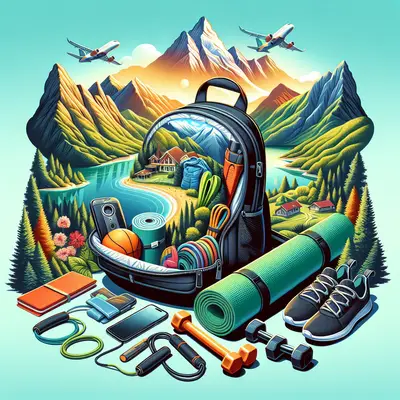
Portable fitness doesn’t mean stuffing a duffel with random gadgets; it means building a deliberate “micro kit” that earns its space in your luggage.
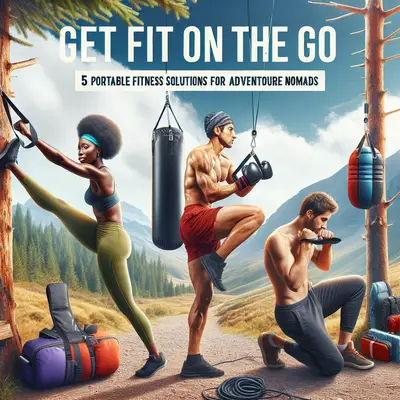
Start with one or two resistance bands of different strengths—they weigh almost nothing and can mimic rows, presses, pulls, and hip work you’d normally do on machines. Add a lightweight suspension trainer or gymnastic rings if you can: they anchor to doors, beams, or trees and turn any room, balcony, or park into a strength station.
A compact jump rope covers your cardio when you don’t feel like pounding unknown streets or dealing with traffic. If you have a little extra space, a mini loop band set (those short circular bands) is gold for glute activation and shoulder stability, especially after long flights or bus rides. Finally, tuck in a lacrosse ball or small massage ball—this isn’t “gear” in the flashy sense, but it’s a lifesaver for tight hips, back, and feet after travel days.
The key is redundancy: choose pieces that serve multiple purposes. If a tool only does one thing, it has to be exceptional to justify its spot in your pack.
Tip 1: Anchor Your Day With a 15-Minute “Anywhere Circuit”
Travel schedules are unpredictable, but your body thrives on consistency. Instead of waiting for the “perfect” gym or free afternoon, lock in a short, non-negotiable daily circuit that can happen in almost any space.
Think of it as your physical baseline: 10–15 minutes that keep your joints awake, your muscles active, and your brain in training mode. For example:
- 40 seconds bodyweight squats, 20 seconds rest
- 40 seconds push-ups (hands on bed or desk if needed), 20 seconds rest
- 40 seconds band rows (anchored in a door), 20 seconds rest
- 40 seconds glute bridges or mini-band hip thrusts, 20 seconds rest
- 40 seconds loaded carry (heavy backpack or suitcase), 20 seconds rest
Run this for 2–3 rounds and you’ve checked the box, even in a tiny hotel room. The win isn’t intensity; it’s the daily habit. When you arrive somewhere with better space or equipment, you’re already “switched on” and ready for a longer session—instead of starting from zero.
Tip 2: Turn Your Luggage Into Strength Training
You’re already hauling weight; you might as well train with it. With a bit of creativity, your backpack or suitcase becomes a makeshift kettlebell or sandbag.
Fill your bag with clothes, books, or a water bottle and tighten the straps for stability. Use it for goblet squats, Romanian deadlifts, single-arm rows, and overhead presses (if your shoulders are comfortable and the space allows). Suitcase carries—walking while holding your bag in one hand—are a brutal and effective way to hit your grip, core, and posture all at once.
If you’re on longer stays, water jugs, rice bags, or grocery items become temporary weights. Wrap them in a tote or daypack to make them easier to grip. This approach keeps you from obsessing over finding “real weights” and instead turns the gear you already carry into a functional strength tool.
Bonus: training with travel loads mirrors the real-world demands of hauling your pack up hills, through stations, and into new cities. Stronger in training means less fatigue on the move.
Tip 3: Use Portable Gear to Offset Travel Damage
Long flights, bus rides, and co-working marathons tend to hammer the same weak spots: tight hip flexors, rounded shoulders, stiff lower backs, and cranky necks. Smart use of minimal gear can counteract this before it becomes a real problem.
Use mini loop bands around your knees or ankles for lateral walks, monster walks, and clamshells to wake up your glutes, which often go “offline” after hours of sitting. Resistance bands can restore your upper back and shoulders—think band pull-aparts, face pulls, and overhead presses with a controlled tempo.
A massage or lacrosse ball lets you hit hotspots: roll your feet after walking in new shoes all day, your glutes after long buses, and your upper back and chest after laptop time. Five to ten minutes of targeted mobility and light band work in the evening can make the next day’s hiking, surfing, or scooter exploring feel way better.
The goal isn’t perfect posture; it’s staying mobile and pain-free enough to keep saying yes to adventures.
Tip 4: Design Workouts Around Your Environment, Not Against It
Instead of fighting your surroundings, build your sessions around the terrain and objects available. Portable equipment is there to fill gaps, not dictate the whole workout.
In a park with benches and a few trees? Use benches for step-ups, Bulgarian split squats, and incline push-ups. Hook your suspension trainer or rings to a sturdy branch for rows and face-pulls. On a beach? Use the unstable sand for walking lunges, lateral shuffles, and short sprints, then finish with band work under the shade.
Stuck in a tiny Airbnb with hard floors and no furniture that feels safe to pull on? Focus on floor-based work: glute bridges, dead bugs, side planks, and banded hip work, plus jump rope intervals if you have a bit of vertical space and tolerant neighbors.
By letting your environment shape the session, you’ll train movement patterns you might otherwise ignore—stairs, hills, uneven ground, and odd objects. Portable gear simply extends your options so you can hit push, pull, hinge, squat, and carry patterns in almost any setting.
Tip 5: Use Tech to Keep Your Training Consistent and Measurable
Being on the move makes it easy for weeks to blur together. Without some tracking, your training can quietly slide from “structured” to “random exercise when I remember.” Portable gear pairs perfectly with light digital structure.
Use a simple notes app or training app to log the basics: exercises, sets, reps, band thickness, and how the session felt. With resistance bands, you can track progression by increasing reps, adding an extra set, or stepping further away from the anchor to increase tension.
Timer apps are ideal for EMOM (Every Minute on the Minute) and AMRAP (As Many Rounds As Possible) sessions, which work well when you have limited time and no idea how your day might unfold. Download a couple of offline workout apps or save a few favorite routines so that patchy Wi-Fi doesn’t derail your plan.
Even a basic smartwatch or fitness tracker can help you keep an eye on daily movement targets and recovery, especially when your sleep schedule is erratic across time zones. The goal isn’t to obsess over data; it’s to make sure you’re still progressing—even if your “gym” keeps changing countries.
Conclusion
You don’t need a permanent address or a full rack of weights to build and maintain a strong, capable body. With a dialed-in micro kit, a daily anchor routine, and a willingness to train with whatever your environment offers, you can stay fit enough to chase sunrises, side quests, and spontaneous weekend treks anywhere on the map. Portable equipment doesn’t replace adventure—it makes sure your body is ready for more of it.
Sources
- [American Council on Exercise (ACE) – Resistance Band Training](https://www.acefitness.org/resources/everyone/blog/7441/ace-sponsored-research-resistance-bands-vs-machines) - Research and guidance on effectiveness of resistance bands compared to machines
- [Cleveland Clinic – Benefits of Resistance Bands](https://health.clevelandclinic.org/resistance-band-exercises) - Overview of health and strength benefits plus example exercises
- [Harvard Health – The Importance of Strength Training](https://www.health.harvard.edu/staying-healthy/strength-training-builds-more-than-muscles) - Explains why maintaining strength matters for long-term health and function
- [Mayo Clinic – Fitness Basics for Busy People](https://www.mayoclinic.org/healthy-lifestyle/fitness/in-depth/fitness/art-20048269) - Practical strategies for fitting short, effective workouts into a busy schedule
- [National Academy of Sports Medicine (NASM) – Suspension Training Benefits](https://blog.nasm.org/benefits-of-suspension-training) - Details on how portable suspension systems support strength, stability, and mobility
Key Takeaway
The most important thing to remember from this article is that this information can change how you think about Portable Equipment.