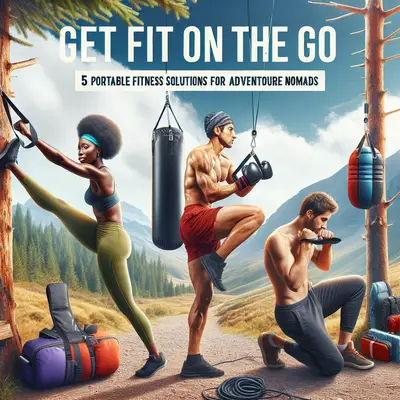
You don’t need a home gym, a fancy membership, or a checked bag full of iron to stay strong on the road. Whether you’re sprinting between airports, working from a beach café, or living out of a van, smart portable equipment turns any stopover into a training ground. This isn’t about “making do” when you travel—it’s about building a mobile setup that hits hard, packs small, and survives layovers, delays, and border crossings.
Welcome to your go-anywhere gear strategy: lean, rugged, and built for nomads who hate feeling weaker when they move more.
Building Your Pocket-Sized Power Kit
Think of your portable equipment as a modular system, not a single “miracle” gadget. Each piece should earn its spot by pulling triple duty: strength, mobility, and recovery. Weight, durability, and airport-friendliness matter just as much as versatility.
Start with ultra-packable staples: a light resistance band loop, a long resistance tube with handles, and a compact suspension trainer or strong yoga strap. These weigh less than a water bottle and collapse into your laptop compartment. Add a mini massage ball or lacrosse ball for recovery and a jump rope if you’re not in a noise-sensitive hostel. This tiny arsenal lets you load big muscle groups (legs, back, chest, glutes) without touching a dumbbell.
Focus on tools that anchor easily to doors, poles, railings, or tree branches. Door-safe suspension trainers and bands with door anchors let you turn a cramped room into a full-body station in under a minute. Pick gear with metal carabiners, strong stitching, and clear weight ratings—nomad life is rough on cheap equipment. The goal: a setup you can unpack, rig, and break down in less time than it takes to scroll a social feed.
Smart Gear for Tight Spaces and Long Journeys
Space is your biggest constraint, not motivation. Your equipment should disappear into your pack but feel like a full gym when you deploy it. This means thinking in dimensions, not just weight. Slim, flexible items—bands, straps, foldable mats—slide around laptop sleeves and clothes rather than needing their own bag.
If you’re frequently flying, avoid anything that looks like a weapon or takes up awkward space. Heavy metal bars, big kettlebells, or hard-edged push-up handles are more hassle than they’re worth. Instead, modular gear like resistance bands and bodyweight anchors can mimic rows, presses, deadlifts, and squats by changing lever arms and angles. A sturdy luggage handle, bed frame, or rail can act as an anchor point—just always test stability before loading up.
For road trips and van life, you can go slightly heavier: a single adjustable dumbbell, a compact kettlebell, or a set of plate-loaded handles can live in your trunk. Combine them with bands and you’ve got hybrid resistance options without turning your vehicle into a rolling CrossFit box. Think: equipment you forget is there until you need it, not gear that dominates your living space.
Five Field-Tested Fitness Tips for Travelers and Nomads
These tips assume you’re using portable gear, constantly changing environments, and a schedule that laughs at routine. Each tip pairs a mindset shift with practical tactics you can use immediately.
1. Treat Your Carry-On as Part of the Workout
Your backpack or suitcase is free resistance. Use it.
Fill it with what you already carry—laptop, charger, toiletries, maybe a water bottle—and use it as a sandbag substitute. Hug it for squats, hold it goblet-style for lunges, or press it overhead for shoulder work. Wrap a long resistance band around the handle and anchor the other end under your feet to turn it into a heavy row or deadlift setup.
This approach transforms dead time (like early mornings in quiet hotels) into loaded training sessions without extra gear. Just make sure zippers are closed, straps are secured, and fragile items are snug before you start moving weight around.
2. Use Resistance Bands to Replace a Whole Weight Room
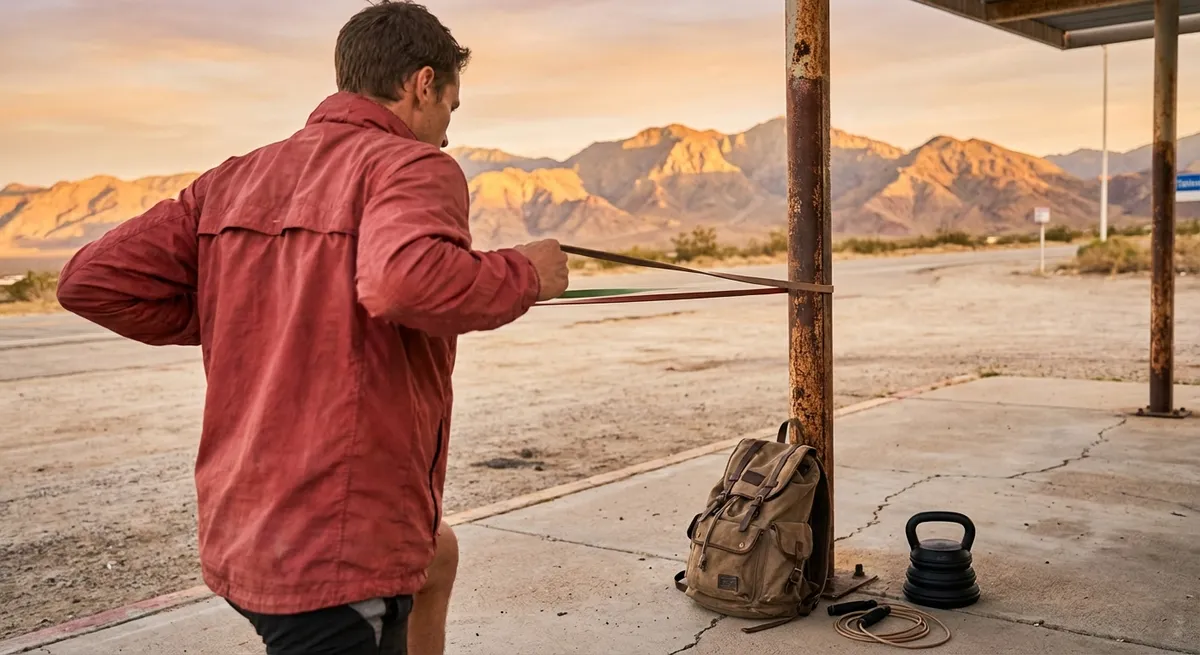
A simple set of bands can target nearly every major lift pattern if you know how to position your body. Loop bands under your feet for deadlift-style hip hinges, step into them for squats, or anchor them in a doorway for rows and presses. Adjust tension by changing your distance from the anchor or your grip width.
Bands are especially powerful for travelers because they create constant tension, challenging muscles through the entire range of motion. They’re also perfect for joint-friendly warmups after long flights—band pull-aparts, face pulls, and light rows wake up the upper back and shoulders that slump over laptops and tray tables. Focus on controlled reps and slow eccentrics to make light bands feel heavy.
3. Make Doors, Railings, and Trees Your Permanent “Gym Membership”
Any sturdy structure becomes a training partner with the right attachment. A suspension trainer or strong yoga strap turns a random doorway into a station for rows, push-ups, fallouts, and assisted single-leg squats. A playground bar or tree branch unlocks hangs, pull-ups, and core work.
Before loading any anchor, test it: pull, shake, and lean gradually into it to see if it moves or flexes. For doors, anchor on the side that closes towards you and lock it if possible. Outdoors, choose thick, solid branches and fixed railings rather than decorative or flimsy structures. This fieldcraft mindset keeps your training safe and reliable instead of improvised and risky.
4. Program “Micro-Sessions” Around Your Travel Rhythm
Instead of chasing a perfect 60-minute workout, stack smaller bouts of focused effort throughout the day. Portable gear shines in short, sharp sessions: 8–15 minutes of high-quality work you can drop into your schedule between calls, trains, or check-ins.
For example: morning—banded mobility and core; midday—quick strength block with suspension trainer; evening—light band work and recovery with a massage ball. These micro-sessions keep your joints awake, circulation up, and strength from fading during long travel stretches, without needing a full uninterrupted hour or a dedicated gym.
5. Guard Your Joints With Portable Recovery Tools
Nomad life is hard on your neck, hips, and back. Portable recovery gear is as important as your strength kit. A small massage ball, mini foam roller, or even a firm water bottle can help undo the stiffness from planes, buses, and long laptop sessions.
Target travel problem zones: hip flexors, upper back, glutes, and calves. Use your ball against a wall in cramped rooms—no floor space required. Combine this with light band work and active mobility (like controlled circles and stretches) to restore range of motion before you start loading up with squats and rows. Recovery gear doesn’t just make you feel better; it keeps you training consistently instead of losing days to tightness or pain.
Portable Training Templates for Any Stopover
To keep things simple on the road, build a basic structure you can repeat anywhere, then plug in whatever gear you have. A reliable format is: push, pull, hinge, squat, core, and carry/hold. This hits your whole body without needing long planning sessions.
For example, in a tiny hotel room with just bands and a backpack: band-resisted squats (squat), band rows (pull), push-ups with hands on your pack (push), Romanian deadlifts holding your backpack (hinge), a plank variation (core), then a suitcase carry walking slow laps (carry). If you have a door anchor or suspension trainer, swap in inverted rows, assisted single-leg squats, and fallouts for more challenge.
Think “movement categories,” not fixed exercises. That mental shift lets you adapt on the fly to new rooms, new parks, and new gear setups, while still progressing over time by adding reps, slowing tempo, or stacking extra sets.
Conclusion
Your strength doesn’t have to be tied to a single gym, city, or routine. With smart portable equipment and a field-ready mindset, every doorway, backpack, and park bench becomes part of your training landscape. Pack lean, choose gear that multiplies your options, and program sessions that slip into the cracks of your travel days.
Life on the move doesn’t have to mean losing your edge—it can be the reason you sharpen it. Travel light, train hard, and let your portable kit earn its space in your bag every mile you cover.
Sources
- [American Council on Exercise (ACE) – Resistance Band Training 101](https://www.acefitness.org/resources/everyone/blog/7440/resistance-band-training-101/) - Overview of benefits, safety, and exercise ideas for band-based workouts
- [Mayo Clinic – Exercise: How to Get Started](https://www.mayoclinic.org/healthy-lifestyle/fitness/in-depth/exercise/art-20048389) - Guidance on structuring safe, effective routines, useful for adapting workouts while traveling
- [Cleveland Clinic – Why Stretching and Mobility Matter](https://health.clevelandclinic.org/benefits-of-stretching) - Explains the role of mobility and stretching in combating stiffness from long periods of sitting or travel
- [Harvard T.H. Chan School of Public Health – Physical Activity Guidelines](https://www.hsph.harvard.edu/nutritionsource/staying-active/) - Evidence-based recommendations for maintaining activity levels, relevant for setting travel fitness goals
- [Centers for Disease Control and Prevention – Travel Health: Jet Lag and Fatigue](https://wwwnc.cdc.gov/travel/page/jet-lag) - Discusses how travel affects the body, informing workout timing and recovery strategies on the road
Key Takeaway
The most important thing to remember from this article is that this information can change how you think about Portable Equipment.