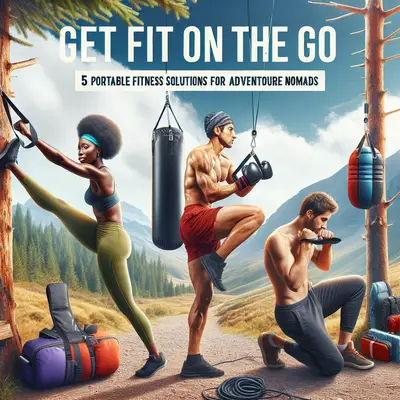
If your “home base” is whatever Wi‑Fi signal you’re currently stealing from a café, your training can’t depend on a fixed address. Your gear has to fit under a bus seat, not in a garage rack. The good news: with the right portable equipment and a few smart tactics, you can turn any layover, guesthouse balcony, or trailhead into a legit training zone. This guide lays out how to build a travel-ready micro‑gym and stay strong anywhere, plus five practical fitness tips for nomads who live out of backpacks and carry‑ons.
Designing a Micro-Gym That Fits in Your Daypack
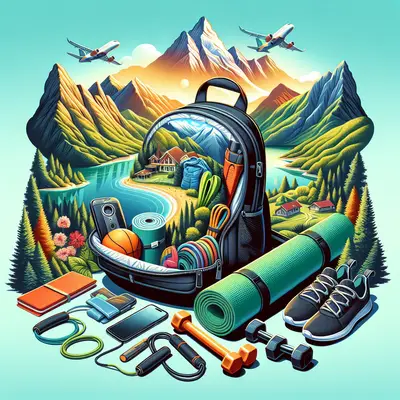
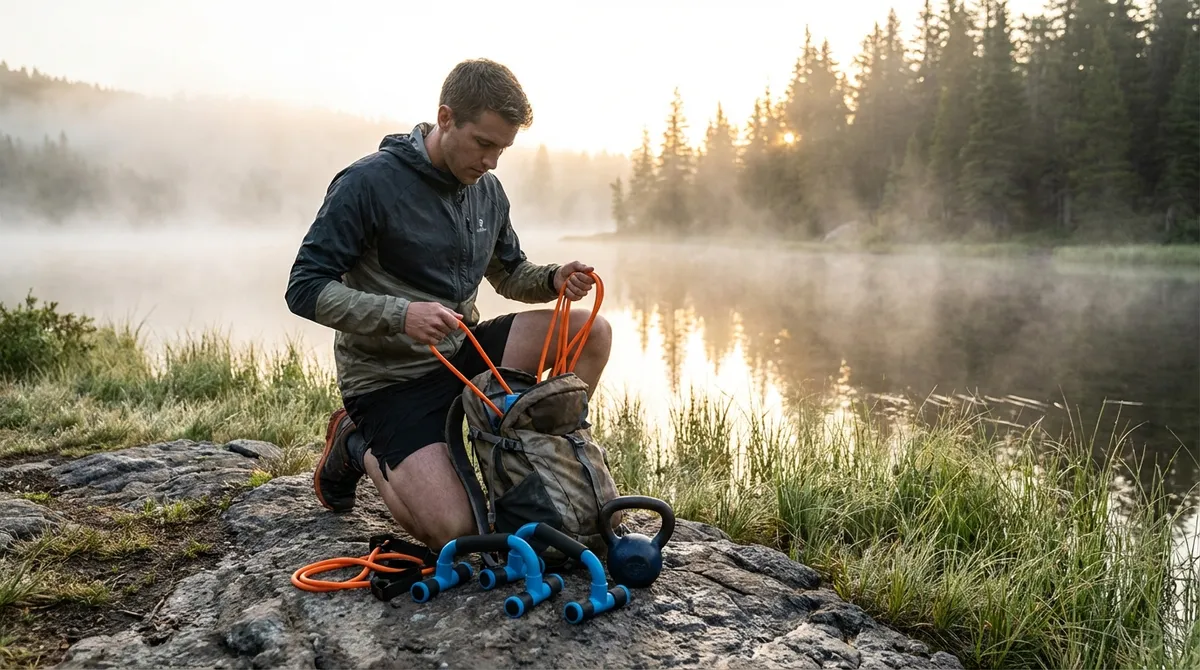
Think of your travel kit as a “power layer” you add to any environment. The goal isn’t to bring everything—just the highest-impact, lowest-bulk tools. Prioritize gear that’s light, compressible, and multi-use. Resistance bands, a lightweight suspension trainer, and a compact jump rope can easily slide into spare laptop sleeve space. These pieces can simulate pulling, pushing, and loaded lower‑body work you’d normally rely on machines and dumbbells for.
Durability matters more on the road than at home. Cheap bands or off-brand straps that snap mid‑workout aren’t just annoying; they can leave you injured halfway through a visa run. Choose brands that publish actual load ratings and use metal carabiners instead of plastic clips. Go for gear that can anchor safely to doors, trees, railings, and playground structures so you can adapt to whatever your day hands you. Once you have this core kit, every parking lot, park bench, and hostel bunk becomes potential training real estate.
Essential Portable Equipment for Nomads on the Move
Start with variable resistance bands that include handles and a door anchor. They weigh almost nothing and cover rows, presses, curls, triceps work, and even assisted pull‑ups if you find a sturdy bar. Add a flat “loop” band for glute and hip work that keeps you strong for long walks, hikes, and city exploration. These alone can replace an entire stack of dumbbells in a hostel where the “gym” is just a lonely treadmill.
A travel-friendly suspension trainer is the next upgrade. It rolls up to the size of a water bottle, hangs from a door, tree branch, or beam, and offers rows, push‑up variations, single-leg squats, and core work. For conditioning, a speed rope turns any patch of pavement into a cardio zone, especially when running isn’t safe or practical. If you’re often in one place for a few weeks, consider a foldable yoga mat or microfiber travel mat for floor work without sharing questionable hotel carpet. Each item should earn its space by offering full‑body, multi-angle training options—not one-trick novelties.
5 Trail-Tested Fitness Tips for Travelers and Digital Nomads
Tip 1: Build a “Default” 20-Minute Plan Using Only Your Kit
Create one go‑to session that needs no thought and no perfect environment. For example: 5 exercises, 40 seconds on, 20 seconds off—band rows, push‑ups or band presses, squats or band squats, band deadlifts or hip hinges, and a core move using your suspension trainer or band. When you’re jet-lagged, underslept, or rushed between calls, this template strips away decision fatigue. You just unpack, set a timer, and move.
Tip 2: Lock Training to an Existing Daily Anchor
On the road, schedules unravel fast. Tie your workout to something you never skip—like your first coffee or post-work shutdown. If you always hunt down coffee, commit to 15–30 minutes of training before the first sip, using only the gear in your bag. Or finish your last work task, close the laptop, and immediately set up your bands in the doorway. By hitching training to a non-negotiable habit, you avoid “I’ll do it later” in a city where “later” usually means a night market and three new invitations.
Tip 3: Train for Carrying, Climbing, and Walking—Not Just Aesthetics
Nomad life is secretly a strength sport: you’re hauling packs up hostel stairs, sprinting between gates, and clambering into tuk-tuks. Use your portable gear to train muscles and patterns you actually use—rows and face pulls for posture under a backpack, banded deadlifts and hip hinges to make suitcase carries easier, and single-leg exercises (split squats, step-ups, single-leg RDLs) to handle uneven streets and trails. Think “resilient traveler” first and “mirror muscles” second; aesthetics will follow, but function keeps you exploring longer.
Tip 4: Use Micro-Sessions on Transit Days
Travel days don’t have to be total write-offs. Break your workout into three 5–10 minute chunks: one before checkout, one during a layover or mid-drive stop, and one after check-in. Morning could be band rows and push-ups; the layover might be air squats, glute band walks, and calf raises; the evening ends with core work and mobility. Your portable equipment turns boring waits into productive mini blocks, so you arrive less stiff, less foggy, and more ready to explore instead of crashing.
Tip 5: Protect Sleep and Joints First, Intensity Second
Adventure lures you into overdoing it: sunrise hikes, midnight work calls, surprise food tours. When sleep tanks, swap all-out intensity for joint-friendly, technique-focused sessions using your travel kit. Bands and bodyweight let you reduce joint stress while still hitting muscles. Think controlled tempos, higher reps, and fewer maximal jumps or sprints. This approach keeps your knees, shoulders, and low back ready for more adventures—and reduces the odds of being sidelined in a country where healthcare access is complicated and expensive.
Adapting Gear to Any Environment Without Being “That Person”
Not every space welcomes a full-blown workout circus. Portable gear shines because it lets you blend in. In hotel rooms, use door anchors and quieter moves like rows, presses, and isometric holds instead of pounding burpees at 6 a.m. In public parks, attach a suspension trainer or band to a tree or railing, but check for damage risk and avoid blocking walkways. When training near crowds, shorter sessions and smaller movements keep you from becoming the unintentional street performance.
Be aware of local norms. In some places, shirtless park workouts are normal; in others, they stand out in all the wrong ways. Your gear helps you adjust: you can train indoors when outdoor workouts would feel unsafe or disrespectful. Always inspect anchor points—a sketchy balcony rail or weak door frame isn’t worth a fall. If you can’t find a safe anchor, downgrade to floor-based band work and bodyweight drills until you’re in a better environment. Flexibility isn’t a backup plan on the road; it’s the whole program.
Conclusion
You don’t need a fixed gym membership to build a strong, adventure-ready body—you need a smart mix of portable tools and a few trail-tested habits. A handful of bands, a suspension trainer, and a rope can compress a full training system into a corner of your carry-on. Combine that micro-gym with anchored routines, travel-specific movement patterns, and micro-sessions, and every new city becomes another training ground. Keep your kit light, your approach flexible, and your standards high, and you’ll stay strong enough to chase every side quest your travels throw at you.
Sources
- [American College of Sports Medicine – Resistance Training Guidelines](https://www.acsm.org/docs/default-source/files-for-resource-library/resistance-training-for-health-and-fitness.pdf) - Evidence-based recommendations on strength training volume, frequency, and safety
- [Mayo Clinic – Resistance Bands: How to Use Them Safely](https://www.mayoclinic.org/healthy-lifestyle/fitness/in-depth/resistance-bands/art-20044843) - Practical guidance on selecting and safely using resistance bands
- [Harvard Health – Why Strength Training Matters](https://www.health.harvard.edu/staying-healthy/why-strength-training-is-so-important) - Overview of the health benefits of regular strength training, especially for travelers seeking long-term resilience
- [CDC – Physical Activity Guidelines for Adults](https://www.cdc.gov/physical-activity-basics/guidelines/adults.html) - Official recommendations for weekly activity levels and intensity
- [Cleveland Clinic – How Sleep Affects Exercise (and Vice Versa)](https://health.clevelandclinic.org/sleep-and-exercise) - Explains the relationship between quality sleep, recovery, and training effectiveness
Key Takeaway
The most important thing to remember from this article is that this information can change how you think about Portable Equipment.