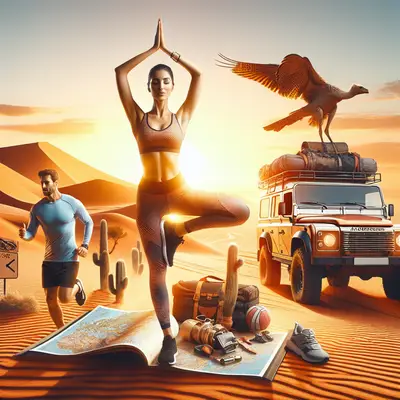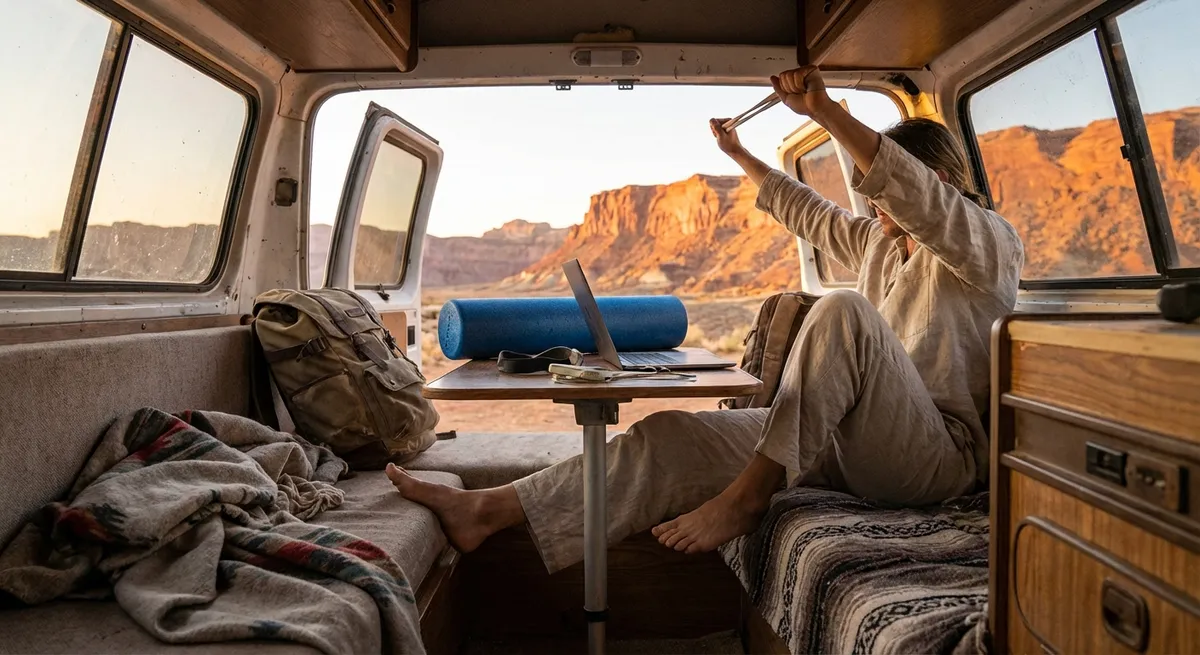
There’s the version of travel you see on social media—cliffside sunsets, perfect flat whites, coworking rooftops—and then there’s what your body feels: tight hips, a stiff back, swollen ankles, and a neck that hates economy seats. Nomad life can turn you into a walking knot if you don’t manage recovery as seriously as you manage your itinerary. The good news: you don’t need a home gym, spa membership, or checked luggage to keep your body moving well. You just need a few travel‑proof tactics and a willingness to treat recovery like gear maintenance for your own body.
Why Mobility Is Survival Gear for Nomads
Constant movement sounds active, but most nomads live in a strange paradox: you’re changing countries every month yet sitting for most of your waking hours. Long-haul flights, bus rides, laptop marathons, and hostel bunks all stack the odds toward stiffness and overuse injuries.
Poor mobility doesn’t just feel bad—it shrinks your “adventure radius.” A tight lower back makes you skip that sunrise hike. Cranky knees turn “let’s walk the city” into “let’s call a ride.” And consistent pain drains the mental bandwidth you need for creative work, navigation, and staying safe in unfamiliar places.
Instead of chasing perfect workouts, think like an expedition leader: your body has to be durable enough to handle awkward beds, heavy backpacks, random staircases, and surprise detours. Mobility, light strength work, and quick recovery rituals are how you keep your “travel vehicle” (your body) in working order—no matter where you sleep tonight.
Below are five traveler‑tested fitness tips that fit in a carry‑on, work in tiny spaces, and keep you ready for the next adventure.
Tip 1: Turn Every Transit Stop Into a Micro-Mobility Session
Transit is where your body takes the worst punishment—and where you have the most dead time to fix it.
At airports, bus terminals, train platforms, or ferry queues, turn idle waiting into a 5–10 minute mobility circuit:
- Ankle circles and calf pumps
Standing or seated, draw slow circles with your toes, then pump your heels up and down. This helps circulation and reduces swelling from long sits.
- Hip openers with “world’s greatest stretch”
In a quiet corner, step one foot forward into a lunge, hands inside your front foot. Drop your back knee if needed. Rotate your torso toward the front leg, reach one arm up, breathe. Switch sides. This hits hips, hamstrings, and upper back at once.
- Doorway or column chest stretch
Place your forearm against a wall or column at 90 degrees and gently rotate your body away to open tight chest muscles from laptop hunching.
- Neck reset
Gently tuck your chin (double-chin style), then slowly rotate your head left and right as if saying “no” in slow motion. Keep the movement small and controlled.
Treat these as “maintenance stretches,” not intense workouts. The goal is to keep joints moving and blood flowing so you don’t step off your flight feeling 20 years older than your passport says.
Tip 2: Build a Pocket-Sized Recovery Kit
You don’t need a suitcase full of gear, but a tiny recovery kit can save you from overpriced airport massages and emergency pharmacy runs. Dedicate a small pouch to a few lightweight tools:
- Mini massage ball or lacrosse ball
Roll under your feet, along your glutes, upper back (against a wall), or hip flexors. Perfect after walking cobblestones or carrying a backpack all day.
- Micro resistance band (loop band)
Takes no space and lets you wake up sleepy glutes and shoulders in a hotel room or airport restroom stall (yes, really).
- Travel-sized magnesium spray or lotion
Some travelers find magnesium helps with muscle relaxation and cramping after long days or hard workouts.
- Packable water bottle
Hydration is recovery 101. A collapsible bottle weighs almost nothing and protects you from the “forgot to drink water until 6 p.m.” problem.
With this kit, you can run a 5–15 minute “recovery protocol” almost anywhere:
- Rehydrate and sip while you work on tight spots with the ball.
- Run a quick band circuit (glute bridges with a band, lateral steps, shoulder pull-aparts).
- Finish with a few long, relaxed stretches before bed.
Think of this as carrying a pocket-sized physical therapist in your backpack—minus the co-pay.
Tip 3: Use “Movement Anchors” Instead of Full Workouts
Travel days are unpredictable. You might plan a 45‑minute workout and then lose your gym, your time, or your energy to delayed flights and visa lines. Instead of all‑or‑nothing thinking, build your day around “movement anchors”: tiny, non‑negotiable bouts of movement that keep your body online even when life goes sideways.
Examples of movement anchors:
- Morning wake‑up sequence (5–7 minutes)
- 10–15 bodyweight squats
- 10 hip hinges (hands on hips, push hips back)
- 10 wall or floor push‑ups (elevate hands if needed)
- 20–30 seconds of cat‑cow on the floor or bed
- 20–30 seconds of child’s pose or seated forward fold
- Midday screen break (3–5 minutes)
- 10 band pull‑aparts or doorway chest stretches
- 10–20 standing calf raises
- 5–10 slow bodyweight lunges or step‑backs
- 30 seconds of gentle neck mobility
- Pre‑sleep downshift (5–10 minutes)
- 1–2 minutes of slow nasal breathing, lying on your back
- 30–60 seconds per side of hip flexor stretch
- 30–60 seconds per side of hamstring or glute stretch
- 1–2 minutes of light spinal twists on the floor or bed
Even on chaotic days, you can usually protect two of these anchors. Over weeks and months, they do more for your health and mobility than the occasional “perfect” workout you never quite find time for.
Tip 4: Treat Walking as Your Nomad Superpower
You’re a traveler—use that. Walking is the most underrated, logistics‑friendly, zero‑equipment training on the planet, and it doubles as cultural immersion.
Ways to turn walking into structured training without losing the joy of exploration:
- Adopt “active transport” as your default
If a destination is under 25–30 minutes on foot and the area is safe, walk it. You’ll quietly accumulate 8,000–12,000 steps on errands and meetups alone.
- Add “terrain challenges” to your routes
Seek stairs, hills, or bridges. Do an extra ascent of that long staircase you just found. Your legs and cardio will thank you, and the viewpoint probably doesn’t suck either.
- Use loaded walking when safe
When carrying your backpack between stays, walk a bit longer (if the area is safe and well‑lit). That’s functional strength training baked into your moving day.
- Walk after heavy screen time or big meals
A 10–20 minute walk after work or dinner can improve blood sugar control, digestion, and sleep quality—key pillars of recovery for anyone living out of a bag.
If you like numbers, track steps with your phone or watch, but don’t become a slave to the counter. The real goal is to make “can I walk this?” your first question in every new city.
Tip 5: Protect Sleep Like It’s Expensive Equipment
You can out‑walk a bad bus ride, you can stretch away a stiff neck, but you cannot out‑train chronic sleep deprivation. For nomads, bad sleep is basically a feature: new beds, street noise, time zones, and odd work hours. That makes sleep hygiene non‑optional if you want to stay healthy, strong, and clear‑headed on the road.
Travel‑friendly sleep tactics:
- Create a portable sleep cocoon
- Eye mask (blackout level, not the flimsy airline kind)
- Earplugs or noise‑canceling headphones with a downloaded white-noise track
- A light scarf or buff that can double as a pillowcase or extra eye cover
- Anchor your body clock with light
Get outside into natural light within an hour of waking whenever possible. If you land in a new time zone, use daylight walks to help reset your circadian rhythm.
- Keep a simple pre‑sleep ritual
Same 5–10 minute wind‑down no matter where you are: stretch + breathwork + no screens in your direct line of sight. The consistency tells your brain, “We sleep after this.”
- Watch the caffeine and late‑night work
Try to cut caffeine 6–8 hours before your target bedtime; use decaf or herbal tea at night. If you must work late, dim screens and room lights to reduce blue‑light blast.
Quality sleep is the multiplier for everything else—movement, mood, creativity, and resilience. Nomad life is demanding; your body deserves a fighting chance.
Conclusion
Nomad health isn’t about chasing gym perfection in every new city. It’s about building a body that can handle bumpy roads, surprise itineraries, and long laptop days without falling apart. Micro‑mobility at transit stops, a tiny recovery kit, daily movement anchors, adventurous walking habits, and disciplined sleep hygiene are your travel‑proof foundation.
Think of yourself as both explorer and expedition gear. Your passport gets you across borders—but your joints, muscles, and nervous system get you up the mountain, through the alleys, onto the scooter, and back to your laptop again tomorrow. Treat them like your most important kit, and your adventures can stay wild without your body paying the price.
Sources
- [Centers for Disease Control and Prevention – Benefits of Physical Activity](https://www.cdc.gov/physicalactivity/basics/pa-health/index.htm) - Overview of how regular movement supports health, including cardiovascular and metabolic benefits
- [Harvard T.H. Chan School of Public Health – Walking for Health](https://www.hsph.harvard.edu/nutritionsource/walking/) - Evidence-based breakdown of why walking is such powerful, accessible exercise
- [Johns Hopkins Medicine – Sleep and Mental Health](https://www.hopkinsmedicine.org/health/wellness-and-prevention/sleep-and-mental-health) - Explains how sleep quality impacts mood, cognition, and daily performance
- [National Institutes of Health – Sleep and Chronic Disease](https://www.ncbi.nlm.nih.gov/books/NBK19961/) - Research-backed discussion of sleep’s role in long-term health and disease risk
- [American Council on Exercise – Stretching and Flexibility](https://www.acefitness.org/resources/everyone/blog/7440/the-importance-of-stretching/) - Practical guidance on mobility work and why regular stretching matters
Key Takeaway
The most important thing to remember from this article is that this information can change how you think about Nomad Health.