When your “home base” changes every few nights, staying fit can feel like chasing a moving target. One hotel has a full gym, the next has a broken treadmill and a yoga mat that’s seen things. But you don’t need a pristine fitness center—or even much floor space—to keep your body adventure-ready. With a backpack’s worth of portable tools and a few smart tactics, your hotel room becomes a mini training ground between flights, client calls, and sunset missions.
This guide lays out five travel-proof fitness tips designed for travelers and digital nomads who live out of carry-ons but still want trail-ready strength and everyday stamina.
Map Your “Movement Zones” Before You Unpack
Most travelers check the Wi‑Fi and minibar first. If you care about performance, scan the room like a field operative.
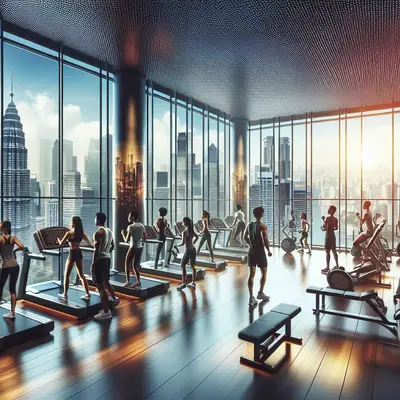
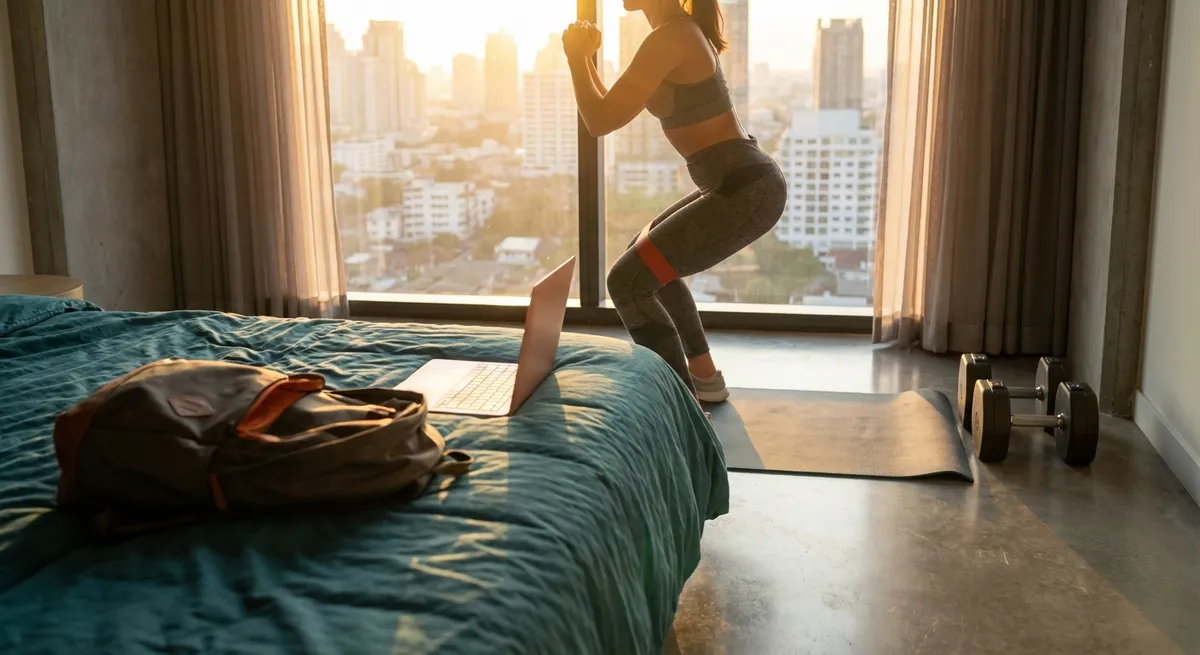
Look for three simple “zones”: a clear floor patch for bodyweight work, a stable anchor point (door, bedframe, or heavy desk) for bands or suspension trainers, and a stretch-friendly space near a wall for mobility work. That’s your micro-gym. If the hotel has a fitness center, walk through it once—even if you plan to train mostly in your room. Identify one or two key tools you can use efficiently: a cable stack, adjustable dumbbells, or a rowing machine.
Treat the whole property as your training ground. Stairs become a conditioning hill; the hallway doubles as a walking lunge runway; a quiet corner near the elevator can host a five‑minute mobility reset after long calls. When you start seeing “movement zones” instead of “cramped room,” consistency gets a lot easier.
Tip 1: Build a No-Excuse Bodyweight Circuit
Your strongest insurance policy against bad gyms and tight schedules is a go‑anywhere bodyweight routine. Aim for a simple, repeatable circuit you can hit in 15–20 minutes with zero setup.
Include four movement patterns: push, pull (or a pulling alternative), hinge, and squat, plus a core finisher. For example:
- Push: Incline push‑ups on the desk or bedframe
- Hinge: Hip hinges or single‑leg Romanian deadlifts (bodyweight)
- Squat: Air squats or split squats beside the bed
- Core: Forearm plank or dead bugs on a towel or travel mat
If you don’t have a pull-up bar or bands, substitute with isometric “wall pulls” (leaning back and pulling hard against a towel wedged in the door) or extra rowing when you find a cable machine in a hotel gym later that week.
Work in time blocks instead of reps when jet lag hits: 30 seconds work, 20 seconds rest, cycling through 3–4 rounds. The goal isn’t to shatter records—it’s to keep your joints talking, your muscles awake, and your head clear after hours of flights or screen time.
Tip 2: Turn Minimal Gear into Maximum Options
You don’t need a rolling suitcase full of equipment. A compact “mobile strength kit” can live in your backpack and barely nudge the scale but radically expand your hotel training options.
Consider packing:
- A light and medium resistance band with handles
- A mini‑loop band for hips and shoulders
- A jump rope (or a speed rope if you’re experienced)
- A collapsible or fabric suspension trainer (optional but powerful)
With those, you can mimic many gym moves: banded rows using the door as an anchor, banded Romanian deadlifts, overhead presses, hip abductions, and glute bridges with added resistance. A jump rope in a parking lot or in a high-ceiling lobby area (off‑peak hours) becomes your portable cardio machine.
Choose gear that passes the “airport test”: light enough to carry all day, simple enough to clear security without drama, and tough enough to survive being jammed under a seat. Over weeks and months, the difference between having and not having that kit is the difference between improvising confidently and skipping workouts altogether.
Tip 3: Sync Your Training with Jet Lag and Time Zones
Your body’s internal clock doesn’t care what your boarding pass says. When you cross time zones, your training needs to adjust as much as your meetings do.
On arrival days, aim for shorter, circulation-focused sessions: brisk stair climbs, 10–15 minutes of light band work, and mobility. Think “reset,” not “max effort.” Use daylight to your advantage—training outdoors near the hotel or by a bright window helps your circadian rhythm adjust more quickly and can improve sleep quality.
If you wake up absurdly early in a new time zone, turn it into a quiet training window before emails start. Favor strength and mobility in the new morning, keeping higher-intensity intervals for times when you’ve had at least a day to adapt. Hydration and light, protein-forward meals before and after training help reduce the fogginess that comes with long-haul travel.
Instead of chasing a perfect weekly plan, shift your mindset: on the road, your “program” is a rolling 3–4 day loop of strength, conditioning, and mobility you can slide forward or back depending on flights and energy.
Tip 4: Use Micro-Sessions to Outmaneuver a Packed Schedule
When your calendar is stacked from breakfast meetings to late‑night video calls, the idea of a 60‑minute workout can feel impossible. Break your expectation instead of breaking your consistency.
Use “micro‑sessions”: 5–10 minute bites of movement threaded through your day. For example:
- After checking email: 3 rounds of 10 incline pushups + 10 air squats
- Between calls: 60 seconds of jumping jacks, 30 seconds of high knees, 30 seconds rest—repeat 3 times
- Before showering: a 5‑minute mobility flow for hips, back, and shoulders
These small bursts improve blood flow, reduce stiffness from endless sitting, and keep your nervous system primed for bigger efforts on days when you have more time. A handful of micro‑sessions can add up to 20–30 minutes of training without ever needing a dedicated “workout block.”
Mentally, they’re easier to start, which matters when you’re underslept, overcaffeinated, and tempted to collapse on the bed with room service.
Tip 5: Treat Recovery Like Essential Gear, Not a Luxury
Adventures and deadlines both drain the same battery. If you ignore recovery, hotel training becomes another stressor instead of a performance booster.
Start with sleep. Use blackout curtains or an eye mask, set the room temp cooler if you can, and keep your last screen time 20–30 minutes before lights out. On late‑night work sprints, a very short, low‑light mobility session in your room can help switch your nervous system from “go mode” to “sleep mode.”
Hydration and movement are your jet lag allies. Drink water steadily, especially on and after flight days, and walk the halls or nearby streets instead of parking in a chair the moment you arrive. A compact massage ball or even a tennis ball in your bag lets you roll out tight hips, calves, and upper back against the wall after long travel days.
Finally, respect “down days”—especially on multi‑week trips. A deliberate light day of walking, stretching, and easy bands is not a failure; it’s what keeps your joints, tendons, and head ready for the next wave of work and adventure.
Conclusion
You don’t need a perfect gym, a fixed address, or a rigid schedule to stay strong on the road. You need a few reliable tools, a flexible plan, and the willingness to turn whatever space you have—cramped room, hotel stairwell, quiet hallway—into your personal training ground.
When fitness becomes woven into how you travel instead of something you “try to fit in,” every border crossing, client visit, or new city becomes another rep in a long, strong journey. Keep your kit light, your plan adaptable, and your standards high enough to matter but low enough to be repeatable. Your future adventures will thank you.
Sources
- [American College of Sports Medicine – Staying Active While Traveling](https://www.acsm.org/news-detail/2016/11/22/staying-active-while-traveling) – Practical guidance from ACSM on maintaining physical activity on the road
- [CDC – Physical Activity Basics](https://www.cdc.gov/physicalactivity/basics/index.htm) – Evidence-based recommendations for adults on how much and what types of exercise to prioritize
- [Sleep Foundation – How Travel Affects Sleep](https://www.sleepfoundation.org/travel-and-sleep) – Explains jet lag, circadian disruption, and strategies to improve sleep during travel
- [Harvard Health Publishing – The Importance of Stretching](https://www.health.harvard.edu/staying-healthy/the-importance-of-stretching) – Outlines benefits of flexibility and mobility work, especially for people who sit or travel frequently
- [Mayo Clinic – Resistance Bands: Portable, Affordable Strength Training](https://www.mayoclinic.org/healthy-lifestyle/fitness/in-depth/resistance-bands/art-20046673) – Details on how and why to use resistance bands effectively and safely
Key Takeaway
The most important thing to remember from this article is that this information can change how you think about Hotel Fitness.