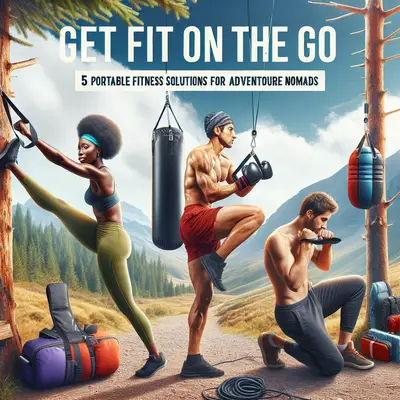
You don’t need a home gym or a permanent address to build a powerful, capable body. If your life lives in carry-ons, co‑working spaces, and border crossings, your training just needs to be smarter, lighter, and brutally efficient. This guide is your field manual for staying strong with gear that actually earns its spot in your pack—and five dialed‑in tips to keep travelers and digital nomads fit on the move.
Build A “Go Kit” That Lives In Your Backpack
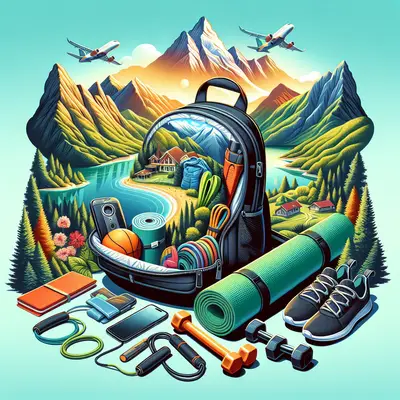
Think of your portable gear as a permanent part of your travel system, not something you toss in last-minute. A compact “go kit” should be light enough that you never debate bringing it, but versatile enough to cover strength, mobility, and conditioning.
Anchor your kit with multi-use pieces: a long resistance band, a mini-loop band, and a lightweight jump rope. Add one or two tactical extras like a suspension trainer or foldable push-up handles if you tolerate a bit more weight. Prioritize gear that compresses flat, doesn’t scream “gym equipment” at airport security, and works in tight spaces like hostel corners or tiny rooms. Pack it in a small mesh pouch so you can grab it fast between check-out and your next bus ride. If it’s always ready, you’ll use it. If it’s buried under laundry and cables, you won’t.
Tip 1: Turn Resistance Bands Into A Traveling Strength Rack
Resistance bands are essentially your carry‑on squat rack, cable machine, and rehab lab rolled into a few ounces of rubber. With a single long band and a mini-loop, you can hit every major muscle group without needing a gym floor or barbell.
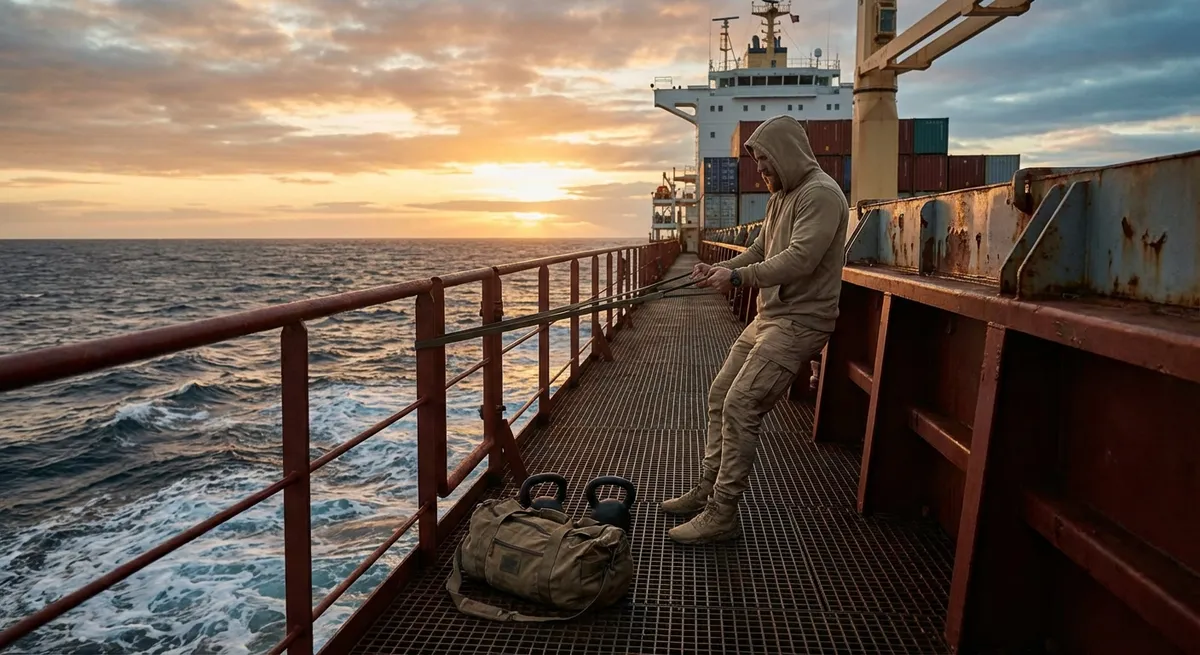
Use a heavy long band for rows, deadlift patterns, presses, and face pulls by looping it around poles, door frames (with a door anchor), or sturdy bed frames. The increasing resistance as the band stretches challenges your muscles differently than free weights and is gentle on joints hammered by long travel days. The mini-loop band locks in your glutes and hips: monster walks in a hallway, banded squats in a hostel common room, or hip bridges on your bed. Stack bands for extra load, or slow your tempo to make lighter bands brutally effective. Treat bands as serious strength tools, not warm‑up toys, and you’ll maintain muscle and power across time zones.
Tip 2: Use A Suspension Trainer To Dominate Any Doorway
A suspension trainer (like TRX-style straps) turns doors, trees, railings, and bus stops into training stations. It’s one of the few pieces of portable gear that can challenge your pulling strength as well as pushing, which most bodyweight travel routines lack.
Set it up on a sturdy door (that closes away from you), balcony beam, or jungle gym and you instantly unlock rows, chest presses, hip hinges, single-leg squats, and core work. By changing your angle to the anchor point, you can scale movements from beginner-friendly to savage. This is key on the road: you may be under-slept, jet-lagged, or tight from long rides, so being able to dial difficulty up or down on the fly keeps you consistent. The trainer packs down to roughly the size of a water bottle, and if you use it 3–4 times a week for 20–30 minutes, it’s arguably the highest “strength per gram” investment in your pack.
Tip 3: Make Cardio Out Of What The City Gives You
You don’t always need a dedicated piece of cardio gear. Your surroundings—stairs, plazas, waterfronts, side streets—can become your engine-building playground. The trick is to structure it like training, not just random wandering.
Pick a landmark run or power walk route near your stay: a hill, a staircase, a waterfront loop, or a quiet neighborhood circuit. Layer in short sprints, stair repeats, or fast walking intervals between slow-paced exploration. If you’ve packed a jump rope, use it for 30–60 second bursts between bodyweight or band sets, especially in cramped hotel rooms. On days when weather or safety shuts down outdoor cardio, run “station circuits” indoors: 30 seconds of burpees, 30 of high knees, 30 of mountain climbers, 30 of rope skipping, repeated for 10–15 tough minutes. You’re not chasing perfect workout conditions—you’re harvesting whatever the city offers you that day and turning it into conditioning.
Tip 4: Use Your Tech Like A Training Partner, Not A Distraction
Your phone is already glued to you—make it your portable coach instead of your biggest excuse. A couple of smart app choices plus a simple tracking habit will keep you progressing instead of repeating the same hotel push-up routine forever.
Use a timer or interval-training app to structure sessions so you don’t drift into aimless scrolling between sets. Download offline-capable fitness apps or bookmark short, equipment-specific routines (band-only, suspension-only, bodyweight-only) for no‑Wi‑Fi locations or dodgy connections. Track your key metrics in a basic notes doc: number of reps per set, band color or thickness used, angles on your suspension trainer rows, and how many minutes of conditioning you clocked. When you land in a new city, you immediately know how to beat last week’s you, even if everything else—bed, timezone, language—has changed. Consistency plus small progressions turns travel chaos into measurable gains.
Tip 5: Lock In A “Minimum Effective Dose” Routine For Crazy Days
Some days go sideways: delayed flights, lost bags, client fires, or back‑to‑back calls. The worst mistake is deciding those days “don’t count” and skipping movement entirely. Instead, design a non-negotiable “minimum effective dose” routine that you can hammer out in 10–15 minutes with whatever gear you have.
Choose 3–4 cornerstone moves that require minimal space: for example, a push, a pull, a leg exercise, and a core move. With a basic kit, that could look like band rows, push-ups, split squats, and plank variations. Set a timer for 12 minutes and cycle through as many controlled rounds as possible without rushing your form. If you’re really cooked, pick 1–2 moves and do them every hour on the hour for 5 quick minutes between tasks. The goal isn’t to crush yourself; it’s to protect your identity as someone who trains, no matter what the airport or the Airbnb throws at you. When your baseline is this reliable, longer workouts become a bonus, not a fragile plan.
Conclusion
Your passport, your laptop, and your portable gear are all just tools—they only matter if you actually use them. Build a compact kit that lives in your backpack, learn a handful of movements that hit your whole body, and then let every new city become your training ground. Strong nomads don’t wait for perfect gyms or ideal schedules. They adapt, improvise, and keep moving—one banded row, doorway row, and stair sprint at a time.
Sources
- [American Council on Exercise – Resistance Bands 101](https://www.acefitness.org/resources/everyone/blog/7485/resistance-bands-101-how-to-use-them-effectively/) - Overview of benefits, setup, and exercise ideas for band training
- [TRX Training – Science of Suspension Training](https://www.trxtraining.com/train/science-of-suspension-training) - Explains how suspension training challenges strength, stability, and coordination
- [Harvard Health – The Importance of Strength Training](https://www.health.harvard.edu/staying-healthy/the-importance-of-strength-training) - Summarizes health, longevity, and mobility benefits of regular resistance work
- [CDC – Physical Activity Guidelines for Adults](https://www.cdc.gov/physicalactivity/basics/adults/index.htm) - Evidence-based recommendations for weekly activity and strength training
- [Mayo Clinic – Interval Training For Fitness](https://www.mayoclinic.org/healthy-lifestyle/fitness/in-depth/interval-training/art-20044588) - Details how structured intervals can improve cardio fitness efficiently
Key Takeaway
The most important thing to remember from this article is that this information can change how you think about Portable Equipment.