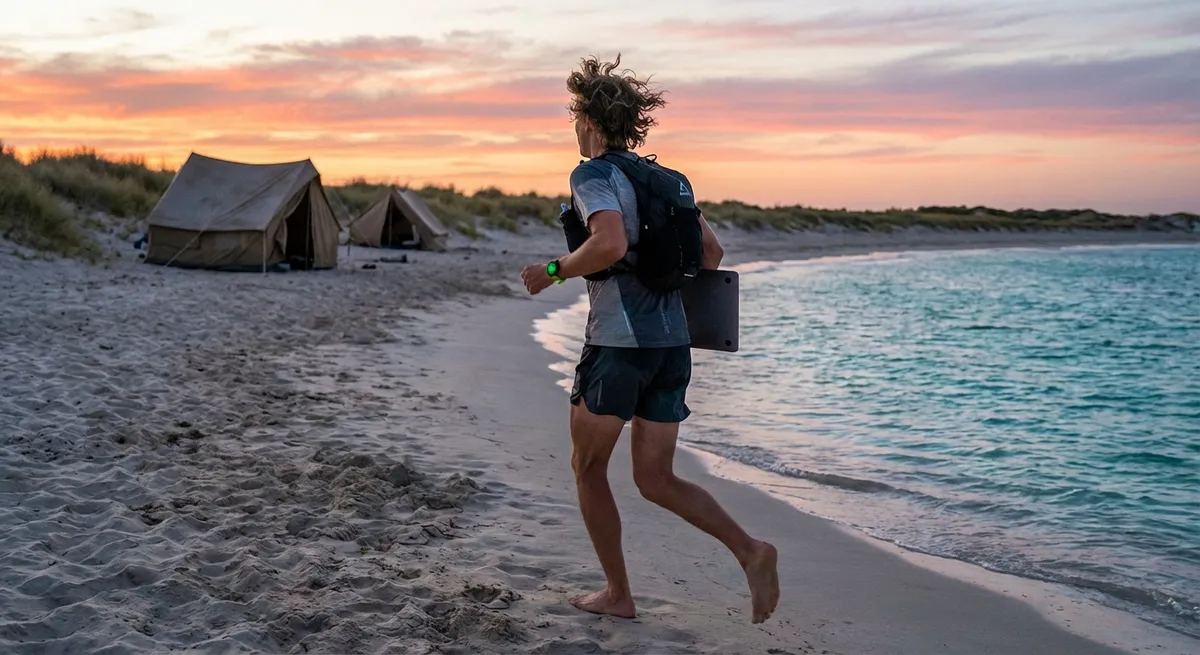
Travel days blur together fast—border stamps, bus tickets, new beds, new Wi‑Fi passwords. In the middle of all that motion, your body quietly keeps score. Nomad health isn’t about chasing a perfect routine; it’s about building a rugged, packable system that survives red-eye flights, surprise layovers, and weeks of coworking-lounge ergonomics. This is your field guide to staying strong, clear-headed, and ready for the next border crossing without hauling a home gym on your back.
Redefining Fitness When Your Home Has Wheels
When your “gym” is whatever floor space you can find between outlets and backpacks, traditional fitness rules fall apart. Long work blocks, erratic sleep, and new foods can leave you feeling drained before you even think about training. The solution isn’t more discipline—it’s smarter design. Think of your health like your passport: always on you, easy to access, ready for short-notice missions.
Nomad-friendly fitness isn’t built around hour-long workouts; it’s built around micro-sessions that fit between calls, buses, and check-in times. Instead of “I need equipment,” you think “How can I challenge my body with what’s here?” Door frames become pull-up stations, benches become step-up boxes, and a folded towel becomes a surprisingly brutal slider for core work. This mindset shift keeps you training consistently, even when your environment changes daily.
Just as you audit your backpack for weight and usefulness, you can audit your health habits for the same criteria. Is this practice portable? Does it work in tight spaces? Can I do it jet-lagged? The more your answers are “yes,” the more resilient and sustainable your nomad life becomes.
Tip 1: Build a “No-Excuse” Bodyweight Circuit
When Wi‑Fi drops or a train is delayed, you don’t need a gym—you need a go-to routine you can launch in seconds. A simple bodyweight circuit hits every major muscle group, spikes your heart rate, and requires no equipment and almost no space. Think in movements, not machines: push, pull, hinge, squat, and carry (or stabilize).
A sample minimalist circuit:
- Push: Incline push-ups against a bed, table, or wall
- Pull: Backpack rows (load your bag; row it from the floor or a chair)
- Hinge: Good mornings or hip hinges, focusing on slow control
- Squat: Air squats or split squats using a chair for balance
- Core: Planks, side planks, or dead bugs on a towel or jacket
Cycle each move for 30–40 seconds with 20 seconds of rest, 3–5 rounds total. That’s 15–25 minutes, done. This circuit scales easily: slow down for more control, add a pause at the bottom of each rep for intensity, or shorten rest times for more cardio demand. Because it’s the same framework every time, you don’t waste mental energy figuring out what to do—vital when you’re tired, jet-lagged, or overloaded from travel logistics.
Tip 2: Turn Transit Time into Mobility Time
Planes, buses, and trains are basically full-body stiffness machines. Long hours in a seat shorten your hip flexors, lock up your back, and wreck your posture. Instead of surrendering to that tightness, treat transit as a mandatory mobility workshop. Think “move a little, often” rather than “stretch once at the end.”
On flights or buses, aim for a mini-mobility break every hour or two. Simple drills: ankle circles and calf pumps to support circulation, seated spinal twists, gentle neck rotations, and shoulder rolls to combat laptop hunch. When you can stand, add calf raises, quad stretches using your seat for balance, and hip circles in the aisle or at the back of the cabin. In stations or terminals, use a wall for chest-opening stretches and hamstring stretches.
You’re not trying to get bendy enough for Instagram—you’re preserving baseline function. Consistent light movement helps counteract the risks associated with prolonged sitting, including stiffness and reduced circulation. Build a rule: every time you refill your water bottle or visit the bathroom, you add 60–90 seconds of stretching or mobility. Over a full travel day, that quietly adds up to real maintenance work.
Tip 3: Pack a Micro-Gym That Weighs Almost Nothing
Your backpack is prime real estate, so anything that makes the cut has to earn it. A “micro-gym” should be light, compact, and versatile. A single long resistance band can mimic rows, presses, pull-aparts, and anchored core work using bed frames, railings, or sturdy door hinges. A mini-loop band fits in your pocket and turns basic squats, glute bridges, and lateral steps into serious lower-body sessions.
If you’re willing to carry one more item, a lightweight jump rope gives you high-intensity cardio in a tiny package. Ten focused minutes of intervals—30 seconds jumping, 30–60 seconds rest—can match or beat much longer runs in terms of conditioning. When jumping isn’t an option, high-knee marches or shadowboxing in place can scratch the same itch without bothering neighbors or hotel staff.
The key is stacking tools that multiply your options instead of doing just one thing. One long band, one mini-loop, and one rope add almost no weight but unlock hundreds of combinations. This setup works on balconies in Bangkok, hostel courtyards in Lisbon, or tiny apartments in Mexico City. By defaulting to this micro-gym when you land somewhere new, you remove friction and keep your training consistent.
Tip 4: Anchor Your Routine with “Non-Negotiable” Health Habits
Travel destroys rigid schedules, but it responds surprisingly well to flexible anchors. Instead of “I work out at 7 a.m. every day,” think “I move my body in three small ways, no matter where I am.” Pick a few non-negotiables that can be done in almost any environment and don’t require motivation theatrics.
Examples of strong anchors:
- A daily step minimum (e.g., 7–10k steps), hit by walking to coffee shops, coworking, or viewpoints instead of always grabbing a cab
- A 5–10 minute morning movement ritual: cat-cows, hip circles, arm swings, and a short plank
- A post-work “shutdown set”: 2–3 rounds of squats, push-ups, and dead bugs before you close your laptop
- A nightly wind-down: brief stretch session and 5 minutes of slow breathing before bed
These anchors give your days shape, even when time zones and cities change. They also help stabilize sleep and energy levels by creating small, consistent signals for your body. Instead of chasing perfection, you’re building a sturdy baseline: enough movement, enough recovery, and enough structure to keep you from feeling like a permanently jet-lagged laptop zombie.
Tip 5: Eat Like You’re On Expedition, Not Vacation
Long-term travel and digital nomad life feel like a constant soft-launch party: new restaurants, local specialties, cheap street food. You should absolutely enjoy that—but if every day is treated like a holiday, your energy, focus, and long-term health pay the price. The mindset shift: you’re on an expedition, not a week-long escape. Your body is your primary piece of gear, not an afterthought.
Start by controlling the easy wins. Aim for a reliable breakfast or first meal that’s protein-forward and not a sugar bomb—think eggs, yogurt, local beans, canned fish, or simple oats, depending on what’s available. Protein supports muscle maintenance, especially when training is inconsistent, and steadier blood sugar keeps your brain clear for work and navigation. When eating out, scan menus for a solid protein source, a vegetable, and a complex carb; then add the fun stuff.
Hydration is your stealth ally. Travel days, high heat, and air conditioning can all dehydrate you fast, amplifying fatigue and headaches. Carry a refillable bottle, drink regularly, and add an electrolyte packet on heavy training or very hot days. Finally, treat alcohol and late-night heavy meals like optional gear—sometimes useful, often just extra weight. Enjoy them with intention, not by default, so they don’t quietly sabotage your sleep and recovery.
Conclusion
Nomad health isn’t about finding the perfect gym in every city or sticking to a rigid plan while life moves under your feet. It’s about building a lean, adaptable system that thrives on change: a bodyweight circuit you can run anywhere, mobility work woven into travel days, a micro-gym that fits in your pack, daily anchors that survive time zones, and food choices that support the miles ahead. When you move through the world with a strong, well-maintained body, every hilltop viewpoint, last-minute detour, and sunrise bus ride gets better.
Pack light, move often, and treat your health like the most important gear you bring. The road will throw chaos at you. With the right habits, you’ll be ready for all of it.
Sources
- [World Health Organization – Physical Activity](https://www.who.int/news-room/fact-sheets/detail/physical-activity) - Global guidelines and benefits of regular movement, helpful for setting realistic nomad routines
- [American College of Sports Medicine – Exercise and Physical Activity Basics](https://www.acsm.org/education-resources/trending-topics-resources/exercise-physical-activity) - Evidence-based recommendations for strength and cardio that can be adapted to travel
- [Harvard T.H. Chan School of Public Health – The Nutrition Source](https://www.hsph.harvard.edu/nutritionsource/) - Research-backed guidance on building balanced meals while on the road
- [CDC – Traveling with Chronic Conditions](https://wwwnc.cdc.gov/travel/page/travelers-with-chronic-illnesses) - Practical considerations for travelers managing ongoing health issues
- [Sleep Foundation – Jet Lag and Sleep](https://www.sleepfoundation.org/shift-work-disorder/jet-lag) - Explains how time zone changes affect sleep and recovery, crucial for nomad performance
Key Takeaway
The most important thing to remember from this article is that this information can change how you think about Nomad Health.