Holiday travel is here, which means two things: delayed flights and bodies slowly fusing to terminal seats. Bored Panda just highlighted “25 Travel Gadgets For Anyone Who Is Already Mentally Preparing For The Chaos Of Holiday Travel,” and the timing could not be better. While the internet obsesses over compression cubes and clever cable organizers, we’re zooming in on a different angle: which portable gadgets actually help you stay strong, mobile, and sane when you’re living out of a backpack and sprinting between gates?
Inspired by the current wave of “travel gadget” listicles and the real‑world grind of crowded airports, we’re breaking down a Core On Tour‑style approach: gear that earns its space because it keeps your body moving, not just your stuff organized.
Below are five travel‑proof fitness tips, each anchored by a piece of portable equipment you can throw in your carry‑on and forget—until it saves your day (and your back).
1. Turn Your Packing Cube Obsession Into a Mini Strength System
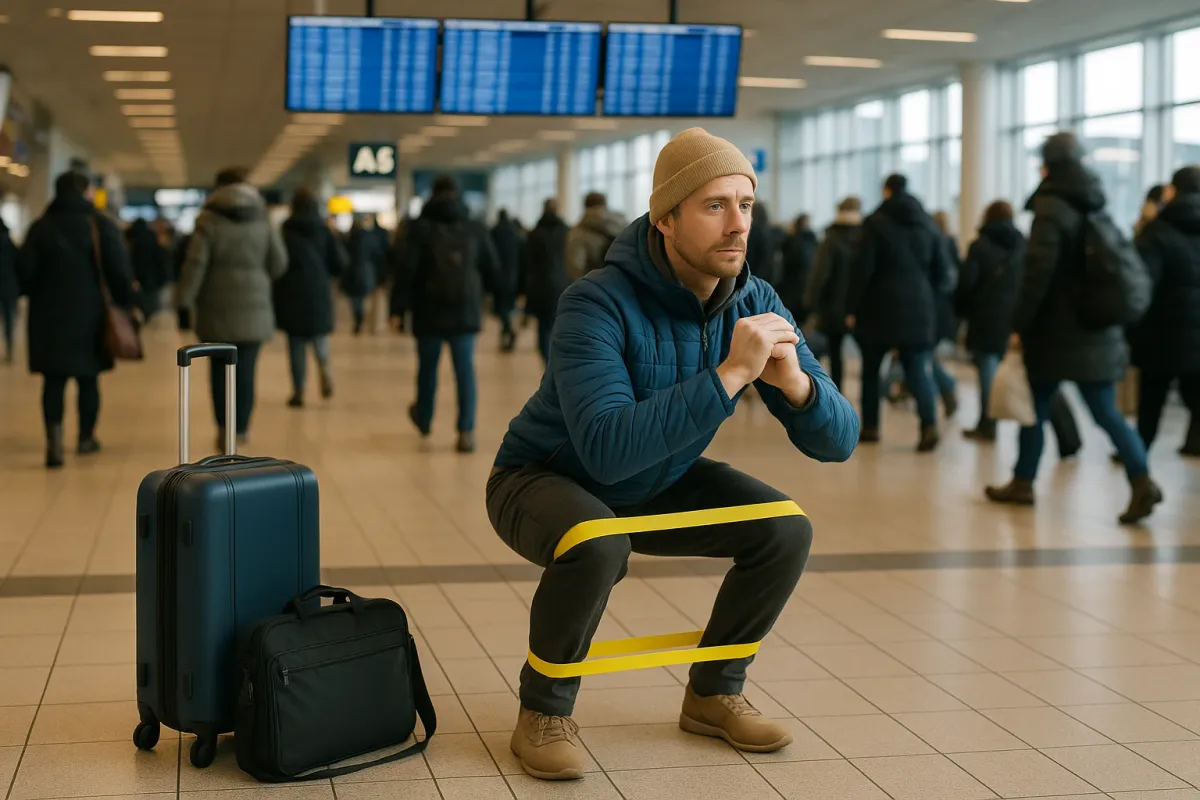
Everyone’s buying packing cubes right now thanks to viral travel gadget roundups—and they are great for keeping your life sorted. But you know what else is cube‑sized and actually trains your body? Mini resistance loops and flat bands that fold smaller than a pair of socks.
Slide a set of light/medium/heavy bands into the same cube you use for underwear and you’ve quietly built a mobile gym that gets through security without a blink. While you’re stuck in a hotel, hostel, or relative’s guest room, anchor bands around bedposts, heavy chairs, or even your own feet. Use them for rows, chest presses, squats, lateral walks, and glute bridges.
Fitness Tip #1 – Build A “Band-Only” Emergency Session:
When your day explodes and the hotel gym is packed:
- 12 banded squats
- 12 banded rows (anchor to door hinge or heavy furniture)
- 12 banded overhead presses (stand on band)
- 12 banded glute bridges
- 12 banded lateral walks each way
Run that circuit 2–4 times. No noise, no jumping, no equipment drama—just enough load to keep muscles awake after hours of being folded into economy seating.
2. Swap Neck Pillows For A Travel Mat That Actually Protects Your Joints
Neck pillows are all over those gadget lists, but after the flight, they’re dead weight. A foldable travel yoga mat or ultra‑thin fitness mat, on the other hand, keeps paying rent all trip long.
Modern travel mats (from brands like Manduka, Lululemon, Gaiam, and budget Amazon specials) now fold into a square that slides into laptop sleeves or the front of your carry‑on. When you land, it becomes your personal training zone on sketchy hotel carpet, freezing train platforms, or a random patch of park in a city you can’t pronounce.
Fitness Tip #2 – The “Jet Lag Reset” Mobility Flow:
Roll out your mat in your room within 2 hours of arrival:
- 1–2 minutes of cat–cow, focusing on breathing out long and slow
- 10 slow bodyweight lunges each side, arms reaching overhead
- 30–60 seconds deep squat hold, elbows gently pushing knees out
- 30 seconds each side of hip flexor stretch, back glute squeezed
- 1 minute lying on your back, feet up the wall, slow nose breathing
This isn’t just stretching—it’s a nervous system reboot after cramped travel. You’ll sleep better, digest that airport food faster, and feel ready to explore instead of collapsing.
3. Use “Personal Item” Space For a Kettlebell That Weighs Almost Nothing
One of the biggest pain points in travel fitness is load. Bodyweight is great up to a point, but sometimes your muscles need something heavy. That’s where the current wave of collapsible/packable kettlebell shells and sandbags comes in.
These devices pack flat and weigh almost nothing when empty. Once you arrive, you fill them with water or sand (beach, park, or local hardware store) and you’ve instantly upgraded your hotel room into a strength lab. Companies like Kettlebell Kings, Onnit, and multiple Kickstarter upstarts are pushing this space hard—because travelers and digital nomads are tired of relying on sketchy hotel dumbbells.
Fitness Tip #3 – The “Anywhere Load” Strength Blueprint:
If you manage to get your packable kettlebell or sandbag up to a challenging weight (even 8–16 kg / 18–35 lb is enough), rotate these moves 3x/week:
- 10 goblet squats
- 10 one‑arm rows each side (brace on bed or chair)
- 10 Romanian deadlifts
- 10 overhead presses total
- 10–20 swings (if you know clean form; otherwise, do deadlifts again)
Rest 60–90 seconds between rounds, 3–5 rounds total. Suddenly, “no gym” stops being an excuse—your equipment literally folds into your backpack.
4. Let Noise-Cancelling Trends Inspire A “Focus Kit” For Airport Workouts
Noise‑cancelling headphones are headlining every gadget list for a reason: modern travel is loud, crowded, and stressful. Instead of just zoning out to playlists, build a micro “focus kit” around them—one that lets you train anywhere without caring what’s happening around you.
What goes in this kit:
- Noise‑cancelling or snug in‑ear headphones
- A tiny Bluetooth interval timer app on your phone (Seconds, SmartWOD, etc.)
- A lightweight jump rope (many “speed ropes” coil flat)
- A sweat‑resistant headband or cap
With this combo, a quiet corner of the terminal or an empty stretch of parking lot turns into a pop‑up conditioning zone.
Fitness Tip #4 – The 12‑Minute Layover Engine Booster:
When you have at least 20 minutes between flights (and you’re not drenched in winter gear):
Set a 12‑minute timer and cycle through:
- 30 seconds jumping rope (or fast marching in place if space is tight)
- 30 seconds elevated push‑ups (hands on a bench, suitcase, or wall)
- 30 seconds bodyweight squats
- 30 seconds rest
That’s it: 12 total minutes, four rounds. You’ll board the next flight warm, awake, and way less stiff than everyone else shuffling onto the plane.
5. Transform Power Banks and Tech Pouches Into Posture-Saving Tools
Those trending lists love tech pouches, cable organizers, and power banks—and they are essential when your office is a backpack. But that same tech is quietly wrecking travelers’ necks and backs with endless screen hunching.
You don’t need more equipment here. You need a portable posture protocol that runs off the gear you already carry:
- Use your power bank + phone alarm to trigger “posture checks” every 45–60 minutes while working in cafés, trains, or lounges.
- Keep a micro towel or scarf in your tech pouch; rolled up, it becomes a cervical support for quick lying‑down decompression.
- Leverage your backpack itself as a training tool: loaded carries and rows with the weight you’re already hauling.
Fitness Tip #5 – The “Digital Nomad De‑Hunch” Circuit:
Once per working block (morning and afternoon), step away from the laptop:
- 10 backpack rows (hold straps, hinge at hips, pull pack to your ribs)
- 20–30 seconds standing chest stretch in a doorway or against a wall
- 10 “Y” raises: arms overhead in a Y shape, thumbs back, squeeze shoulder blades
- 30–60 seconds lying on your back with towel/scarf under your upper spine, arms spread wide, palms up
This takes 3–4 minutes and counters hours of laptop posture. The “equipment” is everything you already carry—no extra baggage required.
Conclusion
The travel web is currently obsessed with gadgets that tame chaos—packing cubes, cable organizers, smart tags, and collapsible everything. Those are helpful, but for people who live on the move, the real game‑changers are tools that keep your body strong, mobile, and ready for whatever the journey throws at you.
Bands in your packing cube, a foldable mat in your laptop sleeve, a packable kettlebell shell in your carry‑on, a focus kit built around your headphones, and a posture protocol married to your tech gear—this is how you turn holiday travel chaos into a moving, breathing training ground.
You don’t need a perfect gym. You need smart, portable equipment and a few ruthless routines that fit between boarding calls, client calls, and border crossings. Pack light, train wherever you land, and let every trip make you a little tougher than the last.
Key Takeaway
The most important thing to remember from this article is that this information can change how you think about Portable Equipment.