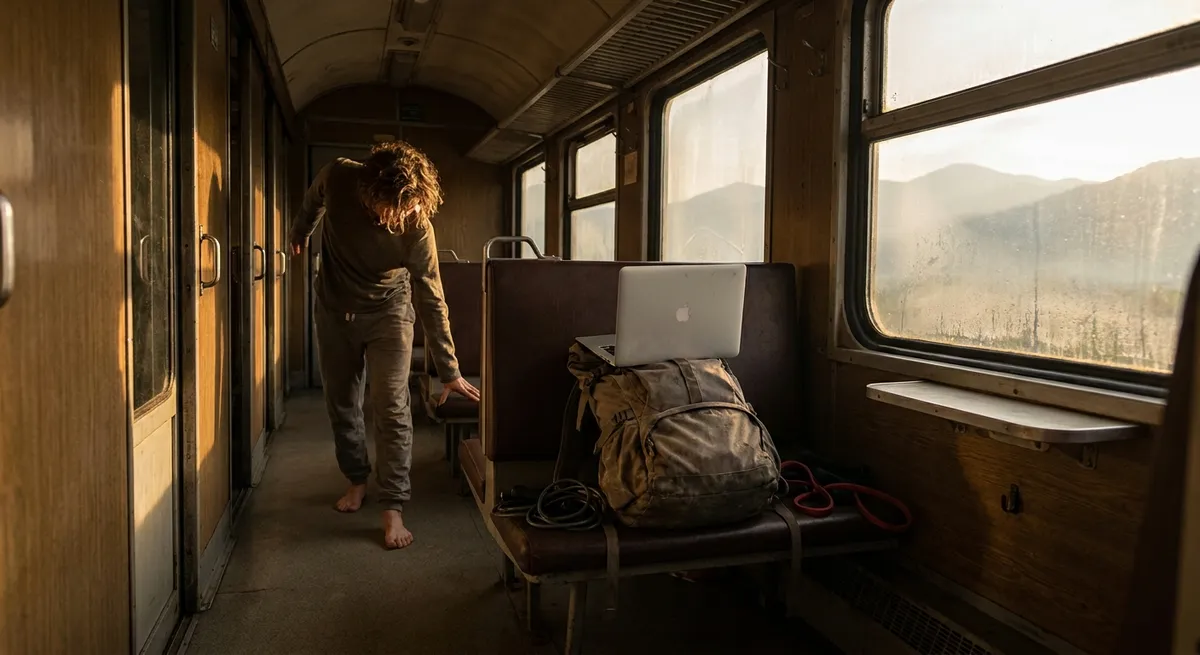
You don’t have to trade strength for stamps in your passport. Whether you’re sprinting through airport terminals, working from jungle hostels, or chasing sunsets between client calls, your body can be more than just a passenger—it can be mission-ready gear.
Nomad health isn’t about perfect routines; it’s about portable tactics that survive red-eye flights, noisy dorms, and unpredictable Wi‑Fi. Think of your body as your true home base: the one thing that crosses every border with you. This guide gives you five travel-tested fitness tips you can run anywhere—from a 4 a.m. layover to a mountain town café—without needing a full gym or a full night’s sleep.
Build a “No-Gym Needed” Movement Ritual
Forget the idea that training only counts if there’s a squat rack nearby. As a traveler or digital nomad, your best program is the one you can run in a cramped Airbnb, at a rest stop, or on a beach at sunrise. The goal is consistency, not perfection.
Design a 10–15 minute “anywhere” circuit that doesn’t rely on heavy gear or large spaces. For example: air squats, push‑ups, split squats, hip hinges (good mornings), plank variations, and loaded carries with your backpack. Rotate 4–6 moves, 30–45 seconds each, 2–3 rounds. That’s short enough to squeeze in before checkout, but potent enough to maintain strength and mobility while you’re bouncing between cities.
Think in patterns instead of exercises: push, pull, hinge, squat, carry, and rotate. If you can hit most of these a few times per week, you’re not “starting from zero” every time you get back home or into a real gym. This pattern-based approach is also adaptable—tight hostel space? Focus on floor work and isometrics. Beach or park? Add sprints and longer carries. The ritual stays; the scenery changes.
Turn Your Luggage Into a Traveling Weight Room
Your gear can do more than haul clothes and camera equipment. With a little creativity, your luggage becomes your mobile weight set. This keeps your training portable and familiar—no need to hunt down a perfect gym after a border crossing.
Backpacks and small duffels loaded with clothes, books, or camera gear can double as kettlebell and dumbbell substitutes. Hug them to your chest for goblet squats, hold them by the handle for one-arm rows, or press them overhead for shoulder work. Your carry-on suitcase? That’s your deadlift and row tool—lift from the floor with a hip hinge, then row it toward your hip while maintaining a strong back.
Even smaller items help. A laptop bag can be used for single-arm suitcase carries to challenge grip and core. A full water bottle or travel thermos is a decent stand-in for light shoulder raises and biceps work. Focus on slow, controlled reps and higher volume (12–20 reps) when the load is lighter than you’d normally use. This approach keeps your muscles honest and your packing list light.
Portable Strength: Five Fitness Tips That Fit in Your Daypack
Here are five practical, packable strategies to keep you strong, mobile, and ready for the next border crossing.
1. Anchor Your Day with a 10-Minute “Arrival Reset”
Every time you land somewhere new—hotel, guesthouse, friend’s couch—run the same short routine: 10 deep breaths, 1–2 minutes of hip mobility (lunges or hip circles), 1–2 minutes of shoulder mobility (arm circles, band pull-aparts if you carry a band), then a quick circuit of squats, push‑ups, and a plank. This signals to your body, “We’re here, we’re safe, and we move.” It helps shake off travel stiffness and fights the paralysis that comes from sitting too long.
2. Carry a Single Resistance Band and Use It Hard
One light-to-medium resistance band weighs almost nothing but unlocks full-body training. You can loop it around a tree, a bedpost, or your foot for rows, presses, pulldowns, face pulls, and assisted squats. Aim for 2–3 band sessions per week, 15–25 minutes each, focusing on higher rep ranges (12–20) and slow eccentrics (3 seconds lowering) to make light resistance more challenging. This keeps your joints feeling supported when you’re logging lots of steps on unfamiliar terrain.
3. Treat Stairs and Hills as Built-In Interval Training
Whenever you’re somewhere with stairs, a steep street, or a hill, you’ve found your cardio equipment. Do short, hard intervals: climb for 20–30 seconds, walk back down for 40–60 seconds, repeat 6–10 times. This kind of high-intensity effort takes less time than long, steady runs and doesn’t require a safe running route in a new city. Keep your posture tall, pump your arms, and stop if your form collapses—this is about sustainable stress, not self-destruction.
4. Move Every Time You Switch Devices or Locations
Nomads often live by their screens. Use that to your advantage. Pair movement with every environmental change: before opening your laptop, do 20 squats; between calls, walk for 5 minutes; before plugging in at a new café, do 10–15 push‑ups against a wall or table. These micro-sessions add up over a full day of work and travel, and they break the spell of marathon sitting sessions that wreck your hips and back. Simpler rule: no new tab without new movement.
5. Guard Your Sleep Like It’s Your Passport
Sleep is the quiet engine of nomad health, but jet lag, noise, and late check-ins constantly attack it. Prioritize a simple sleep protocol: 30 minutes of screen dimming before bed, a consistent wind-down routine (reading, stretching, journaling), and some sort of light blocking—eye mask, towel over the window, or hoodie over your eyes if that’s all you have. If you cross time zones often, catch morning daylight and avoid bright screens late at night to help your internal clock recalibrate faster. A strong body on the move is built just as much in the dark as it is under a backpack.
Eating for Energy When Your Kitchen Changes Weekly
Strength training on the road only gets you halfway there. The other half is figuring out food when your “kitchen” is sometimes a hostel microwave, a 7‑Eleven, or a street food stand. The goal isn’t perfection; it’s damage control plus deliberate wins.
First, aim for a protein anchor at every meal. This can be grilled meat, eggs, yogurt, tofu, beans, or a simple protein shake from a small travel-friendly tub or ready-to-drink option. Protein helps maintain muscle when your training is inconsistent and your sleep is hit-or-miss. Pair it with something colorful (fruit or vegetables) whenever you can—local produce stands are often your best ally in budget destinations.
Second, scout your environment like you would scout a new hiking route. Upon arrival, locate a grocery store or market within walking distance. Pick up easy staples: nuts, fruit, yogurt, canned fish, pre-washed salad mixes, or whole-grain crackers. These create a “base layer” of nutrition so that occasional late-night noodles or pastries don’t completely define your diet. When eating out, use simple default choices: grilled over fried, water over soda, and add a side of vegetables when available.
Joint Care for Heavy Miles and Light Luggage
Nomads and travelers often log surprising mileage: urban exploration, spontaneous hikes, long commutes, and zigzagging through stations with a backpack that gets heavier every hour. Without some intentional joint care, ankles, knees, hips, and shoulders start complaining loudly.
Work a 5–10 minute daily mobility check into your morning or pre-bed routine. Focus on ankle circles, calf stretches, controlled hip rotations (on all fours or standing), thoracic spine rotations (thread-the-needle or open books), and shoulder circles. Move slowly and smoothly, searching for “sticky” ranges and breathing deeply into them. This isn’t about extreme flexibility; it’s about keeping your movement options open so you’re ready for surprise detours and last-minute adventures.
Pay attention to your load management too. If you’re carrying a heavy pack regularly, alternate shoulders when using a single-strap bag, tighten your hip belt and chest strap on larger packs, and plan one lighter or “recovery” day of walking after long hauls. Small course corrections now mean fewer forced rest days later due to overuse flare-ups. Your body is your long-haul vehicle—treat it like something you plan to drive for decades.
Conclusion
A strong nomad isn’t the person who finds the perfect gym in every new city; it’s the one who can train anywhere, recover in chaos, and keep their body adventure-ready while the scenery constantly changes. By turning your luggage into equipment, using a single band for full-body strength, sneaking movement into your workday, and protecting your sleep and joints like key travel documents, you build a moving basecamp that never checks out.
Your route will always be unpredictable. Your routine doesn’t have to be. Pack light, move often, and let your health be the one thing that doesn’t get lost in transit.
Sources
- [Centers for Disease Control and Prevention – Physical Activity Basics](https://www.cdc.gov/physicalactivity/basics/index.htm) - Guidelines on how much activity adults need and why consistency matters
- [World Health Organization – Physical Activity](https://www.who.int/news-room/fact-sheets/detail/physical-activity) - Global recommendations and health impacts of regular movement
- [Harvard T.H. Chan School of Public Health – Sleep and Health](https://www.hsph.harvard.edu/nutritionsource/sleep/) - How sleep quality affects performance, recovery, and overall health
- [Mayo Clinic – Resistance Band Training](https://www.mayoclinic.org/healthy-lifestyle/fitness/in-depth/resistance-bands/art-20047267) - Benefits and practical tips for using bands as portable strength tools
- [National Institutes of Health – Protein and Muscle Health](https://www.ncbi.nlm.nih.gov/pmc/articles/PMC6566799/) - Research on protein intake, muscle maintenance, and physical function
Key Takeaway
The most important thing to remember from this article is that this information can change how you think about Nomad Health.