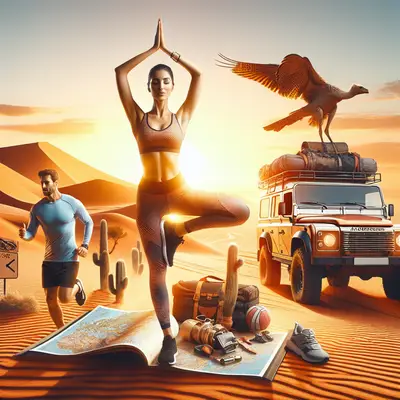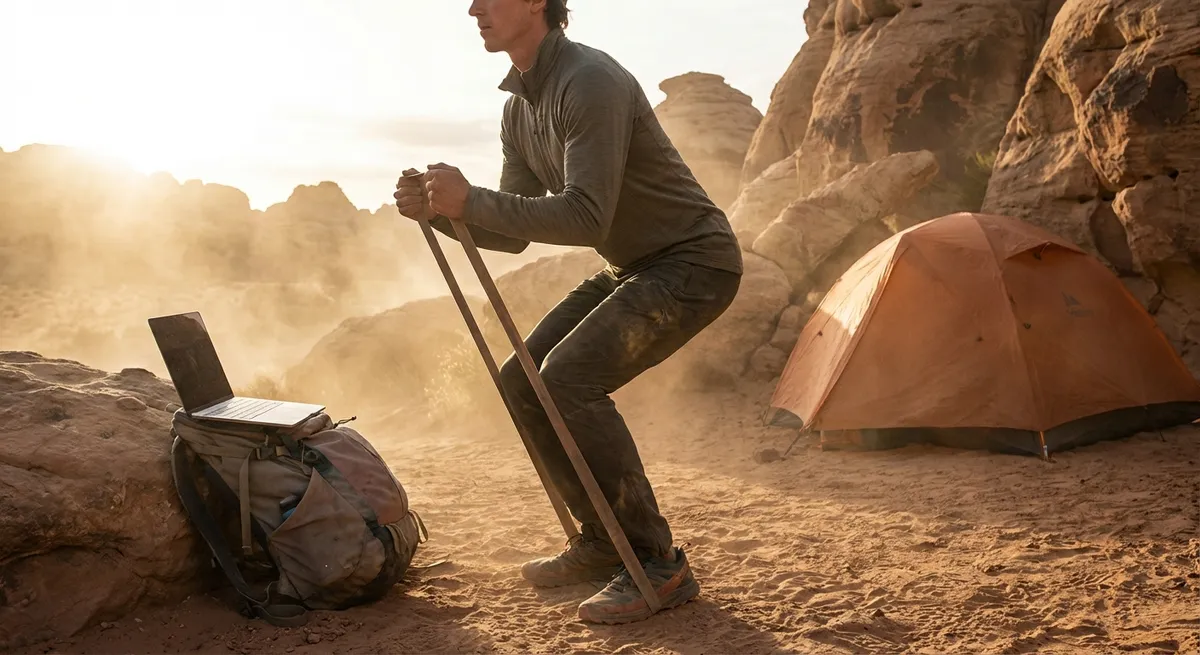
The flight’s late, your hostel’s on a hill, and your “gym” is whatever you can lift, push, or hang from. Perfect. Nomad health isn’t about waiting for the right conditions—it’s about staying adventure-strong in the mess and magic of the road. This guide gives you portable, real-world strategies so you can keep building a capable body while you’re crossing borders, hopping coworking spaces, or chasing that next sunrise workspace.
Build a Travel-Ready Body, Not a Perfect Routine
When you live out of a backpack or suitcase, “routine” is more of a moving target than a fixed schedule. Instead of chasing ideal conditions, design a body that can perform under less-than-ideal ones: tight hotel rooms, noisy streets, and shifting time zones.
Think in terms of minimum effective dose. A consistent 20–30 minutes of smart training beats a heroic 2-hour session you only squeeze in once a week. Focus on movements that keep you strong for travel itself: carrying luggage, climbing stairs, hiking bus stations and back alleys, sprinting for last-minute connections. If your default goal is, “move with intent every day,” you’ll stay healthy enough to say yes to the tougher adventures instead of sitting them out with an angry back or tight hips.
Tip 1: Turn Every Destination Into Your Training Map
Your environment is your first piece of equipment. Instead of hunting for the nearest gym the moment you land, scan your surroundings like a field manual.
Benches become step-up platforms and push-up bars. Stairwells turn into hill sprints under a roof. Park railings are perfect for rows and incline push-ups. Even a sturdy doorframe can host isometric holds or towel rows (loop a towel around the knob on the hinge side for safety and pull).
When you arrive somewhere new, do a 5-minute “fitness recon” walk: not for sightseeing, but for movement scouting. Look for:
- A safe stretch of flat ground (for sprints, walking lunges, or mobility)
- Any overhead bar, branch, or beam (for hangs and pull-ups)
- Stairs or hills (for conditioning)
- A quiet corner (for core work and stretching)
Once you’ve mapped your options, your workouts stop depending on a daily guest pass and start matching the terrain of your trip.
Tip 2: Pack a Pocket Arsenal of Portable Tools
You don’t need to travel with a gym in your bag, but a few grams of gear can unlock a lot of training options. Think “high utility, low weight, zero electricity.”
Useful, packable tools include:
- Long resistance band (or two strengths): Anchors almost anywhere for rows, presses, deadlifts, and assisted pull-ups.
- Mini-loop band: Great for glute activation, hip strength, and shoulder stability in tight spaces.
- Jump rope: When space allows, it’s a high-intensity conditioning tool that doubles as a warm-up.
- Light suspension trainer or yoga strap: If you’ve got a door or a tree, you’ve got rows, presses, and assisted single-leg work.
Store everything in a small mesh pouch in your backpack. When all you need to work out is one lightweight bag, there’s no excuse to skip just because you’re between cities or waiting for your Airbnb host.
To keep it simple, build a default “anywhere circuit” using this kit:
- Band rows
- Band chest presses or push-ups
- Band or bodyweight squats
- Single-leg RDLs (bodyweight)
- Planks and side planks
Hit 3–4 rounds at a pace that gets you breathing hard but still in control. Done.
Tip 3: Anchor Your Day With a Non-Negotiable Movement Block
Travel days blur time. Workdays bleed into nights. Social invites pile up. If movement is “whenever I find time,” it’ll vanish. Decide instead that one specific block of time belongs to your body.
For many nomads, early morning works best: fewer distractions, fewer schedule changes, and cooler temperatures in hot climates. But if you’re not a morning person, link your session to something you already do: after your first coffee, before you open your laptop, or immediately when you return to your room at night.
Keep the bar intentionally low: commit to a 10-minute minimum. That’s your non-negotiable. Once you start, most days you’ll go longer; on rough days, that 10 minutes is still a powerful line in the sand that keeps your identity as “someone who trains” alive.
A simple 10-minute “anchor session” for busy days:
- 3 minutes: joint mobility (neck, shoulders, hips, ankles)
- 4 minutes: alternating sets of push-ups and squats (moderate reps)
- 3 minutes: plank variations and deep breathing
No shower available? Dial down intensity, focus on strength and control rather than max sweat. The goal is continuity, not collapse.
Tip 4: Use Micro-Workouts to Survive Long Work Sprints and Travel Days
Digital nomads spend serious hours sitting—on buses, in airports, at café tables—and that can wreck hips, backs, and shoulders. Instead of waiting for a big workout window, sprinkle movement throughout long days.
Think micro-workouts: fast, focused, and done before your brain has time to resist. Every 45–60 minutes of focused work, stand up and move for 3–5 minutes:
- 10–15 air squats
- 10–15 band pull-aparts or doorway chest stretches
- 20–30 seconds of calf raises on a step
- 30–60 seconds of gentle spinal twists and neck rolls
- A short walk around the block or down the hall
On travel days, use layovers and fuel stops as mandatory movement breaks. Walk the terminal end to end. Do heel raises while you wait in line. Sit on the floor and hit hip stretches instead of curling into another plastic chair.
These small sessions won’t feel like “real workouts,” but they add up fast: better circulation, less stiffness, and more energy for spontaneous adventures when your laptop finally closes.
Tip 5: Train for Capability, Not Just Aesthetics
Life on the road is unpredictable. You might find yourself hauling your backpack up four flights of stairs, hopping onto a moving boat, or hiking further than planned because the last bus never showed. Build a body that can say yes to those moments.
Focus on functional patterns you can train anywhere:
- Squat and lunge: For stairs, hiking, and carrying loads.
- Push and pull: For upper-body strength that translates to climbing, paddling, and hauling gear.
- Hinge: Think deadlift pattern—great for protecting your back while lifting luggage.
- Carry: Farmer’s carries with water jugs, backpacks, or grocery bags train grip, core, and total-body stamina.
- Rotation and anti-rotation: Planks, side planks, and controlled twists help stabilize your spine when terrain or luggage gets awkward.
Periodically test yourself in the real world: can you jog up that hill without stopping, hang from a bar for 30 seconds, or carry all your bags in one trip across the station? These “field tests” keep training relevant and make progress feel like more than numbers on a screen.
Conclusion
You don’t need a permanent address or a premium gym membership to build a capable, resilient body. You need a plan that moves with you: gear that fits in your pack, routines that flex with flight times, and a mindset that treats every city, jungle, or seaside town as fresh training terrain.
Anchor one daily movement block, exploit the environment, carry a minimalist toolkit, and weave micro-sessions into long work and travel days. Do that consistently, and your body stops being the limiting factor in your adventures—and starts becoming your favorite piece of travel gear.
Sources
- [World Health Organization – Physical Activity Guidelines](https://www.who.int/news-room/fact-sheets/detail/physical-activity) - Global recommendations on how much weekly movement supports health
- [American College of Sports Medicine – ACSM Guidelines for Exercise](https://www.acsm.org/education-resources/trending-topics-resources/exercise-guidelines) - Evidence-based guidance on strength, cardio, and flexibility training
- [Harvard Health – The Importance of Stretching](https://www.health.harvard.edu/staying-healthy/the-importance-of-stretching) - Explains why mobility work and stretching matter, especially for people who sit or travel a lot
- [Mayo Clinic – Resistance Training: Health Benefits](https://www.mayoclinic.org/healthy-lifestyle/fitness/in-depth/strength-training/art-20046031) - Outlines the benefits of strength training and basic principles you can adapt on the road
- [U.S. Department of Health & Human Services – Physical Activity Guidelines](https://health.gov/our-work/nutrition-physical-activity/physical-activity-guidelines) - Official U.S. guidelines with practical activity ranges for adults
Key Takeaway
The most important thing to remember from this article is that this information can change how you think about Nomad Health.