There’s the trip you plan—and then there’s the trip your body actually has to survive. Red-eye flights, overnight buses, hard beds, soft pillows, long cowork days, and short hotel gyms can wreck your strength and mobility if you don’t travel smart. The good news: you don’t need a full-size weight room to stay strong on the move. With the right portable equipment and a few dialed-in tactics, your backpack becomes a mobile training base, ready for action on layovers, rooftops, and any patch of floor you can claim.
Building a Pack-Light Power Kit
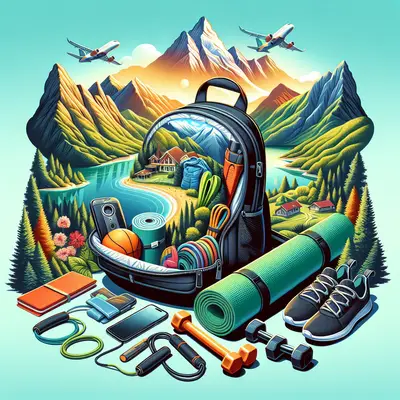
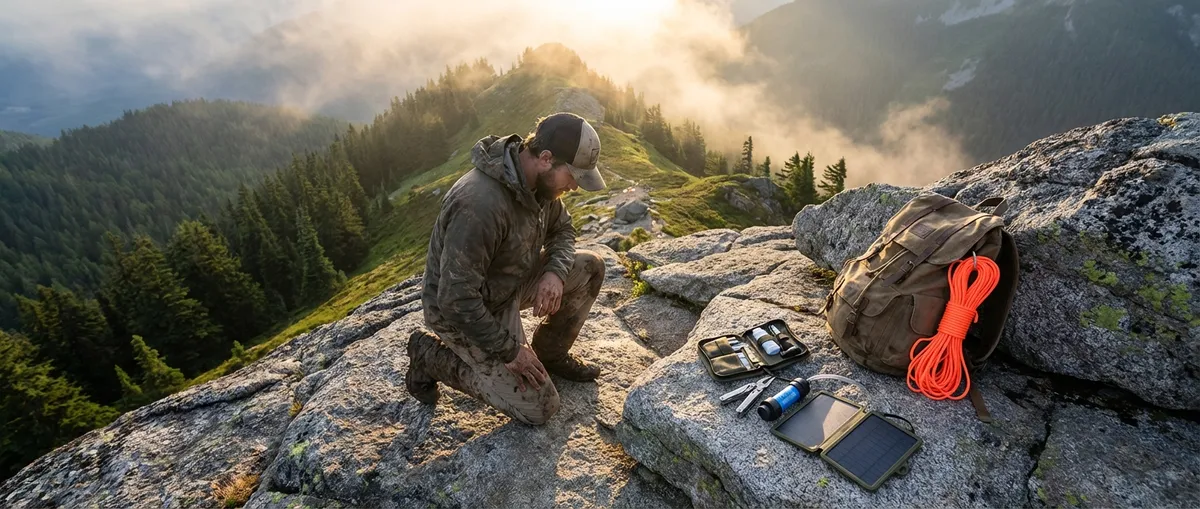
Think of your portable equipment as a “travel loadout”: everything has to earn its space and weight. Your goal isn’t to bring more gear—it’s to bring smarter gear that can cover strength, mobility, and conditioning without tipping the luggage scale.
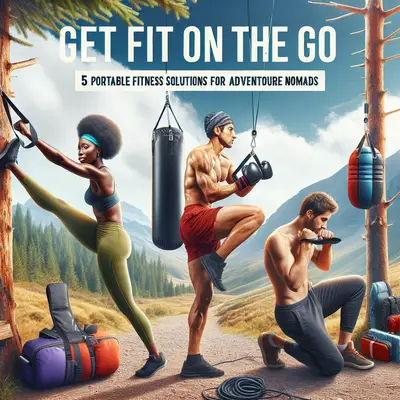
A resistance band mini-set is the closest thing to a pocket-sized gym. Light, cheap, and multi-use, they handle warm-ups, activation work, and surprisingly tough strength work if you know how to anchor and loop them. Add one light and one heavy band and you can hit upper-body pulls, presses, and lower-body tension drills almost anywhere. A compact suspension trainer (or strong, adjustable straps with handles) converts any doorframe, tree branch, or playground into a full-body station for rows, presses, and core work. If you’re willing to carry a bit more weight, a packable sandbag or collapsible water bag lets you create a loaded object using beach sand, dirt, or hotel sink water for carries, squats, and cleans.
Don’t overlook micro-gear that protects your body over long travel days. A lacrosse ball or small massage ball targets cranky hips and shoulders. A thin travel yoga mat or foldable mat turns questionable hostel floors into usable training space and doubles as a stretching station during long work blocks. Your laptop backpack is also a training tool: loaded carry drills with your actual travel bag build real-world strength in the same patterns you’ll use sprinting through airports or scrambling up stairs with all your gear. Pack with intention, and your kit becomes part gym, part survival tool.
Five Field-Tested Fitness Tips for Travelers and Nomads
You might not know what tomorrow’s Wi-Fi will be like, but you can control how your body shows up. These five tips keep your training realistic and adaptable, not dependent on a perfect gym.
1. Anchor your day with a 10–15 minute “non‑negotiable” session.
Make your shortest workout your most consistent one. Every day, no matter where you are, do a fast, portable mini-session using a band or bodyweight circuit. For example: 3 rounds of 10 band rows, 10 push-ups, 10 air squats, and a 30-second plank. This keeps your joints awake, your posture from collapsing, and your routine intact even on chaotic travel days. Anything extra you do is bonus, but this baseline makes sure you never go completely offline.
2. Use your environment as hidden training terrain.
Stairs, curbs, benches, and railings are free equipment. Turn hostel stairs into a conditioning ladder with loaded backpack carries or step-ups. Park benches become platforms for elevated push-ups, Bulgarian split squats, and triceps dips. Doorframes and sturdy poles are anchors for bands and suspension trainers. Once you start looking at cities, hostels, and train platforms as obstacle courses instead of dead space, you’ll find places to train everywhere—no “gym nearby” excuse required.
3. Program “time blocks,” not muscle groups.
On the road, you can’t always stick to a perfect split like push/pull/legs or upper/lower. Instead, program around time windows: short (10–15 minutes), medium (20–30 minutes), and long (35–45 minutes). Keep 1–2 go-to sessions ready for each block using your portable gear. When a client cancels or a bus is delayed, you just pick the block that fits, hit start, and move. This mindset turns unpredictable schedules into training opportunities instead of obstacles.
4. Prioritize posture and pulling strength to undo travel damage.
Travel and laptop time shove you into a rounded, head-forward posture. To counter it, bias your portable routine toward pulling and extension. Use bands or a suspension trainer for rows, face pulls, and pull-aparts. Mix in thoracic extensions over your foam roller substitute (a rolled-up towel on a mat) and band-resisted external rotations for your shoulders. Keeping your back and rear delts strong not only fights pain but also makes your pushing work (push-ups, presses) safer and more effective with minimal equipment.
5. Treat mobility as “movement hygiene,” not a separate event.
Instead of waiting for a 30-minute yoga block you’ll never schedule, layer micro-mobility into your day using the gear you already packed. While a file syncs or coffee brews, grab a band for ankle mobilizations, hip openers, or overhead shoulder stretches. Use that lacrosse ball on your glutes, feet, and upper back while you answer emails on the floor. Tie mobility to existing triggers—post-flight, pre-meeting, or before bed—so it becomes a travel habit. A few minutes, many times, beats one big session that keeps getting postponed.
Essential Portable Tools and How to Use Them
When space is tight, every item in your bag needs multiple jobs. Here’s how to get the most from a lean travel kit.
A set of loop resistance bands (from light to heavy) is your high-value MVP. Use heavy bands for deadlift-style hinges, anchored rows, good mornings, and assisted pull-ups if you find a bar. Light bands shine for shoulder health, glute activation before runs or hikes, and core anti-rotation drills by anchoring them to door handles or fixed objects. Double loop bands to increase tension and slow down reps to make even simple movements like squats or push-ups challenging.
A compact suspension trainer punches way above its weight in versatility. Hung from a door, beam, or tree, it enables rows, fall-out planks, single-leg squats, and horizontal presses in tiny spaces. Adjust your body angle to scale difficulty: the closer your feet are to the anchor point, the harder the movement. It’s particularly useful in cramped hotel rooms where floor space is limited but vertical height is available.
If you’re heading somewhere with access to sand, dirt, or any fillable resource, a collapsible sandbag or water bag adds real loading capacity. Filled, it transforms your training: front-loaded squats, cleans, shouldering, carries, and overhead presses with an awkward object build the kind of real-world strength that transfers directly to carrying backpacks, luggage, and gear. The instability of the load forces your core and grip to work harder than with neat, rigid weights.
Support gear multiplies your options. A thin travel mat protects your knees and spine during floor work and doubles as a stretching and breathwork station in noisy hostels. A jump rope offers a brutally efficient conditioning tool that fits in any side pocket; even five minutes of intervals (30 seconds on, 30 seconds off) can spike your heart rate when you can’t run outside. Finally, a small massage ball or mini-roller recovers your calves after long city walks, your hip flexors after days of sitting, and your upper back after laptop marathons. All together, this compact arsenal weighs less than a laptop but covers mobility, strength, and cardio in almost any setting.
Making Training Stick Across Borders and Time Zones
Staying fit on the road isn’t about heroic workouts; it’s about reliable habits you can carry across borders, beds, and time zones. Your portable equipment is a physical reminder of your commitment—when your bands or suspension trainer show up on the floor, they nudge you toward action. Keep your kit visible in your room instead of buried in your bag, and you’ll be far more likely to use it between calls, meals, and transport legs.
Use your travels as a way to experiment, not downgrade. Some months your focus might be band-resisted strength with short, high-density sessions; other months, you might lean into outdoor runs, stair intervals, and bodyweight skills while your gear handles warm-ups and accessory work. Either way, tracking a few simple markers—how many push-ups you can do, how heavy your pack-loaded carries feel, how long you can hold a plank—keeps you honest and shows progress even when the scenery and schedule change constantly.
The more miles you log, the more you realize that the “perfect” gym is a luxury, not a requirement. What you actually need is a small, well-chosen kit, the willingness to train in imperfect spaces, and a few reliable systems that survive jet lag and last-minute itinerary changes. Pack smart, move often, and let your portable equipment turn every stop on your route into a chance to get just a bit stronger than when you arrived.
Sources
- [American Council on Exercise – Benefits and Uses of Resistance Bands](https://www.acefitness.org/resources/pros/expert-articles/5514/resistance-bands-versatile-effective-and-economical/) - Details why bands are effective, versatile, and travel-friendly for strength training
- [Mayo Clinic – Exercise: 7 Benefits of Regular Physical Activity](https://www.mayoclinic.org/healthy-lifestyle/fitness/in-depth/exercise/art-20048389) - Explains the broad health benefits that consistent training provides, relevant for travelers maintaining routines
- [Harvard Health – Why Strength Training Matters](https://www.health.harvard.edu/staying-healthy/why-strength-training-matters) - Outlines evidence-backed reasons to maintain strength work, even with minimal equipment
- [Cleveland Clinic – The Importance of Good Posture](https://health.clevelandclinic.org/importance-of-good-posture) - Covers how prolonged sitting and travel affect posture and why pulling exercises are crucial
- [NHS (UK) – How to Stretch After Exercise](https://www.nhs.uk/live-well/exercise/how-to-stretch-after-exercising/) - Provides guidance on safe stretching and mobility practices that pair well with portable gear use
Key Takeaway
The most important thing to remember from this article is that this information can change how you think about Portable Equipment.