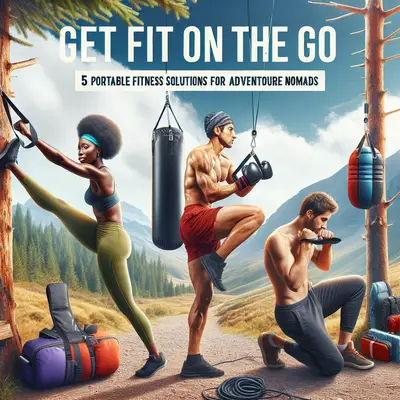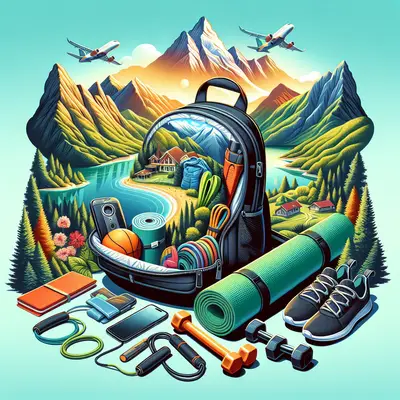
Your backpack is your gym bag, your Airbnb is your locker room, and every border crossing is just another chapter in your training log. Travel doesn’t have to erase your fitness; it can sharpen it. With the right portable equipment and a smart plan, you can stay strong, mobile, and adventure-ready whether you’re catching tuk-tuks in Bangkok or sleeper trains in Europe.
This guide dives into practical, packable gear and five field-tested fitness tips for travelers and digital nomads who refuse to trade strength for stamps in their passport.
Build a Travel-Ready Kit That Actually Fits in Your Bag
Portable equipment should earn its space. Every item in your pack needs to be light, multi-purpose, and tough enough to survive baggage handlers and buses with no suspension.
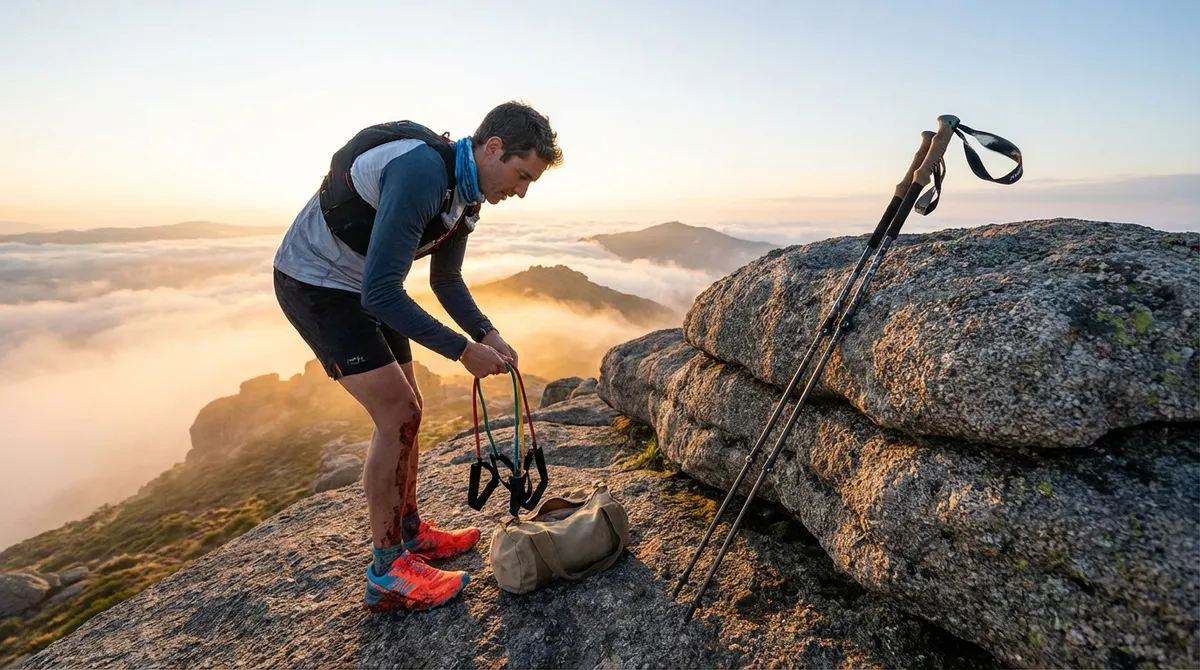
Start with a high-quality resistance band set that includes light, medium, and heavy options plus a door anchor. Bands weigh almost nothing, but they let you mimic cable machine moves: rows, presses, pull-aparts, and hip work. Add a compact suspension trainer that can anchor to doors, beams, and sturdy trees; it turns any spare square meter into a full-body station with rows, presses, lunges, and core work.
Next, consider a lightweight jump rope that doesn’t kink easily. It’s your portable conditioning tool, warm-up, and coordination drill all in one. If you have a few extra grams to spare, pack a mini massage ball or lacrosse ball. It’s a lifesaver for cramped-flight back pain, tight hip flexors from working in cafés, and post-hike foot fatigue.
Finally, use a packing cube or small dry bag as your “mobile gym” compartment. Keeping all your gear in one place reduces friction—if you can find it fast, you’re more likely to use it between meetings, flights, and check-ins.
5 Field-Proven Fitness Tips for Travelers and Nomads
These five tips are built around portable equipment, unpredictable schedules, and limited space—exactly how real travel feels.
1. Anchor Your Day With a 10-Minute “Wake-Up Circuit”
Before you open your laptop or hit maps for the day’s mission, run a fast, equipment-light circuit. It signals to your body that movement is non-negotiable, even on heavy work or travel days.
Example circuit (no equipment needed, add bands if you have them):
- 30 seconds bodyweight squats
- 30 seconds push-ups (elevate hands on bed/desk if needed)
- 30 seconds glute bridges or hip thrusts
- 30 seconds plank or dead bug
- Rest 60 seconds, repeat 2–3 rounds
If you have a suspension trainer, swap in inverted rows or suspended push-ups. Keep intensity at “can still talk, but don’t really want to”—enough to wake you up, not wreck you for a long travel day. This simple ritual stacks wins: better mood, better focus, better recovery from long-haul sitting.
2. Turn Travel Delays Into Mini Strength Sessions
Airports, train platforms, and bus stations are prime territory for low-key, portable training. Instead of doom-scrolling, use your bands or bodyweight for “stealth workouts” that don’t make you the weirdo doing burpees at Gate 42.
Try this band-focused sequence you can do in a corner:
- 12–15 band rows (loop around a pole or heavy fixture)
- 12–15 band overhead presses (if ceiling space allows) or band push-ups
- 12–15 band good mornings or RDLs
- 15–20 band pull-aparts for posture
Run 2–4 rounds with short rests. Keep movements smooth and controlled; this doubles as posture rehab from carrying bags and hunching over screens.
Bonus tactic: use escalators and stairs as your built-in stepper. Take the stairs whenever possible, and for long layovers, set a step goal (for example, 2,000–3,000 steps per layover) to combat sitting-induced stiffness.
3. Cycle Your Training to Match Your Itinerary
Instead of pretending you’ll hit perfect workouts every day, plan your training around the natural rhythms of travel.
On heavy travel or transit days, emphasize short, equipment-light sessions: 5–15 minutes of mobility, core, and light band work. Think of these as “maintenance missions” to keep joints happy and blood moving.
On slower days with longer stays, break out the full mobile gym: suspension trainer workouts, band complexes, jump rope conditioning, and longer circuits. You might do a strength-focused session every 2–3 days and sprinkle short, movement-based “reset sessions” in between.
Mentally, this shift from perfection to cycles is powerful: your standard isn’t “did I do a full workout?” but “did I move with intention today?” That mindset keeps you consistent through jet lag, hostel dorms, and stacked Zoom calls.
4. Prioritize Core and Posture With Smart, Portable Moves
Travel and remote work both conspire to wreck your posture—rounded shoulders, tight hips, stiff lower back. Portable equipment lets you fight back with minimal space.
Make this “posture pack” a staple, especially on days you’ve been glued to a laptop:
- Band pull-aparts: 2–3 sets of 15–20
- Band face pulls (attached at eye level): 2–3 sets of 12–15
- Dead bugs or hollow body holds: 2–3 sets of 20–30 seconds
- Side planks (knees or feet): 2–3 sets of 20–30 seconds per side
These moves strengthen your upper back, core, and deep stabilizers—the same muscles that keep you solid while hauling luggage, hiking unknown terrain, or riding a scooter over potholes. They also help counteract the “tech neck” and rounded spine that come from marathon work sessions in less-than-ergonomic cafés.
5. Use Portable Conditioning Instead of Hunting for a Treadmill
Cardio on the road doesn’t require a hotel gym or a safe running route. Your portable toolkit can hit your heart and lungs just fine.
Here are three travel-friendly conditioning options:
- Jump Rope Intervals:
- 30 seconds jumping / 30 seconds rest × 10 rounds
- Progress by adding rounds or shortening rest. Great for hotel courtyards, rooftops, or quiet streets.
- Band or Bodyweight EMOM (Every Minute on the Minute):
- Minute 1: 10–15 band squats
- Minute 2: 8–12 push-ups or band presses
- Minute 3: 10–15 band rows
- Repeat for 4–6 cycles (12–18 minutes total).
- Stair or Hill Sprints:
- Find a safe staircase or hill.
- Fast walk or jog up, walk down, repeat 6–10 times.
- Use bands afterward for light upper-body work and a cooldown.
These methods are efficient, adjustable, and doable in small spaces. They also train the kind of “get up and go” capacity that makes last-minute hikes, spontaneous surf sessions, and surprise detours more enjoyable instead of exhausting.
Making Your Training Nomad-Proof and Adventure-Ready
Staying fit on the move isn’t about replicating your home gym; it’s about building a system that survives canceled flights, sketchy Wi-Fi, and cramped rooms. Portable equipment gives you leverage: a handful of lightweight tools that multiply your movement options anywhere on the map.
Pack a minimalist kit—bands, suspension trainer, jump rope, a small mobility tool—and pair it with a simple playbook: a short daily ritual, opportunistic movement during delays, schedule-aware training cycles, posture-focused core work, and portable conditioning.
Do that consistently, and every border crossing becomes a progress checkpoint, not a setback. Your passport fills with stamps, your bags stay light, and your body stays ready for whatever adventure shows up next.
Sources
- [American Council on Exercise (ACE): Resistance Band Training 101](https://www.acefitness.org/resources/everyone/blog/7664/resistance-bands-101/) - Overview of benefits and programming ideas for resistance band workouts
- [Mayo Clinic: How Much Exercise Do You Really Need?](https://www.mayoclinic.org/healthy-lifestyle/fitness/in-depth/exercise/art-20048389) - Evidence-based guidelines on activity levels and health benefits
- [Harvard T.H. Chan School of Public Health: Physical Activity](https://www.hsph.harvard.edu/nutritionsource/physical-activity/) - Research-backed information on exercise, health, and practical recommendations
- [Cleveland Clinic: Deskercise! 33 Smart Ways to Exercise at Work](https://health.clevelandclinic.org/deskercise-33-smart-ways-to-exercise-at-work) - Portable, space-efficient movement ideas that map well to travel conditions
- [NHS (UK): Benefits of Exercise](https://www.nhs.uk/live-well/exercise/exercise-health-benefits/) - Government-backed summary of physical and mental benefits of regular activity
Key Takeaway
The most important thing to remember from this article is that this information can change how you think about Portable Equipment.