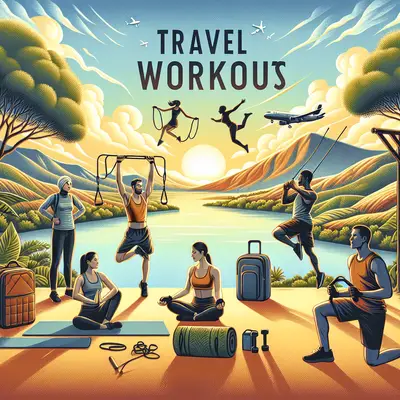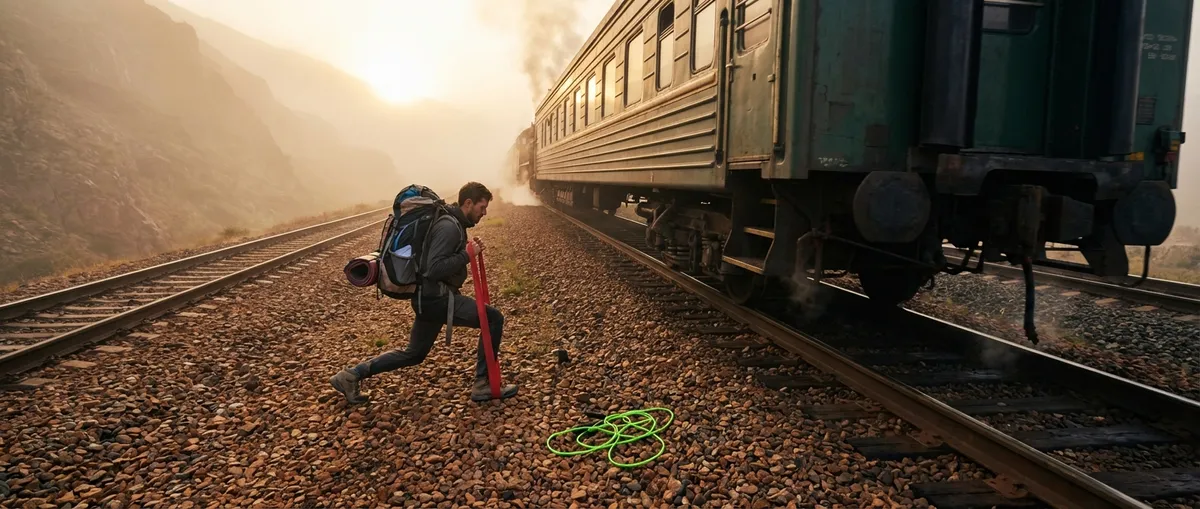
There’s the trip you book—and then there’s the trip your body actually survives. If you’re chasing sunrise flights, overnight buses, and surprise detours, your training can’t be fragile. It has to travel. This isn’t “keep your steps up and hope for the best” wellness; it’s building a body that treats jet lag, cobblestones, and cramped seats like a playground instead of a punishment.
Below is a practical, no-fluff approach to staying fit anywhere, built for travelers and digital nomads who live out of daypacks, not home gyms.
Building a “Go-Anywhere” Body
Your travel training shouldn’t depend on access to a perfect gym or generous hotel square footage. Think of your body as your primary piece of gear and everything else—stairs, railings, benches, doorways—as bonus equipment. The goal: develop strength, mobility, and conditioning that carry over to real-world travel demands like hauling packs, sprinting for connections, and exploring all day without your knees staging a protest.
A good travel-friendly program is built on movements, not machines: squats, hinges, pushes, pulls, and carries. These are the patterns you actually use hauling a duffel into an overhead bin or climbing hostel stairs at midnight. Prioritize short but consistent sessions over heroic, once-a-week marathons. Ten dialed-in minutes most days beats the “I’ll restart when I get home” fantasy every time.
Your best ally is friction: reduce the number of decisions you need to make on the road. Three preset “micro-workouts” you can do in almost any space, paired with a tiny kit (think: jump rope, mini-band, maybe a light resistance band) is usually enough to keep you strong, mobile, and ready for whatever detour the map throws at you.
Five Traveler-Built Fitness Tactics That Actually Survive the Road
Below are five practical tactics designed specifically for travelers and digital nomads. Mix and match based on your schedule, gear, and environment.
1. Turn Transit Delays into Strength Sessions
Airports, stations, and waiting areas are secretly rich training grounds if you’re willing to look mildly strange for 5–10 minutes. The key is staying low-impact and respectful of space while still loading your muscles.
Try a “Gate Strength Circuit” you can run between announcements:
- 8–12 slow squats or sit-to-stands using your backpack as a weight
- 8–10 incline push-ups against a wall, bench, or sturdy rail
- 10–15 standing calf raises using the edge of a curb or step
- 10–20 suitcase deadlifts picking your backpack or carry-on up and down with a flat back
Cycle through 2–4 rounds at an easy pace. The objective isn’t annihilation—it’s circulation, joint lubrication, and reminding your body it’s built for more than sitting. Keep breathing relaxed, posture tall, and angle your setup so you’re not blocking walkways or boarding lines.
This kind of “micro strength dose” helps counter long sitting bouts, supports blood flow in your legs, and keeps your back from locking up before you even reach your destination.
2. Lock In a “Wake-Up Protocol” Instead of Relying on Motivation
New city, new bed, weird pillow, and a time zone your circadian rhythm didn’t agree to. The first 5 minutes after you wake up can determine whether you move like a human or a rusted hinge for the rest of the day.
Create a portable wake-up protocol that requires zero equipment and almost no thinking. For example:
- 10 deep nasal breaths lying on your back, one hand on chest, one on belly
- 10–15 cat-cow spine waves on the floor (or edge of bed if space is tight)
- 10–15 hip hinges with hands sliding down thighs, soft knees
- 10 shoulder circles forward, 10 backward
- 30–60 seconds of marching in place, gradually lifting knees higher
You can run this flow in the space between bed and door. It’s not a full workout; it’s a nervous system reboot. When you prime joints and breathing first thing, you move better all day—on long walks, in cramped co-working chairs, and up random staircases to rooftop viewpoints.
Bonus: If you’re fighting jet lag, doing your wake-up protocol near a window with daylight helps anchor your body clock to the local time zone.
3. Train for Your Terrain, Not Just Your Mirror
Travel exposes you to wildly different environments: humid beach towns, altitude-heavy mountain villages, endless urban sprawl. Your training should adapt to these terrains to keep you safe and make the most of where you are.
Examples:
- Hill or Stair Cities (Lisbon, Valparaíso, San Francisco)
Use the landscape as a strength and conditioning tool. Short stair sprints, uphill walks with your pack, and downhill control work (slow, controlled descents) build your legs and protect your knees.
- High Altitude Stops
Dial down intensity for the first few days. Swap hard intervals for easy walks and mobility. Focus on breathing: slow nasal breathing and longer exhales can help manage the “out of breath” feeling while you acclimate.
- Hot, Humid Destinations
Shorten sessions and do them earlier or later in the day. Favor bodyweight circuits, slow mobility, and walks over long, intense efforts. Hydration and electrolytes matter more than heroics—“I nearly passed out training in 95°F heat” is a bad travel story.
When you think: “What’s the local terrain giving me?” you stop fighting conditions and start using them as training partners.
4. Use a Single Lightweight Tool as Your “Anchor”
You don’t need a full portable gym, but one small, versatile tool can supercharge your options. Think of it as an anchor habit in physical form—if it’s in your bag, training feels “on.”
Good candidate: a long resistance band (pull-up assist style) or a jump rope.
With a long resistance band you can do:
- Rows using a door frame, railing, or sturdy pole
- Assisted single-leg work (band around railing for support)
- Presses, overhead holds, and face pulls
- Band-resisted glute bridges on a hotel floor
With a jump rope you get:
- Compact conditioning anywhere with 2–3 meters of overhead clearance
- A warm-up tool that spikes heart rate quickly
- A skill you can gradually improve, making short sessions more engaging
The key is weight and volume: these tools pack small, weigh almost nothing, and pass easily through most security checks. Build a few “default” circuits around your tool of choice so you’re never staring at it wondering what to do.
5. Treat Walking Like a Training Variable, Not a Background Activity
Travel days often rack up thousands of steps without you noticing—then your hips, feet, and lower back start complaining. Instead of hoping all that walking “counts as exercise,” program it deliberately.
On heavy exploration days, think in three layers:
Base Mileage
Casual walking, photos, and wandering. This is your easy aerobic base—great for health, but only if you’re not limping by evening.
Intentional Intervals
Pick a stretch of promenade, park path, or riverside and alternate: 1–2 minutes fast, 1–2 minutes easy, repeated 6–10 times. You’ve now built a simple conditioning session into sightseeing without needing a track.
Recovery Walks
On days after long travel or intense hiking, take 10–20 minute slow walks focusing on posture, arm drive, and relaxed breathing. Think of it as flushing stiffness out of your system rather than chasing steps.
Care for your walking engine: do ankle circles and calf stretches at night, roll your feet on a bottle or ball if you have one, and rotate footwear when possible. Strong, resilient feet and calves are the difference between “one museum then back to the hotel” and “sunrise to midnight city-wide adventure.”
Portable Sample Session for Any Destination
Use this as a plug-and-play workout when you’ve got roughly 15–20 minutes and minimal space. No equipment required; add a band or backpack for more challenge.
Warm-Up (3–4 minutes)
- 10 cat-cow spine waves
- 10 hip circles each direction
- 10 arm circles forward, 10 backward
- 20–30 seconds marching in place, building to light jog in place if appropriate
Strength & Movement Block (10–12 minutes)
Perform 3–4 rounds at a steady pace:
- 10–15 squats or sit-to-stands (hugging backpack for load if available)
- 8–12 incline push-ups (hands on bed, desk, or wall)
- 8–10 reverse lunges each leg (hold wall for balance if needed)
- 20–30 seconds plank (front or side)
- Optional: 20–40 jumping jacks or 30–60 seconds rope skipping for extra conditioning
- 30–60 seconds calf stretch each side (against wall or step)
- 30–60 seconds hip flexor stretch each side (kneeling lunge)
- 5 slow deep breaths: inhale through nose, exhale longer than you inhale
Cool-Down (3–5 minutes)
Run this two to four times per week, adapting reps to how you feel and what your day demands. It’s simple, repeatable, and designed to survive unpredictable schedules.
Conclusion
Travel doesn’t have to be a long break from your strength—it can be where your strength is built. When your training is compact, terrain-aware, and anchored by a few reliable habits, you stop worrying about “losing progress” and start using every layover, alleyway, stairwell, and sunrise to sharpen your body for the next leg of the journey.
Pack light, move daily, and train like every border crossed is just another rep in a much bigger adventure.
Sources
- [Centers for Disease Control and Prevention – Physical Activity Guidelines](https://www.cdc.gov/physicalactivity/basics/adults/index.htm) - Overview of recommended activity levels for adults, useful for setting travel-friendly targets
- [World Health Organization – Physical Activity Fact Sheet](https://www.who.int/news-room/fact-sheets/detail/physical-activity) - Evidence-based benefits of regular movement and health risks of inactivity
- [Harvard T.H. Chan School of Public Health – Benefits of Physical Activity](https://www.hsph.harvard.edu/nutritionsource/benefits-physical-activity/) - Research-backed breakdown of how different types of exercise support long-term health
- [Sleep Foundation – Jet Lag and Sleep](https://www.sleepfoundation.org/jet-lag) - Explains jet lag mechanisms and strategies (like movement and light) to adjust to new time zones
- [American Council on Exercise – Exercise on the Road](https://www.acefitness.org/resources/everyone/blog/7760/road-warrior-fitness-exercise-tips-for-travelers/) - Practical exercise ideas tailored for frequent travelers and “road warriors”
Key Takeaway
The most important thing to remember from this article is that this information can change how you think about Travel Workouts.