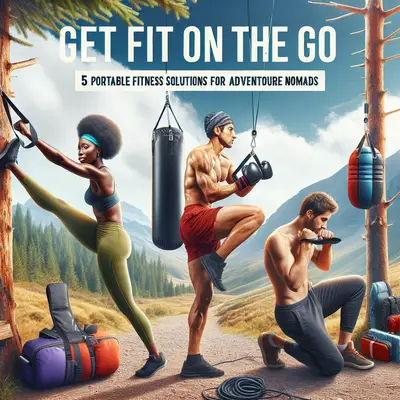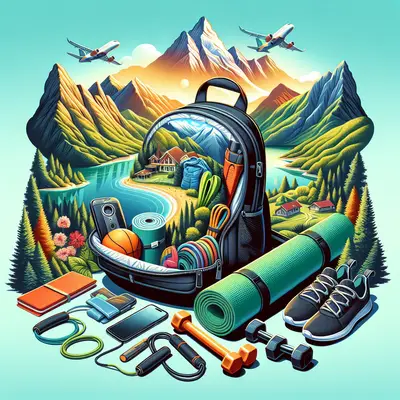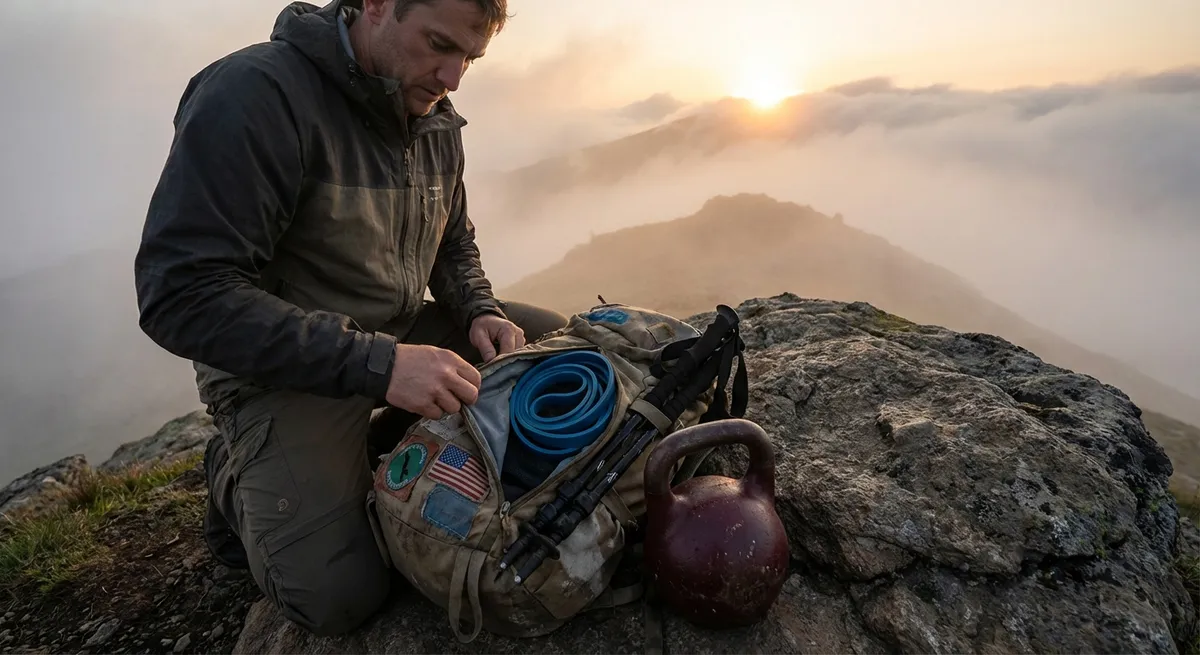
You don’t need a permanent address—or a full-size squat rack—to stay strong. Whether you’re hopping borders every month or living out of a backpack between coworking spaces, your body is the one piece of gear that goes absolutely everywhere. The trick is pairing it with portable equipment that disappears into your luggage but shows up when it’s time to train. This is your trailblazer toolkit: gear and strategies that keep you powerful, durable, and adventure-ready anywhere on the map.
Building a Backpack-Sized Training Arsenal
Think of your luggage as a mobile gear locker. You’re not trying to recreate a full gym—you’re building a compact system that multiplies what your body can already do. Prioritize items that are light, multi-use, and durable: a medium and heavy resistance band can mimic cable machines; a compact suspension trainer gives you rows, presses, and core work off any sturdy door or tree branch; a lightweight jump rope turns any parking lot into a conditioning zone. For stability and mobility, a mini-band (hip loop) is tiny but ruthless—perfect for glute work and knee-friendly warm-ups.
Space is currency when you travel, so choose gear that compresses flat and weighs almost nothing. Store bands in a zip pouch, wrap your jump rope around shoes, and tuck your suspension trainer along the back panel of your backpack. The goal is zero friction to training: if your kit is easy to access and set up in under two minutes, you’ll actually use it between long transit days and unpredictable schedules.
Tip 1: Make Resistance Bands Your Traveling “Weight Rack”
When you don’t know if your next stop has a gym—or power, or stable Wi‑Fi—resistance bands become your insurance policy. A single heavy band can anchor deadlifts, rows, presses, and squats using door frames, railings, or your own body as leverage. Adjusting difficulty is as simple as stepping closer (more tension) or further (less tension) from the anchor. Double up bands when you need a strength challenge, or drop to a lighter band for higher-rep “hotel room hypertrophy.”
Treat bands like modular weights: slow your tempo, add isometric holds at the hardest point of the movement, and chase controlled fatigue rather than just repping mindlessly. When space is tight, run a push–pull–legs circuit: banded push-ups or presses, rows, and squats or RDLs. You’ll keep major muscle groups active without relying on crowded hotel gyms or sketchy equipment in random hostels.
Tip 2: Turn Any Doorway into a Strength Station with a Suspension Trainer
A quality suspension trainer weighs less than a pair of shoes but can replace half the machines in a commercial gym. Clip it to a sturdy door, beam, or playground structure and you’ve got rows, presses, face pulls, pistol squat variations, and brutal core work. Change intensity by simply walking your feet forward or back to alter the angle. That makes it ideal for adjusting on the fly when you’re training on jet lag or after a long travel day.
For digital nomads who sit hunched over laptops in cafés and coworking spaces, prioritize pulling and posture: suspension rows, Y/T raises, and reverse fly variations to open up the upper back. Pair those with single-leg squats, split squats, and hip hinges to maintain lower-body strength without needing a barbell. The added instability forces small stabilizing muscles to work harder, which pays off when you’re hiking, surfing, or hauling bags up questionable staircases in old city centers.
Tip 3: Pack a Jump Rope for “Anywhere” Conditioning
Cardio on the road doesn’t have to mean hunting down a safe running route at dawn. A speed rope fits in your pocket and turns a 3×3 meter patch of concrete into a conditioning arena. Skip rope in short, sharp rounds: for example, 30–45 seconds of jumping followed by 15–30 seconds of rest for 8–12 rounds. It’s efficient, joint-friendly when done on a decent surface, and easy to scale by changing pace or footwork patterns.
On travel days when your step count is low and you’re trapped between flights, a jump rope is your circulation and jet lag ally. Ten minutes of light-to-moderate skipping boosts blood flow, wakes up your nervous system, and helps counter that “airplane statue” stiffness. Just scout a safe spot away from crowds and low ceilings—airport parking decks, quiet plazas, or wide hallways in budget accommodations often work if you’re respectful of space and noise.
Tip 4: Use Mini-Bands and Bodyweight to Armor Your Joints
Adventure travel and desk-heavy remote work share one risk: cranky joints. Mini-bands (hip loops) and bodyweight drills are your portable prehab kit. Slide a loop above your knees for lateral walks, monster walks, and glute bridges before you hike, explore a new city, or sit down for a multi-hour work sprint. Strong glutes and hips stabilize knees and lower back, which is crucial when you’re carrying a pack over uneven terrain or sitting twisted in buses and trains.
Layer in simple bodyweight movements focused on joint-friendly ranges: slow lunges, controlled step-downs from low curbs or steps, calf raises using stairs, and wall slides for shoulders. Use them as a 5–10 minute “movement snack” every few hours on heavy laptop days. The aim isn’t to crush a workout; it’s to keep your joints talking instead of screaming when you ask them to haul you up a volcano or through a surprise 20,000-step sightseeing day.
Tip 5: Anchor Your Training to Daily Travel Rituals
Portable gear is only useful if it actually leaves your bag. The secret weapon for consistency on the road is pairing short training blocks with routines you already have. Attach a 15-minute session to something non-negotiable: right after you brush your teeth in the morning, before you open your laptop, or while your coffee is brewing. Keep your gear visible—hang the suspension trainer over the door handle, leave your bands on the desk, stash your jump rope with your shoes.
Create a simple “no excuses” default session for brutal days: for example, 3 rounds of 40 seconds band rows, 40 seconds squats, 40 seconds push-ups, 40 seconds core, with short rests. If motivation is low, promise yourself just one round; once you start, you’ll often do more. On better days, expand into longer circuits or focus sessions (upper body pull day, lower body strength, conditioning). The key is momentum: stay in the habit of doing something, however small, so your future self landing in a new time zone is already primed to train.
Conclusion
Being a traveler or digital nomad doesn’t mean putting your strength on hold until you’re “back home.” Your body is home. With a smart, backpack-sized arsenal—bands, a suspension trainer, a jump rope, and a mini-band—you can turn airports, hostels, and tiny rentals into training grounds. Pair that gear with intentional, bite-sized routines, and you’ll stay strong enough to chase the hikes, waves, and side streets most tourists never touch. Pack light, move often, and let your portable equipment turn every new destination into another chapter in your strength story.
Sources
- [American Council on Exercise – Resistance Bands 101](https://www.acefitness.org/education-and-resources/lifestyle/blog/6643/resistance-bands-101-how-to-use-them-effectively/) - Overview of effective resistance band use and exercise ideas
- [Mayo Clinic – Exercise: How to Get Started](https://www.mayoclinic.org/healthy-lifestyle/fitness/in-depth/fitness/art-20048269) - Guidance on building sustainable exercise habits, useful for routine planning on the road
- [Harvard T.H. Chan School of Public Health – Physical Activity Guidelines](https://www.hsph.harvard.edu/obesity-prevention-source/obesity-prevention/physical-activity-guidelines/) - Evidence-based recommendations for weekly activity volume and intensity
- [Cleveland Clinic – Jump Rope Benefits](https://health.clevelandclinic.org/jump-rope-workout) - Explanation of cardiovascular and coordination benefits of jump rope training
- [National Institute on Aging – Exercise and Physical Activity](https://www.nia.nih.gov/health/exercise-physical-activity) - Science-backed information on strength, balance, and flexibility work for long-term joint health
Key Takeaway
The most important thing to remember from this article is that this information can change how you think about Portable Equipment.