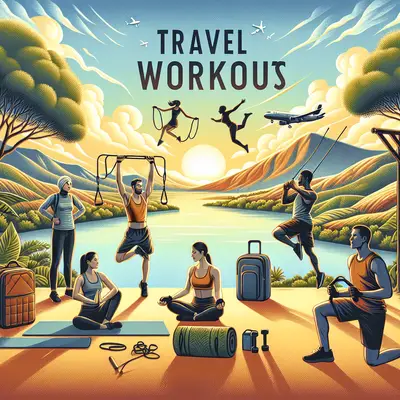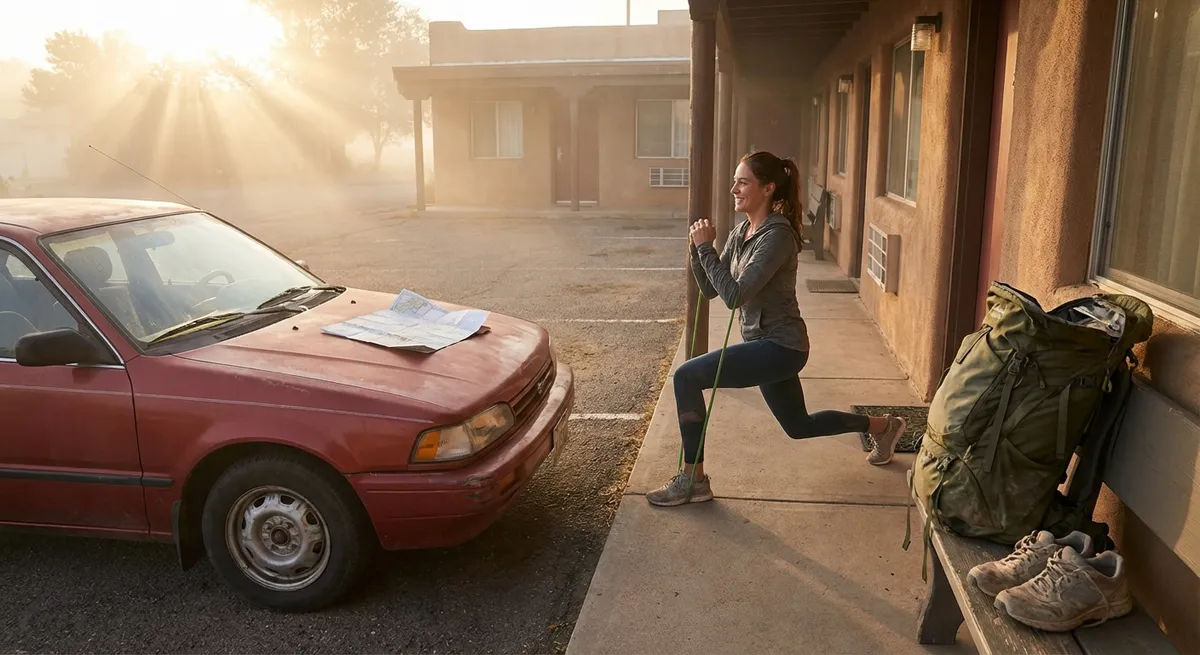
You don’t need a gym, a PR-ready barbell, or a perfectly periodized training block to stay strong while you roam. You just need a body, a bag, a bit of grit, and a plan that survives delayed flights, dodgy Wi‑Fi, and checkout times. This is your field guide to staying fit anywhere—from mountain towns to metro stations—with travel workouts that actually fit the way you move through the world.
Build a “No-Matter-What” Movement Ritual
Travel blows up routines, but it doesn’t have to nuke your momentum. Instead of a strict hour-long workout plan that collapses the second your schedule shifts, build a simple movement ritual you can do in almost any space.
Pick one anchor time: right after waking, before your first meeting, or immediately when you drop your bag in the room. Then lock in a non-negotiable 10–15 minute sequence: think squats, push-ups, hip hinges, and core work. Aim for consistency over intensity—your mission is frequency, not heroics.
This ritual becomes your baseline: even on brutal travel days, you move. On easier days, you can layer on a longer workout or an outdoor adventure. By lowering the barrier to entry (no gear, no perfect space, no perfect mood required), you make training something that travels with you instead of something you keep restarting.
Turn Your Pack Into a Portable Weight Room
Your backpack or carry-on is already with you—so make it earn its seat. With a bit of packing strategy, your luggage becomes a modular training tool that can sub in for dumbbells and kettlebells.
Load heavy items (laptop, power bank, books, water bottles) close to your back so the pack sits well during rows and squats. Tighten the straps so nothing sloshes around. Use it for backpack squats, lunges, bent-over rows, overhead presses (if your shoulders allow), and suitcase-style carries by one handle.
Bonus: a sturdy daypack doubles as a “sandbag” for shouldering, front-loading squats, and good mornings. Adjust weight on the fly by adding or removing water bottles or clothing. You’re not chasing perfect resistance—you’re chasing effort and stability under load. That kind of adaptable strength translates perfectly to hauling gear through train stations and up sketchy hostel stairwells.
Work in “Adventure Intervals” Instead of One Big Session
When your calendar is salted with flights, coworking sessions, and sunset missions, a single long workout often just… doesn’t happen. Instead, think in “adventure intervals”—short, intense bursts of movement stitched through your day.
Use natural breaks:
- Waiting for laundry: quick lower-body circuit
- Zoom break: upper-body push/pull work
- Dinner simmering: core and mobility combo
- Morning: 5 minutes of mobility (neck, hips, thoracic spine)
- Late morning: 3 rounds of 10 squats + 10 push-ups
- Afternoon: 3 rounds of backpack rows + 30-second planks
- Evening: 5–10 minutes of stretching or slow walking cool-down
A sample adventure-interval day:
By the end of the day, you’ve quietly logged a serious training volume without needing a dedicated “gym block.” This style of training is also great for combatting the blood-sugar swings and stiffness that come with long sedentary work stretches and travel days.
Prioritize Strength Moves That Pay Off on the Road
As a traveler or digital nomad, your “functional fitness” is survival gear: carrying packs, climbing stairs, throwing yourself into last-minute hikes, and recovering from long-haul flights. Build your travel workouts around moves that directly upgrade those demands.
Focus on:
- Squat pattern: Air squats, split squats, and backpack goblet squats help with stairs, hills, and standing for long stretches.
- Hinge pattern: Hip hinges and backpack good mornings train your posterior chain for lifting and carrying.
- Push pattern: Push-ups (elevated on a bench or bed if needed) build pressing power for pack handling and posture.
- Pull pattern: Backpack rows, doorframe isometrics, or resistance bands (if you pack them) help counter all that laptop hunching.
- Carry pattern: Farmer carries with bags or water jugs train grip, core, and shoulder stability for real-world hauling.
Rotate through these patterns across your week rather than obsessing over body-part splits. You’re training to be capable anywhere, not prepping for a bodybuilding stage.
Protect Recovery Like It’s Your Passport
You can’t out-training-montage your way past sleep debt, jet lag, and chronic sitting. Recovery is your stealth performance edge on the road, and it starts with what you can control even when everything else shifts.
Anchor the basics:
- Sleep hygiene: Keep a wind-down ritual—screens down, low light, maybe a short stretch session—so your body knows it’s time to power down even in a new time zone.
- Hydration: Flights, AC, and coffee dehydrate you fast. Front-load water in the morning, and match every caffeinated drink with extra fluids.
- Micro-mobility: Between calls or during layovers, run through ankle circles, hip openers, shoulder rolls, and gentle twists. It’s low effort but high return for joints stuck in cramped positions.
- Walking as default: Explore on foot whenever possible. Use walking to scout new neighborhoods, hunt for coffee, or decompress between work blocks—it’s recovery, light cardio, and adventure all in one.
Treat recovery as part of your travel training, not an afterthought. Strong bodies are built in the margins: the hours you sleep, the walks you take, the water you drink, and the way you unwind after long hauls.
Conclusion
Being “fit enough to travel” is easy. Being “travel-strong”—ready to sprint for gates, hike surprise trails, haul packs up old stone steps, and still be functional for work—that’s different. You don’t need a fixed gym or a perfect schedule to build that kind of strength. You need adaptable tools, simple rituals, and the mindset that movement is part of the adventure, not separate from it.
Treat every city, mountain town, and airport terminal as another training ground. Let your backpack be your barbell, your layovers be your intervals, and your walks be both scouting missions and recovery sessions. Your body becomes one more piece of gear you can trust—wherever you drop your pack next.
Sources
- [American College of Sports Medicine – Exercise Guidelines](https://www.acsm.org/docs/default-source/files-for-resource-library/acsm-whats-new-brochure.pdf) - Overview of recommended exercise frequency, intensity, and duration for adults
- [Mayo Clinic – Exercise: How to Get Started](https://www.mayoclinic.org/healthy-lifestyle/fitness/in-depth/fitness/art-20048269) - Practical advice on building sustainable fitness habits and routines
- [Harvard T.H. Chan School of Public Health – Physical Activity](https://www.hsph.harvard.edu/obesity-prevention-source/obesity-causes/physical-activity-and-obesity/) - Evidence-based look at the benefits of regular physical activity and movement
- [CDC – How Much Physical Activity Do Adults Need?](https://www.cdc.gov/physicalactivity/basics/adults/index.htm) - Official U.S. guidelines for weekly physical activity and strength training
- [Sleep Foundation – Travel and Sleep](https://www.sleepfoundation.org/travel-and-sleep) - Research-backed strategies for managing jet lag and protecting sleep quality while traveling
Key Takeaway
The most important thing to remember from this article is that this information can change how you think about Travel Workouts.