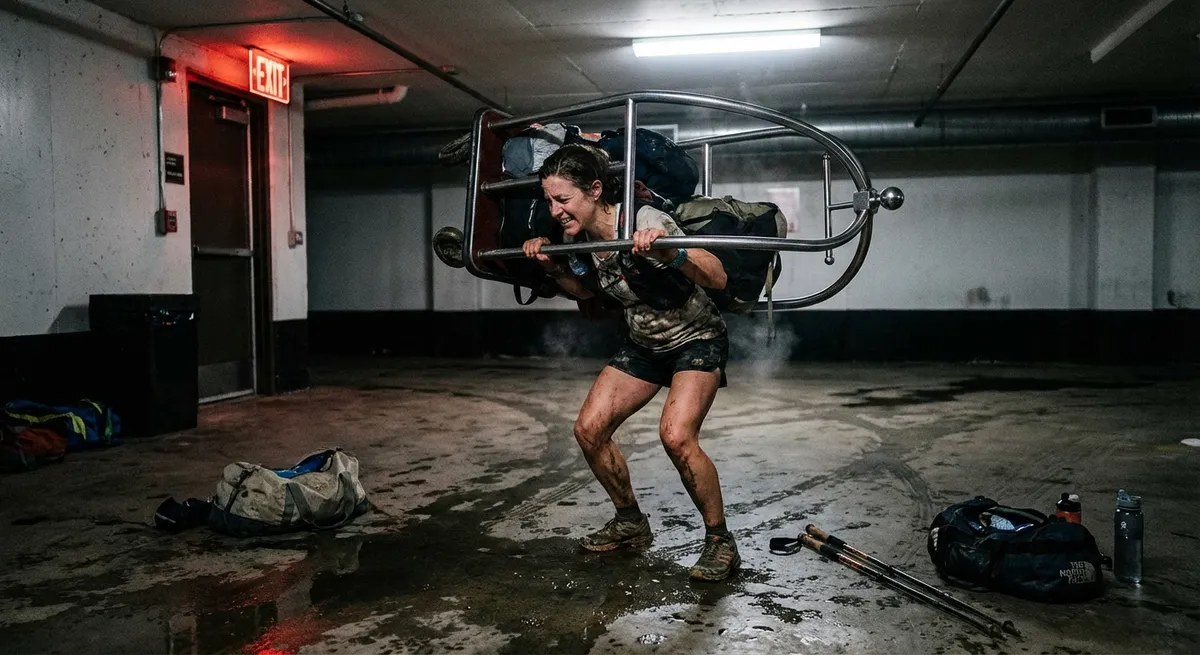
You don’t need a luxury fitness center or a checked bag full of gear to stay strong on the road. Whether you’re hopping between coworking spaces or bouncing from hostel to hotel, your body is the one piece of equipment that always makes it through baggage claim. This guide shows you how to turn any room, hallway, or stairwell into a training ground—so every stop on your journey keeps you adventure‑ready.
Build Your “Zero-Excuse” Hotel Workout Blueprint
Most hotels give you more than enough to work with: floors, walls, a bed, a chair, and stairs. That’s essentially a minimalist training facility. The trick is to walk into your room and immediately scan it like an athlete, not a tourist.
Start by claiming your training zone—a strip of floor between the bed and the window, or a clear rectangle near the door. Test the surface: if it’s slick, do standing moves and push-ups with hands on the bed or desk for more grip. Use the wall for wall sits, handstand holds (or just shoulder taps if you’re not there yet), and supported squats. The bed becomes a soft platform for elevated push-ups, hip thrusts, and step-ups if it’s stable enough. A sturdy chair or bench is perfect for Bulgarian split squats, dips, and incline planks.
Once you see the room as a toolkit, not a cage, the “no gym” excuse disappears. You’ve got leverage points, elevation, resistance (your bodyweight), and room to move—everything you need to stay sharp between flights, meetings, and mountain trails.
Five Road-Proof Fitness Tips for Travelers and Nomads
1. Lock in a Micro-Routine You Can Do Half-Asleep
Travel wrecks consistency, so your first weapon is a simple, repeatable routine you can hit even when you’re jet-lagged or low on willpower. Think of it as your “default mode” workout: short, no setup time, zero decision-making.
Example base routine:
- 8–12 push-ups (hands on floor or bed)
- 10–15 squats
- 20–30 seconds plank
- 8–12 glute bridges
- 20–30 jumping jacks (or march in place if noise is an issue)
Run that circuit 3–5 times with 30–45 seconds rest between rounds. It’s done in under 15 minutes, needs no gear, and hits your major muscle groups and heart rate. The goal isn’t to crush yourself—it’s to protect your identity as “someone who trains,” no matter what time zone you’re in.
2. Travel with One or Two “Multiplier” Tools
You don’t need a full gym in your backpack. One or two ultra-portable tools can multiply your options without eating your luggage space. Ideal picks: a long resistance band and a mini-loop band. They weigh almost nothing and turn your hotel into a strength lab.
With a single long band you can do rows anchored around a door frame (use a sturdy hinge-side anchor and close the door), presses, deadlifts, good mornings, curls, triceps extensions, and band-resisted squats. Mini-bands wrap around your knees or ankles for hip work: lateral walks, monster walks, and glute-focused squats. Pair these with your bodyweight moves and you’ve effectively upgraded a bland hotel room into a mobile strength studio.
Keep them in your laptop sleeve or daypack, not buried in your suitcase. If your band is within arm’s reach, you’re far more likely to get a quick session in between Zoom calls or city explorations.
3. Let Stairs and Hallways Become Your Cardio Trails
If the hotel gym is a sad room with one broken treadmill, abandon it and turn to the architecture. Stairs are one of the best tools for building ready-for-anything legs and conditioning—and almost every hotel has them.
Options:
- Stair intervals: Walk up 2–4 flights at a brisk pace, walk down slowly, repeat for 10–20 minutes.
- Loaded stair climbs: Wear your daypack with your laptop and water bottle for added resistance.
- Hallway shuttles: Use a quiet corridor for walking lunges, side shuffles, or fast-paced walks from one end to the other.
Keep safety and etiquette in mind: avoid running down stairs (high injury risk), stay aware of doors and other guests, and choose non-peak times. For digital nomads working late or early, stair sessions are a perfect “mental reset” block between deep work sprints.
4. Program for Unpredictability Instead of Perfection
On the road, “three perfect 60-minute sessions a week” is fantasy. Flights get delayed, check-ins run late, and last-minute plans happen. So program your training like you program travel: flexible, modular, and ready to adapt.
Think in tiers:
- Tier 1 (5 minutes): One micro-circuit—push-ups, squats, plank. Done.
- Tier 2 (10–20 minutes): Your base routine circuit with bands or added volume.
- Tier 3 (30 minutes): Add stair work, hallway intervals, or slow, controlled strength moves.
Each day, match your tier to reality. If a day implodes, you hit Tier 1 so you don’t break the chain. If you wake up early in a quiet city with nothing on the schedule, go Tier 3 and push harder. This mindset shift—from “perfect plan” to “adaptable framework”—is what keeps nomads consistent over months instead of burning out after a week.
5. Protect Recovery Like It’s a Flight You Can’t Miss
Every new city tempts you: late-night food, one-more-drink networking, sunrise excursions. That’s half the fun. But if you treat recovery as optional, your training and adventures both suffer. Sleep, hydration, and simple mobility work are your hidden performance multipliers.
Travel often disrupts circadian rhythm, so anchor sleep with small habits: dim screens an hour before bed, keep the room cool and dark, and use an eye mask or earplugs if the hotel is noisy. Hydrate on arrival—two full glasses of water for every long-haul flight segment is a good starting point. Layer in tiny mobility snacks: 3–5 minutes of hip flexor stretches, calf stretches against the wall, and gentle spinal rotations on the floor before bed or after waking.
You’re not trying to live like a monk; you’re stacking easy advantages so your body can handle long travel days, spur-of-the-moment hikes, and those unexpected “We’re renting scooters to go see that cliff in an hour, you coming?” invitations.
Designing Your Personal Hotel “Adventure Routine”
To make this stick trip after trip, translate all of this into a simple written plan. Think of it as your “Hotel Basecamp Protocol” that you can copy-paste into every new stop on your route.
Write down:
- Your go-to 10–15 minute circuit (Tier 2).
- Two band workouts (upper body focus, lower body focus).
- One stair/hallway conditioning plan.
- A 3–5 minute mobility and stretch flow for mornings or nights.
Store it in your notes app, Notion, or wherever you keep travel plans. When you check into a new place, scan your room, identify your training zone, locate the stairs, and pick what you’ll do for the next morning. That one-minute setup greatly reduces friction when you’re tired or overwhelmed.
Over time, your body becomes the constant in a life of moving parts. New cities change your view; hotel rooms change your ceiling; but your training habits stay familiar. That consistency is what lets you hike the extra ridge, carry your pack through one more transit nightmare, or say yes to the random adventure—which is why you’re out here in the first place.
Conclusion
Adventure and strength don’t have to be opposites. You don’t need a membership card or a perfect schedule to stay fit while living out of hotels and short stays. With a micro-routine, a couple of portable tools, some creative use of stairs and hallways, and a flexible mindset, every check-in becomes a chance to dial your performance up, not let it slide.
Treat your hotel not as a pause in your training, but as your current basecamp. From there, you’re not just passing through the world—you’re exploring it with a body capable of keeping up.
Sources
- [Centers for Disease Control and Prevention – Physical Activity Basics](https://www.cdc.gov/physicalactivity/basics/index.htm) - Guidelines on recommended activity levels for adults and benefits of regular movement
- [American College of Sports Medicine – ACSM’s Guidelines for Exercise Testing and Prescription](https://www.acsm.org/education-resources/books/guidelines-exercise-testing-prescription) - Evidence-based principles behind cardio and strength training programming
- [Harvard Health Publishing – Benefits of Strength Training](https://www.health.harvard.edu/staying-healthy/strength-training-builds-more-than-muscles) - Overview of why resistance training matters, especially with limited equipment
- [National Sleep Foundation – How Travel Affects Sleep](https://www.thensf.org/how-travel-affects-sleep/) - Explains jet lag, sleep disruption, and strategies for better rest on the road
- [Mayo Clinic – Resistance Band Training](https://www.mayoclinic.org/healthy-lifestyle/fitness/multimedia/resistance-bands/sls-20076713) - Demonstrations and safety tips for using resistance bands effectively
Key Takeaway
The most important thing to remember from this article is that this information can change how you think about Hotel Fitness.